
Dream Vacations That Make Room for Adventure and Rest
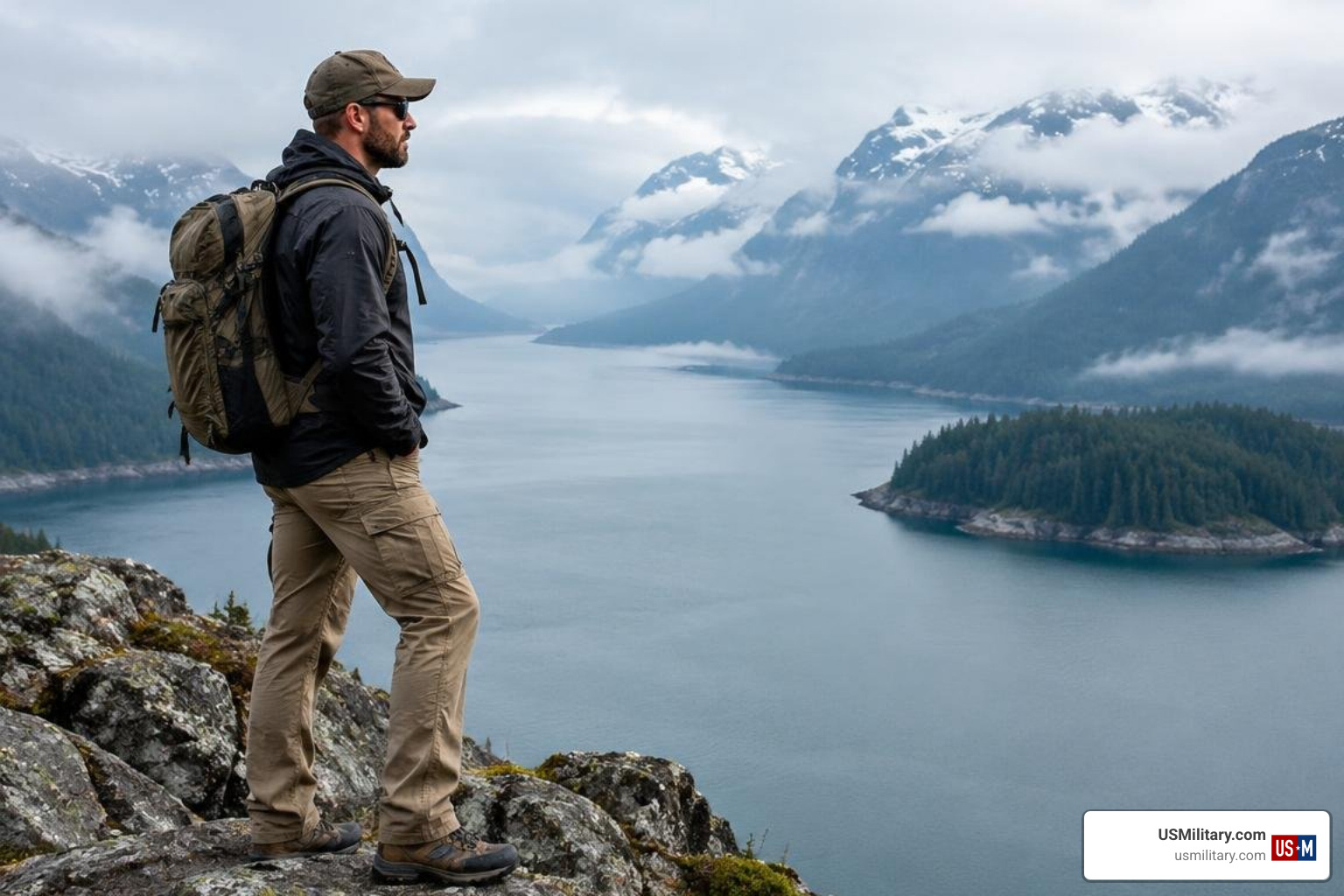
The best dream vacations for Navy SEALs offer a choice, not another test. Ten strong options are the Galapagos Islands for diving; New Zealand's Southern Alps for climbing; Alaska's Kenai Fjords for wilderness; Interlaken for alpine sports; the Bahamas' Exuma Cays for liveaboard diving; Moab for desert trails; Baja for coastal solitude; New Zealand's Fiordland for trekking; Oahu's North Shore for surf and family time; and Italy's Dolomites for mountain routes.
Some trips bring a physical challenge. Others make it easier to sleep, reconnect, and recover after demanding work. For active-duty operators, approved leave, travel rules, and a flexible booking plan matter as much as the destination.
I'm Larry Fowler, BUD/S Class 89, publisher of NavySeal. com and USMilitary.com, where I've covered military careers and veteran issues since 2007. In this Top 10 Dream Vacations For Navy SEALs guide, I'll weigh adventure against the need for real downtime.
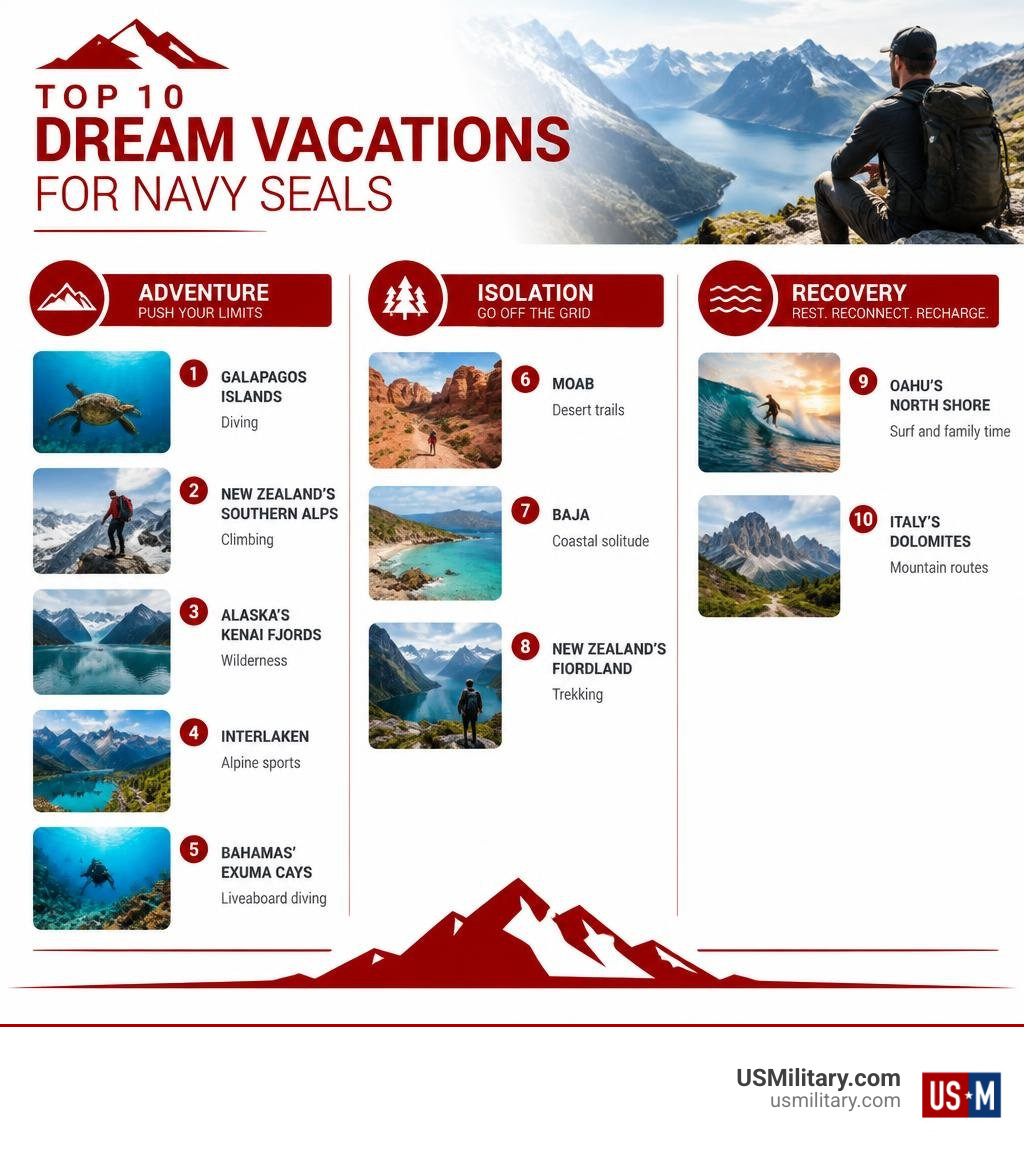
Simple guide to Top 10 Dream Vacations For Navy SEALs terms:
- A Day In The Life Of A Navy SEAL Operator
- What Navy SEAL BUD/S Training Taught Me About Self-Confidence, Courage, & Faith
- How Navy SEALs Can Be Perfect Husbands and Amazing Role Models
Why Special Operators Need Specialized Decompression
Elite military service places extraordinary stress on the human nervous system. Between continuous training blocks, intense physical conditioning, and high-threat deployments, a special operator spends years operating in an elevated state of sympathetic nervous system arousal—the classic "fight-or-flight" response. When operators finally step away on block leave, standard tourist getaways often fail to provide the balance they need. Crowded amusement parks or rigid resort itineraries can trigger frustration rather than relaxation.
Understanding a typical daily operational routine shows why standard leisure travel doesn't always work. Navy SEALs maintain rigorous physical standards, demanding schedules, and tight tactical teamwork. Sudden shifts to complete inactivity can feel disorienting. Active recovery—such as high-mileage backcountry hiking, open-ocean freediving, or mountain biking—allows an operator to channel physical energy in a low-threat environment while clearing systemic cortisol and down-regulating the autonomic nervous system.
Special operations career demands require restorative travel tailored to intentional decompression. Whether through silent wilderness isolation or high-adrenaline outdoor sports, the goal is simple: achieve true biological and mental recovery so operators can return to their families and units restored.
Curating the Top 10 Dream Vacations For Navy SEALs
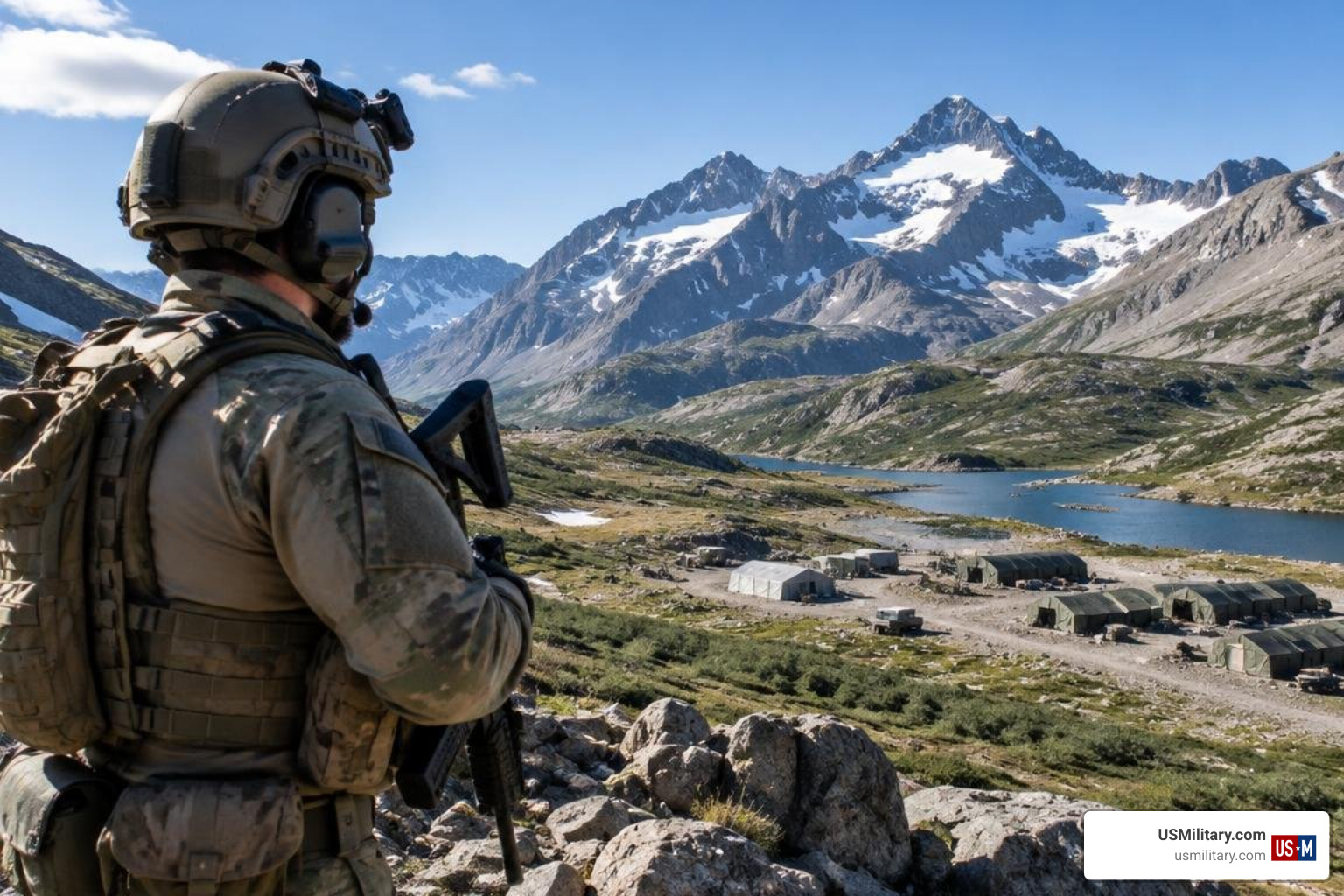
Selecting destinations that truly meet special operators' needs requires strict criteria. We evaluated dozens of global locations based on three foundational factors:
- Geographic Isolation: The ability to escape crowded urban environments and enjoy genuine privacy without operational intrusions.
- Tactical & Physical Terrain: Access to rugged landscapes that challenge navigational instincts, endurance, and technical outdoor skills.
- Restorative Infrastructure: High-quality lodging, nutritious local food, and peaceful settings that promote deep sleep and nervous system recovery.
The table below outlines how our top ten destinations compare across these criteria:
| Destination | Primary Activity | Adventure Level | Isolation Factor | Best Suited For |
|---|---|---|---|---|
| Galapagos Islands, Ecuador | Pelagic Marine Exploration | High | High | Technical divers & marine life enthusiasts |
| Southern Alps, New Zealand | Alpine Ascents & Skydiving | Extreme | Moderate | High-altitude mountaineers & skydivers |
| Kenai Fjords, Alaska | Backcountry Cold-Water Survival | High | Very High | Off-grid isolation & wilderness anglers |
| Interlaken, Switzerland | Extreme Alpine Action Sports | Extreme | Low to Moderate | Adrenaline sports & technical climbing |
| Exuma Cays, Bahamas | Luxury Liveaboard Technical Diving | Moderate | High | Restorative decompression & private charters |
| Moab, Utah | Desert Land Nav & Off-Roading | High | Moderate | Overlanding & technical slickrock trekking |
| Baja Peninsula, Mexico | Blue-Water Spearfishing & Surfing | Moderate | High | Coastal freediving & uncrowded surf breaks |
| Fiordland, New Zealand | Multi-Day Remote Bushcraft Trekking | High | Extreme | Long-range endurance & mental reset |
| North Shore Oahu, Hawaii | Ocean Endurance & Big-Wave Surf | High | Low | Family reconnection & waterman conditioning |
| Dolomites, Italy | Via Ferrata & High-Elevation Ascents | High | Moderate | Mountain movement & alpine wellness |
1. Galapagos Islands, Ecuador: Deep Ocean Exploration
For operators with significant maritime special-operations experience, the volcanic archipelago of the Galapagos Islands offers world-class pelagic diving. The meeting of major ocean currents creates nutrient-rich waters teeming with schooling hammerhead sharks, whale sharks, manta rays, and marine iguanas.
Diving sites like Darwin and Wolf Islands demand strong technical competency because of heavy currents, making them engaging for experienced open-circuit or rebreather divers. The remote isolation of liveaboard vessels far out in the Pacific Ocean ensures zero digital distractions, offering operators pure immersion in deep-ocean exploration.
2. Southern Alps, New Zealand: High-Altitude Mountaineering and Skydiving
New Zealand's South Island presents an unrivaled playground for operators drawn to vertical terrain and military freefall mechanics. The Southern Alps feature rugged, glaciated peaks like Aoraki / Mount Cook that demand sharp technical mountaineering, ice-axe technique, and glacier navigation skills.
Adjacent regions like Queenstown and Wanaka boast premier drop zones for civilian sport parachuting, canopy piloting, and wingsuit flying. The landscape's sheer scale provides a vast visual canvas that promotes deep sensory decompression while keeping operators physically engaged.
3. Kenai Fjords & Seward, Alaska: Off-Grid Arctic Wilderness
Alaska’s Kenai Peninsula offers operators a familiar cold-weather maritime setting, free of tactical stress. Accessible primarily by floatplane, boat, or rugged trail networks, the fjords around Seward offer world-class deep-sea halibut and salmon fishing, sea kayaking alongside calving glaciers, and backcountry brown-bear tracking.
Staying in remote, off-grid coastal cabins allows operators to practice traditional bushcraft, fish for their daily meals, and experience the profound mental stillness of untouched northern wilderness.
4. Interlaken, Switzerland: Extreme Alpine Sports
Between Lake Thun and Lake Brienz and surrounded by the peaks of the Eiger, Mönch, and Jungfrau, Interlaken is Europe's extreme sports capital. It offers a structured outlet for high-speed sports including speedflying, paragliding, technical ice climbing, and navigating exposed via ferrata iron-rung cliff routes.
Navigating Swiss vertical rock faces demands complete presence of mind. This absolute mental focus clears lingering deployment stress, while world-class alpine spas provide contrast hydrotherapy and sauna recovery.
5. Exuma Cays, Bahamas: Luxury Liveaboard Diving
Sometimes decompression calls for high-end comfort paired with pristine marine isolation. The Exuma Cays offer an archipelago of over 365 cays surrounded by turquoise waters, accessible via private yacht charter or dedicated dive liveaboards.
Operators can explore deep blue holes, technical wall drop-offs, and vibrant shark feeding grounds away from public tourists. For those seeking luxury adventure getaways, a private charter through the Exumas balances technical diving with uninterrupted rest on secluded anchorages.
6. Moab, Utah: Tactical Desert Trekking and Off-Roading
For operators who prefer arid-land navigation, Moab is the premier desert outpost. Surrounded by red rock canyons, sandstone arches, and the Colorado River, Moab provides limitless opportunities for technical 4x4 rock crawling, dirt-bike overlanding, and extended multi-day rucking.
Operators can test their terrain-association skills across the expansive Maze District of Canyonlands National Park—one of the most remote regions in the continental United States. Moab stands out among domestic wilderness escapes for operators who want high-mileage adventure without the logistics of international clearance.
7. Baja Peninsula, Mexico: Remote Coastal Solitude and Spearfishing
The rugged coastline where the Sea of Cortez meets the Pacific Ocean offers an ideal blend of primitive solitude and ocean-harvesting pursuits. Renting a rugged four-wheel-drive vehicle with rooftop tents lets operators travel remote coastal trails beyond resort corridors.
Blue-water spearfishing for yellowtail and dorado tests apnea freediving discipline, breath control, and patience. Setting up camp on the beach beneath open stars delivers an immediate reset for overstimulated nervous systems.
8. Fiordland National Park, New Zealand: Multi-Day Wilderness Treks
Located on the southwestern tip of New Zealand’s South Island, Fiordland National Park encompasses over 3 million acres of untracked temperate rainforest, dramatic glacial fiords, and sheer granite peaks. Routes like the Dusky Track or custom off-trail traverses demand intense physical stamina, technical navigation, and wet-weather endurance.
The total absence of cell service, engine noise, and artificial light provides a full sensory reset, making it one of the finest wilderness isolation destinations on Earth.
9. North Shore, Oahu, Hawaii: Surf and Reconnection
Oahu’s North Shore provides watermen with raw ocean power alongside a laid-back lifestyle. During winter swells, breaks like Pipeline and Sunset Beach demand respect, requiring serious physical conditioning and comfort in the ocean.
Beyond the surf, the North Shore offers an ideal setting for husband and family relationship building. Beachfront rentals in quiet towns like Haleiwa let operators share paddleboarding, coastal ridge hikes, and quiet evenings with loved ones, away from the urban bustle of Honolulu.
10. Dolomite Mountains, Italy: Tactical Via Ferrata and High Ascents
The jagged limestone spires of the Italian Dolomites combine historical mountaineering with physical recovery. Operators can navigate the legendary vie ferrate—protected climbing paths originally built during World War I to move troops across exposed mountain ridges.
Traversing suspension bridges, sheer rock faces, and high-altitude mountain passes provides vertical exposure and aerobic conditioning. Evenings spent at alpine refuges (rifugi) offer wholesome regional nutrition, hospitality, and comfortable rest.
Planning Considerations and Military Leave Logistics for Operators
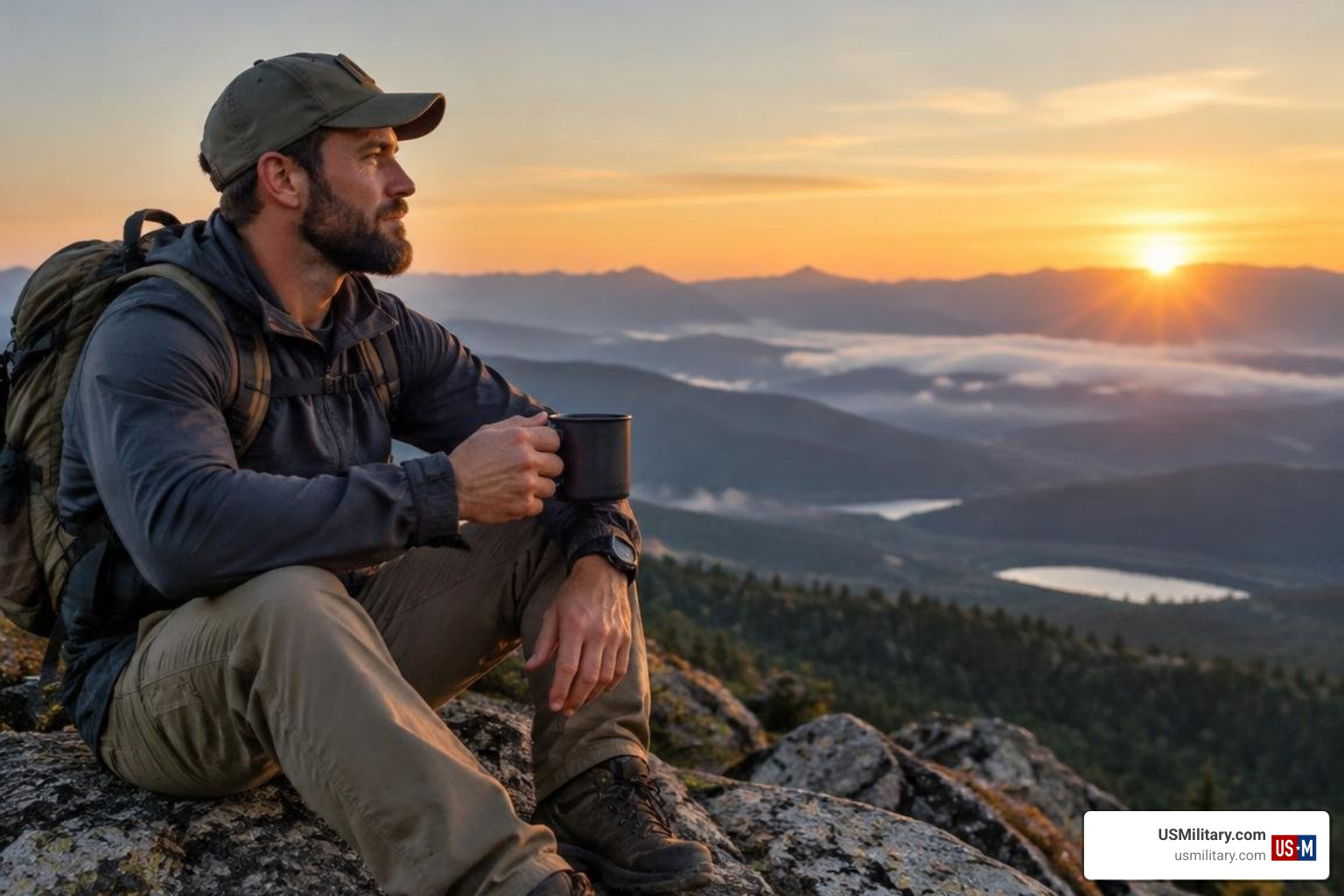
Active-duty service members earn 30 days of paid annual leave per year, accrued at 2.5 days per month. However, special operations schedules revolve around tight deployment workup cycles, including Individual Specialty Training (IST) and Unit Level Training (ULT). Personnel usually take leave during designated "block leave" windows after deployment.
Planning a dream getaway requires proactive administrative preparation. International destinations demand Foreign Clearance Guide reviews and Aircraft and Personnel Automated Clearance System (APACS) approvals. Balancing rigorous travel with stress-management habits ensures operators return to their units no more exhausted than when they left.
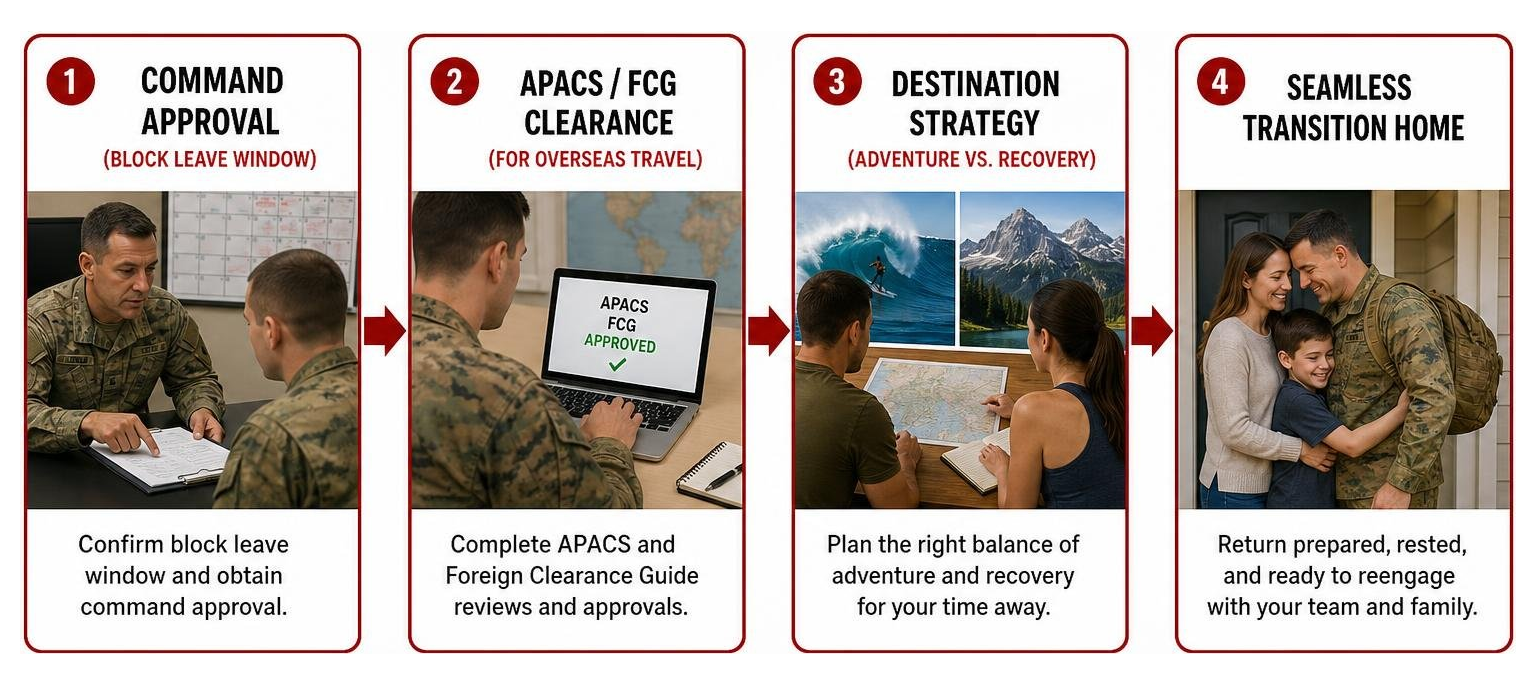
Balancing High Adrenaline and Family Time on Top 10 Dream Vacations For Navy SEALs
Finding balance between personal physical outlets and quality time with spouses and children is essential. The most successful family vacations blend shared outdoor activities—like coastal kayaking or beginner ski slopes—with dedicated downtime. Applying core BUD/S mental resilience lessons helps operators remain patient and flexible when family travel plans shift unexpectedly.
Travel Security and Privacy for Top 10 Dream Vacations For Navy SEALs
Active-duty special operators must maintain operational security (OPSEC) while traveling. When selecting accommodations, private villas, off-grid cabins, and liveaboard vessels offer greater privacy than large commercial hotels. Avoid geotagging real-time locations on social media, keep travel itineraries restricted to trusted family circles, and verify all destination safety advisories before departure.
Frequently Asked Questions About Navy SEAL Vacations
How much vacation leave do Navy SEALs receive each year?
All active-duty military personnel, including Navy SEALs, accrue 2.5 days of paid annual leave per month, totaling 30 days per year. Unused leave can typically be banked up to a 60-day cap. To learn more about how military pay scales and special duty pay operate, see our guide to SEAL compensation and allowances.
Can active-duty Navy SEALs travel internationally while on leave?
Yes. Active-duty operators can travel internationally on approved leave, provided they complete all required country clearances, review Department of State travel advisories, submit APACS documentation, and complete theater-specific force protection briefings before departure.
Do Navy SEALs prefer extreme sports or quiet relaxation on vacation?
Preferences vary by operator and career stage. Younger operators coming off deployment often seek high-adrenaline sports to match their conditioned dopamine baselines, while senior operators and those with families frequently prioritize quiet wilderness isolation, quality sleep, and restorative health practices.
Conclusion
A well-deserved leave window is crucial to sustaining special operations warriors' long-term physical readiness, family health, and mental sharpness. Whether scaling the jagged spires of the Italian Dolomites, diving the remote walls of the Exuma Cays, or resting on the quiet beaches of Oahu, the ideal vacation provides a healthy balance between adventure and restoration.
At NavySeal.com, we provide active-duty personnel, veterans, and military families with trusted guidance on benefits, wellness, and career progression. To learn more about special warfare careers and operational life, read our complete Navy SEALs guide.