What Navy SEALs Do for Fun Off Duty
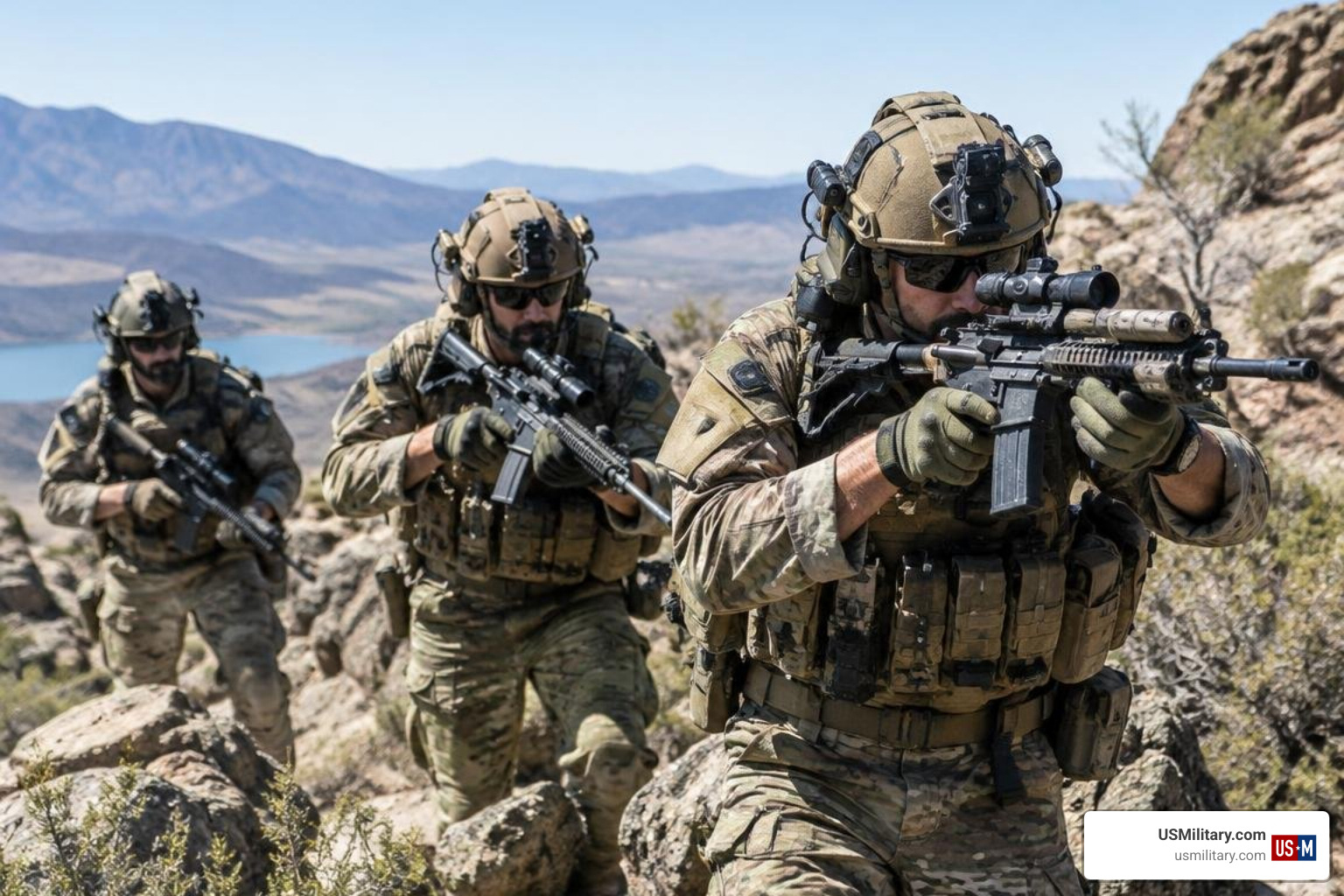
Some Navy SEALs spend their free time on Brazilian jiu-jitsu, endurance races, mountaineering, and challenging workouts. Others prefer time with teammates or family. Former SEALs have even turned a love of fitness into new exercise gear. Their hobbies can be intense, but downtime is not all about chasing danger: rest and recovery matter, too.
The surprising part is how often a hobby draws on skills they already value, such as teamwork, focus, and staying calm under pressure. No single pastime fits every SEAL, and an extreme sport is not a requirement of the job.
I'm Larry Fowler, graduate of BUD/S Class 89, publisher of NavySeal.com and the USMilitary.com Network, where I've covered military careers and veteran resources since 2007. In this look at 15 Things Navy SEALs Do For Fun That You May Find Shocking, I'll separate reported pastimes from the myths about SEAL downtime.
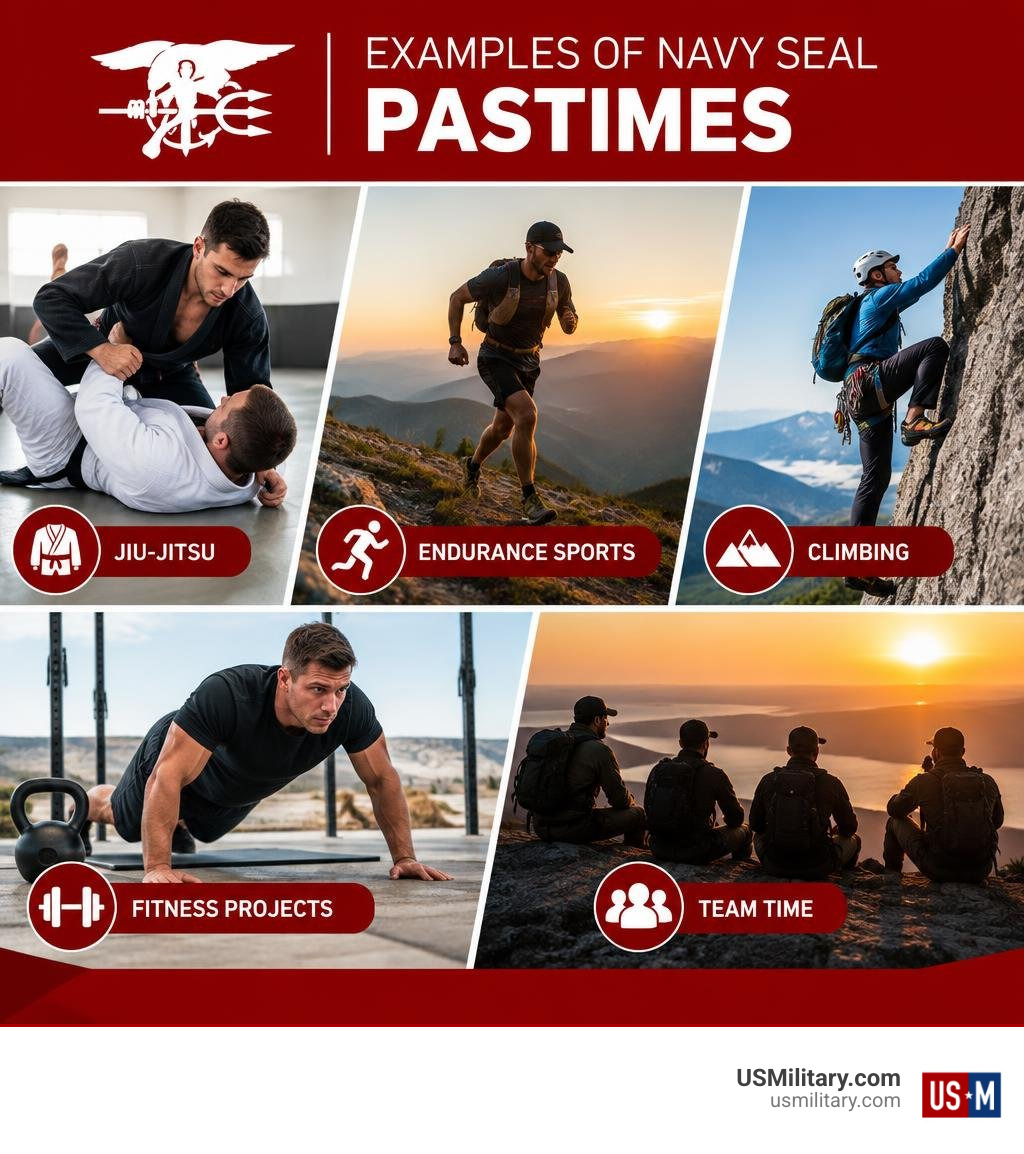
15 Things Navy SEALs Do For Fun That You May Find Shocking word guide:
- A Day In The Life Of A Navy SEAL Operator
- 10 Bad Habits of all Navy SEALs confess to
- What is Navy SEAL Training 3 Phases And WHy is it so tough
For a broader look at how elite units operate, the United States Navy SEALs entry on Wikipedia provides additional historical and organizational context.
The Psychology of SEAL Downtime: Why Elite Warriors Seek Extreme Thrills
To understand why Navy SEALs choose specific pastimes, we have to look at the psychology forged during their selection and training pipelines. Basic Underwater Demolition/SEAL (BUD/S) training has a historic attrition rate of roughly 75% to 80%. Those who survive the brutal crucible—including discovering what is Navy SEAL Hell Week? where candidates run over 200 miles on less than four hours of total sleep—possess distinct psychological profiles.
Personality assessments, such as the NEO Personality Inventory, reveal that SEAL operators generally score exceptionally low in neuroticism and high in extraversion and conscientiousness. This specific neurochemical wiring means that everyday civilian downtime can feel uncomfortably quiet or stagnant.

When an operator spends years developing extreme stress inoculation, normal baseline nervous system activation shifts. They rely on principles like the "40% Rule"—a mental benchmark popularized by elite operators asserting that when your mind tells you that you are completely physically exhausted, your body has only tapped into roughly 40% of its true reserve capacity.
How Adrenaline Channels Focus and Rest
For an elite combatant, an adrenaline-fueled hobby is rarely about reckless chaos. Instead, it provides a direct bridge to the psychological flow state. In high-consequence environments—whether leaping from an aircraft or navigating a technical rock face—sensory distractions vanish.
- Dopamine Regulation: The brain recalibrates neurotransmitter production when navigating controlled risk, replacing chronic operational tension with deep satisfaction.
- Sensory Adaptation: High speeds and physical friction force real-time spatial awareness, sharpening visual and motor reflexes.
- Cortisol Management: Engaging in voluntary, self-directed challenges allows operators to process baseline stress hormones, prompting an operational reset that enables deeper rest afterward.
15 Things Navy SEALs Do For Fun That You May Find Shocking
When looking at the spectrum of off-duty pastimes, standard operating procedures (SOPs) and obsessive risk mitigation follow operators straight into their weekend adventures. Whether jumping from cliffs or playing rapid board games, here is how their downtime breaks down across risk levels and mission-readiness skills:
| Pastime / Activity | Physical Demand Level | Inherent Risk Profile | Core Operational Skill Translation |
|---|---|---|---|
| BASE Jumping & Proximity Flying | High | Very High | Canopy navigation, terminal velocity composure |
| High-Altitude Mountaineering | Extreme | High | Micro-goal chunking, hypoxia resilience |
| Cave & Deep Technical Diving | Moderate | Very High | Closed-circuit gas management, panic suppression |
| Cage-Free Shark Diving | Low to Moderate | Moderate | Heart rate modulation, non-verbal threat cues |
| Open-Ocean Cold Swimming | Extreme | Moderate | Hypothermia tolerance, bilateral endurance |
| Brazilian Jiu-Jitsu (BJJ) | High | Moderate | Tactical combatives, kinetic problem-solving |
| Multi-Day Adventure Racing | Extreme | Moderate | 40% Rule execution, caloric pacing |
| Precision Marksmanship Matches | Low | Low | Ballistic calculation, fine motor trigger control |
| Fitness Equipment Engineering | Moderate | Low | Mechanical ergonomics, tactical problem solving |
| Extreme Off-Road Motorcycling | High | High | Dynamic terrain reading, balance under throttle |
Extreme Aerial and Vertical Sports: 15 Things Navy SEALs Do For Fun That You May Find Shocking
Elite military free-fall parachuting often sparks a lifelong love for high-altitude vertical sports. SEALs take the parachute deployment skills honed during Military Free Fall (MFF) jumps from 30,000 feet and apply them to specialized recreational flight:
1. BASE Jumping and Wingsuit Proximity Flying
While civilian parachutists might make standard drop-zone jumps from airplanes, many active and former operators pursue BASE jumping (fixed-object jumping from buildings, antennas, spans, and earth). Taking it a step further, wingsuit proximity flying involves gliding down mountain contours at speeds exceeding 120 mph. The hobby demands exact glide-ratio calculations, split-second canopy deployment, and zero margin for error.
2. High-Altitude Mountaineering
Conquering 8,000-meter peaks like Everest, Denali, or K2 requires the exact mindset drilled into candidates throughout BUD/S: breaking insurmountable objectives down into small micro-goals. In sub-zero temperatures, mountaineering forces operators to endure extreme hypoxia and sustained physical misery, echoing their core identity of pushing past perceived mental boundaries.
3. Ice Climbing and Frozen Waterfall Ascents
Scaling vertical sheets of frozen water using technical ice axes and crampons provides a pure adrenaline rush wrapped in calculated technique. Ice climbing demands hyper-focus: one sloppy placement of a pick can shear an entire ice shelf off the rock face.
4. High-Stakes Canopy Piloting (Swooping)
Instead of floating gently to a grassy field, canopy piloting involves diving high-performance ram-air parachutes toward the earth at terminal velocity before leveling out inches above ponds or landing strips. It bridges their tactical airborne insertions with precision aerodynamics.
Aquatic and Subsurface Adventures: 15 Things Navy SEALs Do For Fun That You May Find Shocking
As the maritime component of the military's special operations forces, SEALs maintain an unbreakable connection to the water. Drawing inspiration from what Navy SEAL BUD/S training taught me about self-confidence, courage, faith, their aquatic hobbies frequently push the boundaries of technical diving:
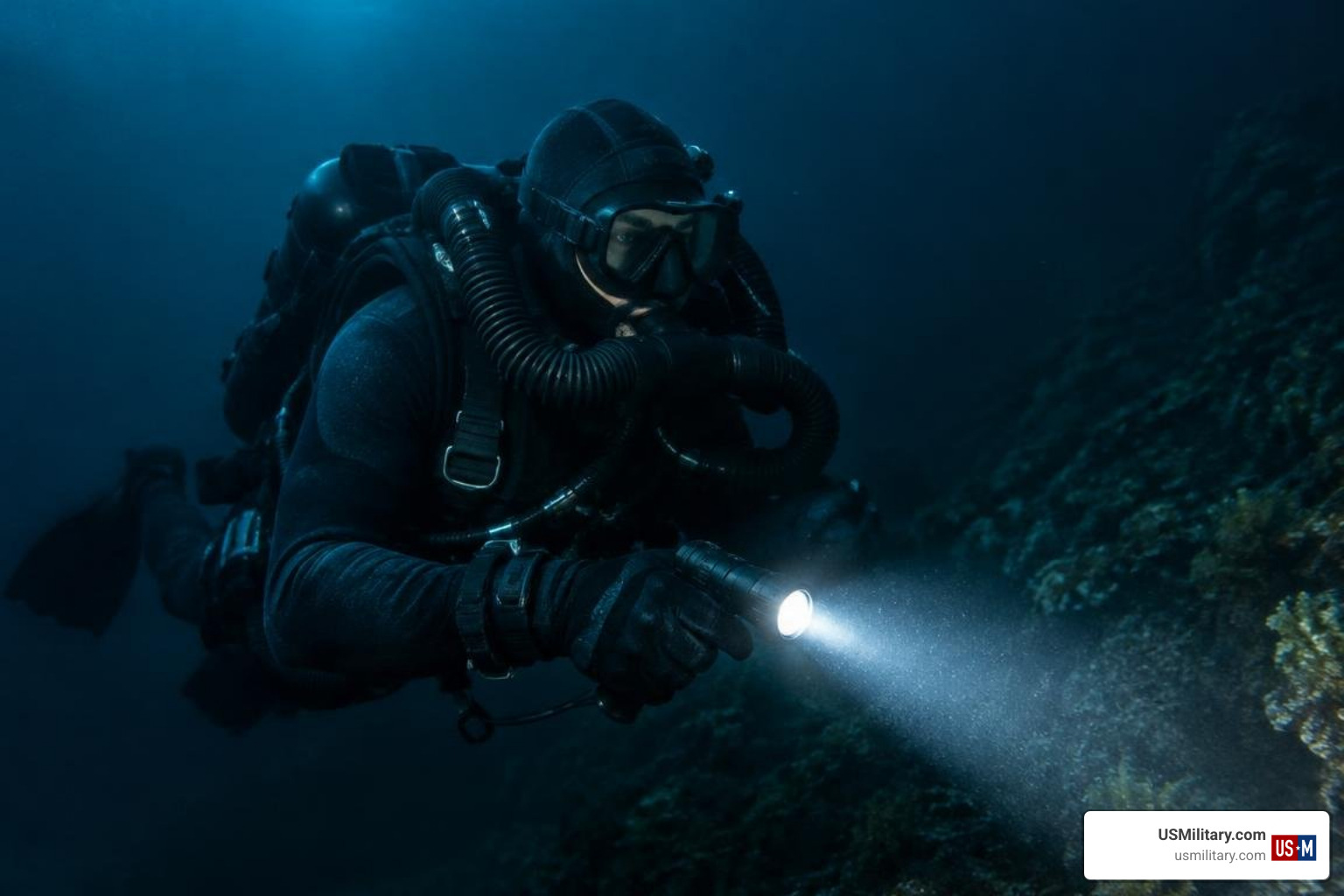
5. Cave Diving and Deep Scuba Exploration
Unlike open-water diving where an emergency ascent to the surface is always possible, technical cave diving traps the diver beneath hundreds of feet of solid rock. SEALs utilize closed-circuit rebreathers (which recycle exhaled gas and eliminate surface bubbles) to navigate pitch-black, submerged labyrinth passages. A single mistake with line management or buoyancy can prove lethal, making it an exercise in total panic suppression.
6. Cage-Free Shark Diving and Pelagic Exploration
Interacting with apex predators—such as tiger sharks, hammerheads, and great whites—without the safety of an iron cage sounds terrifying to most, but many operators find it deeply centering. The sport requires absolute mastery over personal physiological signs: keeping the heart rate low, suppressing abrupt splashing, maintaining steady breathing, and reading non-verbal animal behavior.
7. Open-Ocean Endurance Swimming and Cold Conditioning
During training, candidates must complete brutal multi-mile open-ocean swims in 65°F Pacific waters. In civilian life, many continue open-water distance swimming across challenging channels (such as the English Channel or Catalina Channel) without wetsuits, using cold exposure as a mental sharpening tool.
8. Offshore Powerboating and High-Speed Watercraft Racing
Handling high-powered maritime craft through heavy ocean swells taps into the combat craft traditions of Special Warfare Combatant-Craft Crewmen (SWCC) and SEAL delivery operations. Pounding through six-foot ocean waves at 60 knots requires immense core strength, vessel navigation skills, and split-second helm adjustments.
Combatives, Endurance, and Creative Inventions
Beyond heights and depths, SEAL recreation often centers on tactile problem-solving, physical preservation, and entrepreneurial innovation:
9. Brazilian Jiu-Jitsu (BJJ) and Tactical Combatives
Step inside nearly any SEAL team team-room or garage, and you will find grappling mats. Brazilian Jiu-Jitsu is widely practiced among operators because it serves as kinetic chess. It enables full-contact physical competition against teammates with a low risk of concussions compared to striking arts. Leaders like Jocko Willink have long advocated for daily grappling to instill humility, technical problem-solving, and continuous tactical refinement.
10. Multi-Day Adventure Racing and Ultra-Marathons
When a standard 26.2-mile marathon does not offer enough resistance, operators turn to multi-day adventure races spanning hundreds of miles across deserts, swamps, and mountain ranges. Legendary SEAL ultrarunners regularly compete in 100-mile footraces through Death Valley or ten-day self-supported navigation challenges, turning physical endurance into a game of logistics, caloric management, and unrelenting grit.
11. Tactical Precision Marksmanship Competitions
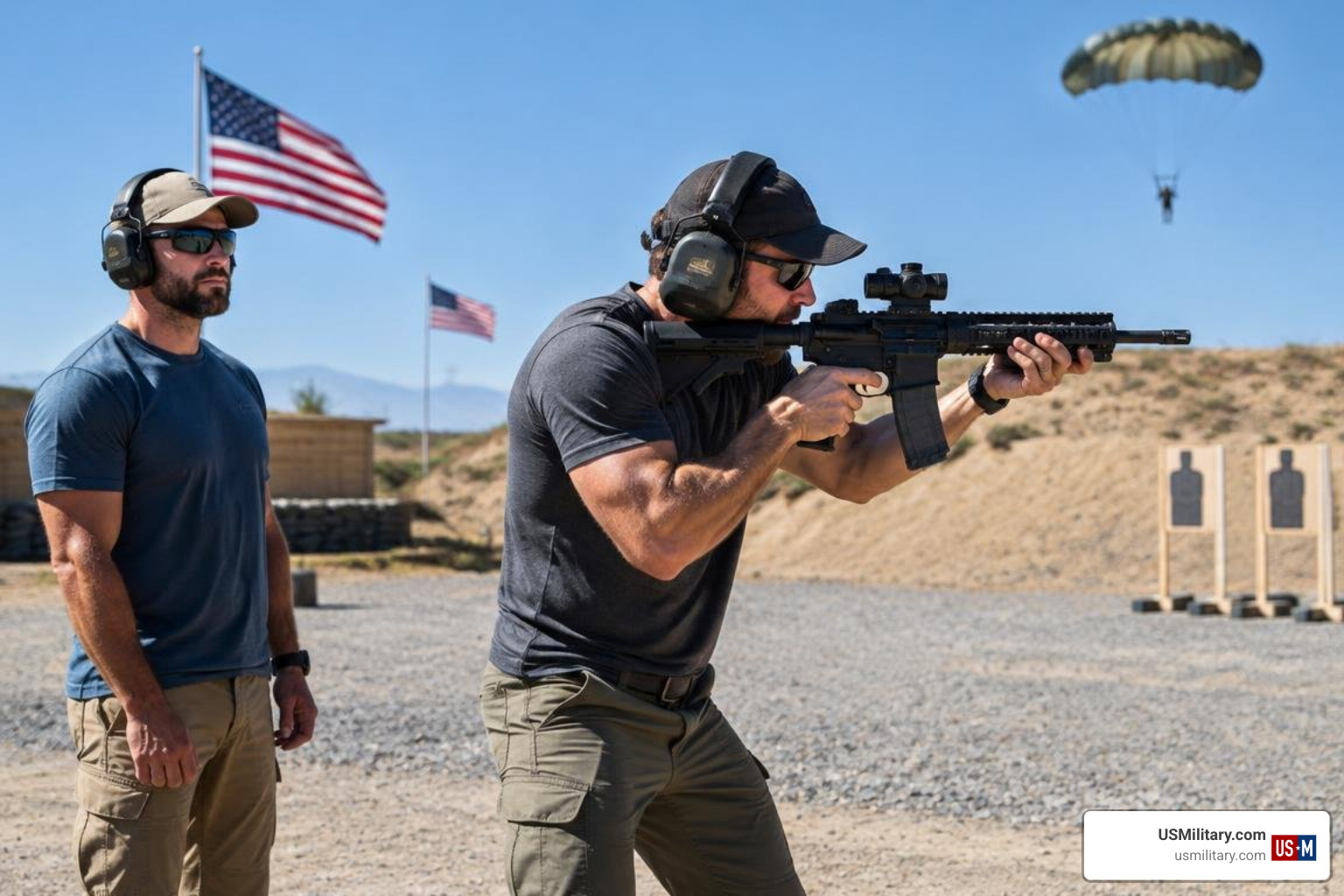
On the civilian circuit, Precision Rifle Series (PRS) matches and three-gun practical shooting events draw heavily from the special operations community. Operators refine ballistic calculations, wind reading, and dynamic transitions between rifles, shotguns, and sidearms under strict shot-timers.
12. Extreme Off-Road Rally and Enduro Motorcycling
Blasting through backcountry trails, boulder fields, and desert dunes on high-performance enduro bikes demands acute situational awareness. SEALs use off-road riding to practice split-second line selection, throttle control, and terrain anticipation at high speeds.
13. Fitness Equipment Engineering and Product Design
Many operators channel their practical fitness knowledge into inventing real-world workout gear. Former SEALs have designed world-famous training systems like the TRX Suspension Trainer (invented by Randy Hetrick using parachute webbing) and the Perfect Pushup (developed by Alden Mills). These innovators take the daily Navy SEAL workout and adapt it into functional gear that benefits civilians worldwide.
14. Dark Humor Sarcasm Competitions and Comic Banter
One of the most essential survival tools in special operations is dark humor. Whether freezing in the Pacific surf at 3:00 AM or surviving desert heat, the ability to laugh at misery is deeply ingrained. Off duty, SEALs maintain legendary circles of creative teasing, self-deprecating wit, and high-energy storytelling that builds unbreakable team cohesion.
15. Tactical Speed Chess and Strategic Tabletop Games
Physical brawn without strategic calculation is useless in modern special warfare. Many operators channel their tactical planning into speed chess, poker, and complex strategy games. Reading an opponent's subtle visual tells, managing risk profiles, and staying several moves ahead keeps their executive cognitive functioning razor-sharp.
From Combat Readiness to Everyday Hobbies: Tactical Roots and Legacy
The transition from official duty to off-duty hobby has deep roots throughout special warfare history. President John F. Kennedy established the Navy SEALs in 1962, drawing on the legacy of World War II Underwater Demolition Teams (UDTs), affectionately known as "Frogmen." Interestingly, early leadership tossed around names like the "Bugs" or "Crawdads" before settling on the acronym SEAL (Sea, Air, Land).
Throughout their operational history, the line between an operator's hobby and battlefield utility has often blurred. In the 1970s, retired SEAL officer John McQuay worked to refine combat optics, pioneering what evolved into modern red-dot sights that allow shooters to acquire targets rapidly with both eyes open.
Similarly, SEALs pioneered the integration of working dogs into tactical airborne and maritime assaults. Operators frequently spend their off-duty hours working with Belgian Malinois and Dutch Shepherds, training these athletic, highly intelligent canines in tracking and agility. Discovering these historical milestones reveals many surprising facts about our armed forces, demonstrating how elite unit discipline consistently drives real-world innovation.
As the famous warrior ethos states, "The only easy day was yesterday." That philosophy shines through the inspiring Navy SEAL quotes operators live by every day, showing that their hobbies are not an escape from their principles, but an extension of them.
Frequently Asked Questions About Navy SEAL Downtime and Hobbies
Why do Navy SEALs pursue high-risk hobbies during their off-duty time?
Operators operate under high physiological stress during deployments. In civilian downtime, ordinary activities can feel under-stimulating. High-risk hobbies provide a controlled environment to recalibrate adrenaline, tap into hyper-focused flow states, and bond with teammates who share the same operational mindset and risk tolerance.
Can civilians safely try extreme Navy SEAL hobbies?
Yes, provided they strictly follow structured safety protocols. Civilians should never attempt activities like cave diving, wingsuit flying, or technical mountaineering without certified professional instruction, checklist-based standard operating procedures (SOPs), redundant safety equipment, and steady, progressive skill development.
How do SEALs balance intense physical hobbies with mission recovery?
SEALs treat their bodies like high-performance machinery. They combine intense pursuits with structured recovery protocols:
- Strategic Fueling: Consuming nutrient-dense foods (often 3,500 to 4,000 calories daily during heavy training) to rebuild muscle tissue.
- Active Recovery: Using low-impact swimming, joint mobility routines, and deliberate breathwork to flush metabolic waste.
- Sleep Hygiene: Prioritizing restorative sleep cycles to manage systemic central nervous system fatigue.
Conclusion
Whether navigating a subterranean cave, soaring along a ridgeline in a wingsuit, or rolling on the mats in a Brazilian Jiu-Jitsu gym, the pastimes of Navy SEALs mirror the values that define their careers. Their downtime combines a deep drive for challenge with strong camaraderie, mental grit, and meticulous attention to detail.
At USMilitary.com, we are committed to providing service members, veterans, and military families with transparent guidance. From navigating VA home loan benefits and military disability ratings to mapping out elite career paths, we serve as your central resource for special operations insights and transition planning. If you are ready to explore elite military training requirements and career pathways, visit our comprehensive Navy SEALs complete guide to begin your journey.