
Where Former Navy SEALs Can Find High-Paying Civilian Roles

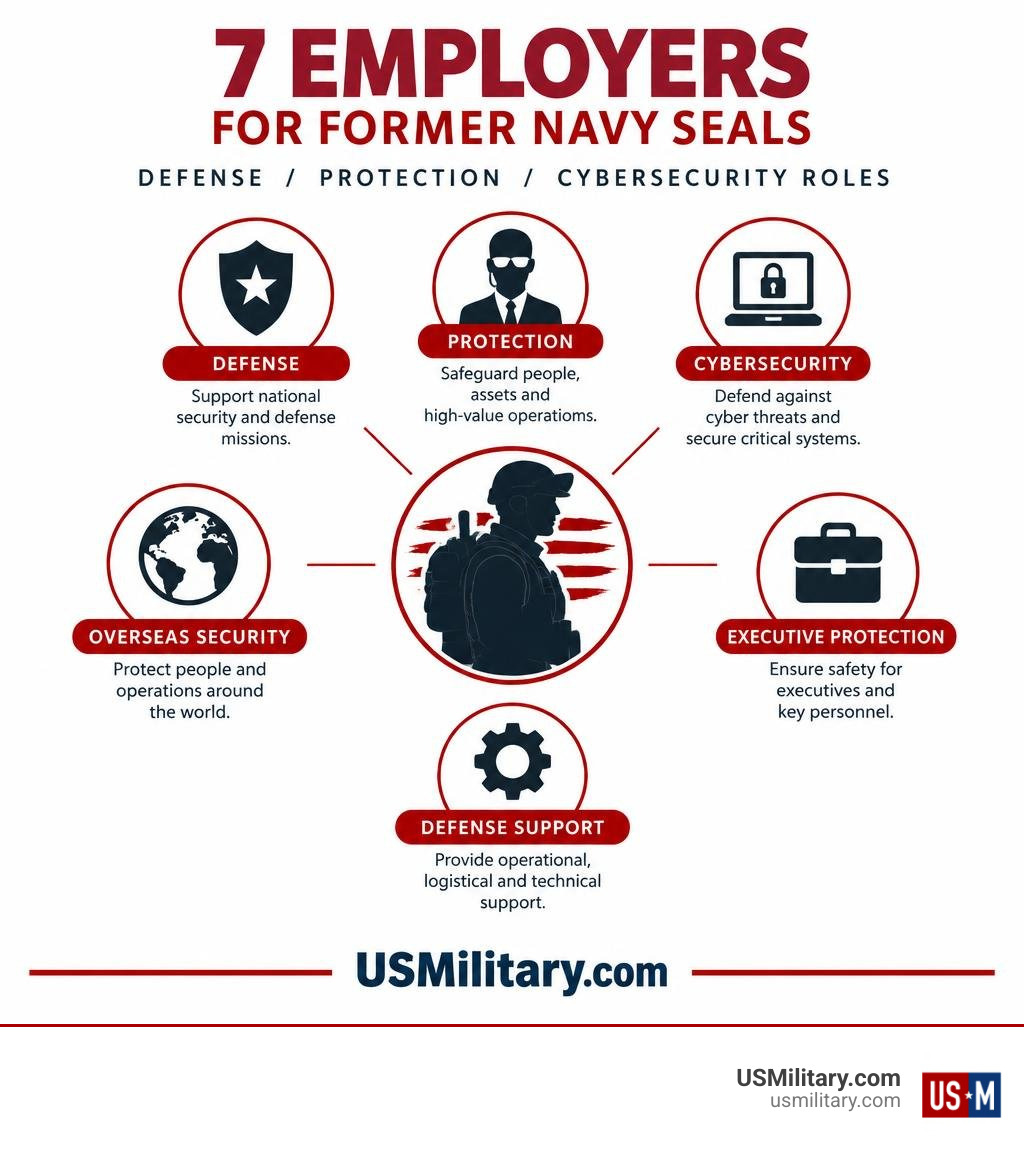
Seven employers worth researching are Constellis, Triple Canopy, CACI International, Gavin de Becker & Associates, Bayshore Global Management, Palo Alto Networks, and CrowdStrike. Triple Canopy is part of Constellis, but the two names can appear in separate job searches. Their roles span overseas security, executive protection, defense support, and cybersecurity. Senior or specialized jobs may pay above typical civilian wages, but SEAL experience alone does not guarantee a premium salary. The role, location, clearance, and technical skills all matter.
I'm Larry Fowler, a Navy veteran and BUD/S Class 89 graduate, and publisher of NavySEAL.com and the USMilitary.com Network, where I've covered military careers and veteran resources since 2007. In Top 7 Companies That Hire & Pay Former Navy SEALs Above Average Salaries, I'll look at where those skills fit, what pay claims deserve a closer look, and what each career path may cost in lifestyle or risk.
Simple guide to Top 7 Companies That Hire & Pay Former Navy SEALs Above Average Salaries terms:
- How Much Are Navy SEALs Paid
- How Much Do Navy SEALs Make Per Year
- Navy SEALs BUD/S Training Requirements
Top 7 Companies That Hire & Pay Former Navy SEALs Above Average Salaries

Transitioning out of Naval Special Warfare means stepping into a private job market where elite leadership, crisis resolution, and active clearances command real financial value. Finding the Top 7 companies that hire and pay former Navy SEALs above average salaries means looking across three primary sectors: defense contracting, high-net-worth executive protection, and enterprise technology.
| Company / Organization | Primary Industry | Typical Roles for Former SEALs | Clearance Factor | Estimated Civilian Compensation |
|---|---|---|---|---|
| Constellis | Defense & Security | Paramilitary Contractor, Site Lead | Secret to TS/SCI | $120,000 – $220,000+ (or daily rates) |
| Triple Canopy | Global Protection | Protective Security Detail, Country Lead | Secret to TS/SCI | $100,000 – $180,000+ |
| CACI International | Defense Tech & Intel | Operations Analyst, Project Director | Top Secret / SCI | $110,000 – $165,000+ |
| Gavin de Becker & Associates | Executive Protection | Protective Security Agent, Operations Lead | Secret / Background | $120,000 – $200,000+ |
| Bayshore Global Management | Family Office / Wealth | Estate Security Director, Protection Lead | Discretion / Cleared | $150,000 – $250,000+ |
| Palo Alto Networks | Enterprise Cyber | Threat Intel Specialist, Security Director | Clearance Preferred | $140,000 – $280,000+ (Base + Equity) |
| CrowdStrike | Cloud Cyber Defense | Incident Responder, Strategic Consultant | Clearance Preferred | $135,000 – $260,000+ (Base + Equity) |
Elite Defense Contractors in the Top 7 Companies That Hire & Pay Former Navy SEALs Above Average Salaries
Paramilitary contracting and operational defense services remain the most direct transition for operators seeking immediate high cash flow. Private military and security organizations regularly contract special operations veterans to execute hostile-environment details and defense support missions.
Private security daily rates and government contracts have historically let top-tier contractors earn $1,500 to $2,000 per day in volatile combat zones, netting up to $15,000 per month. Firms like Constellis and its operating subsidiary, Triple Canopy, hold master contracts with the Department of State and the Department of Defense to manage high-threat protection overseas.
These roles let operators who completed active service as an enlisted SEAL immediately leverage their tactical instincts. Meanwhile, technology-focused defense leaders like CACI International recruit cleared veterans for operational logistics, training simulations, and intelligence support. These corporate positions trade frontline physical hazard for steady six-figure base salaries, full medical benefits, and 401(k) retirement contributions without requiring foreign rotational deployments.
Corporate Tech and Family Offices Among the Top 7 Companies That Hire & Pay Former Navy SEALs Above Average Salaries
Beyond traditional defense contractors, elite private security and enterprise technology organizations aggressively recruit from special operations. High-net-worth individuals and corporate executives require physical and operational protection that goes well beyond standard guard work.
Firms like Gavin de Becker & Associates design bespoke security details protecting public figures and Fortune 500 executives. Similarly, billionaire family offices like Sergey Brin's Bayshore Global Management hire former SEALs as personal security directors and operational managers. These roles combine executive travel, risk mitigation, and lifestyle management, and specialists are often compensated well over $150,000 annually.
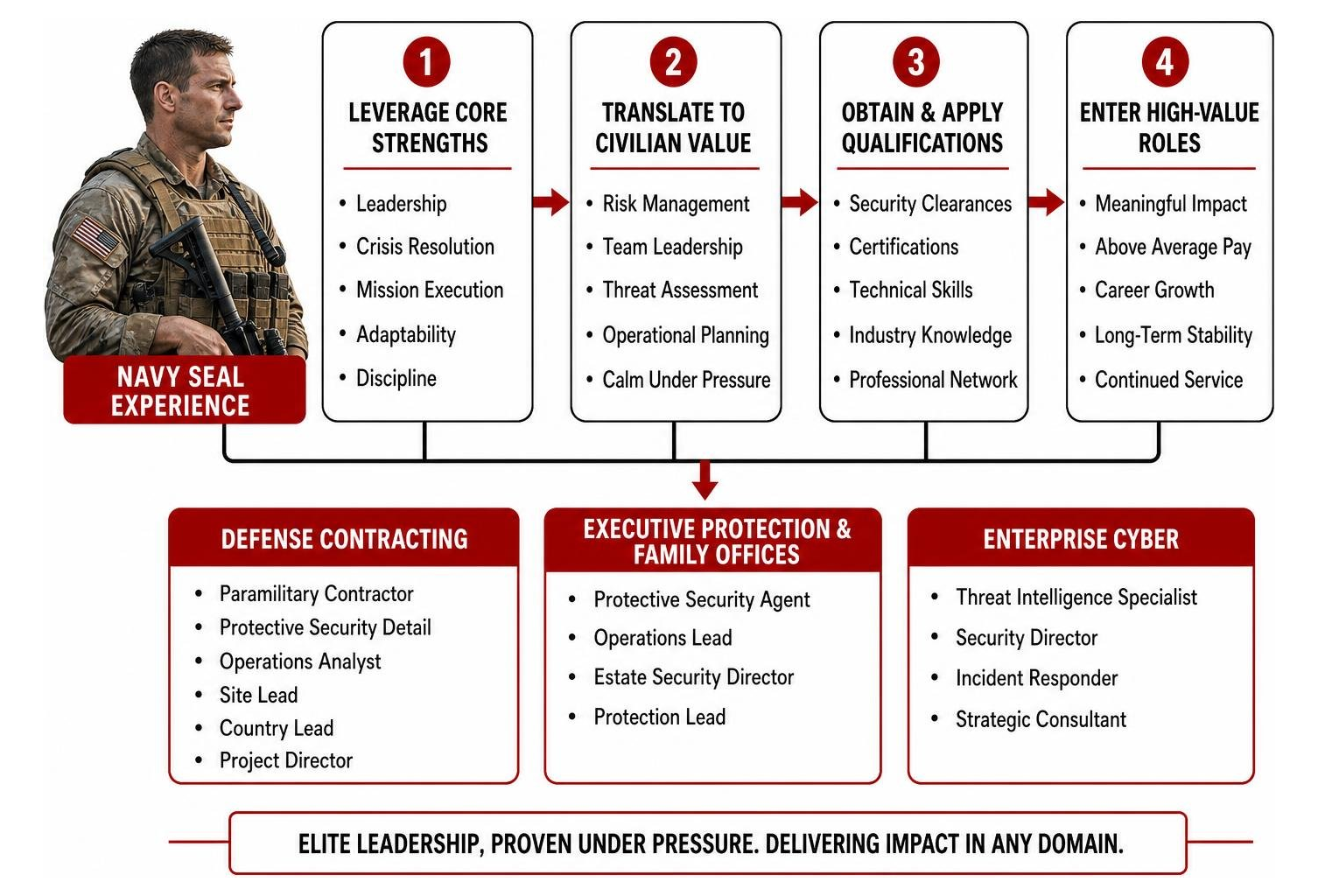
In the cybersecurity and software sector, companies like Palo Alto Networks and CrowdStrike actively seek operators for incident response, threat hunting, and physical-to-digital infrastructure security. Cybersecurity specialist compensation often exceeds $200,000 when accounting for stock units and bonuses. These roles are among the most dependable military jobs to reach six figures in corporate America.
Executive Leadership and High-Impact Enterprise Roles
Navy SEALs do not have to limit themselves to security guardrails. Many operators transition into enterprise operations management, where median civilian salaries sit at $129,330, or take on profit-and-loss (P&L) leadership at small to mid-sized businesses.
Private equity firms frequently back special operations veterans to run portfolio companies (PortCos). As hiring military veterans to lead commercial enterprises shows, former operators have been placed directly as presidents and chief executives of commercial firms—such as scaling a solar installation business past $20 million in revenue—without formal business degrees.
These executive assignments value rapid decision-making, team accountability, and decentralized leadership, making them prime examples of high-paying civilian careers that require military training.
Navigating the High-Earning Transition from Special Warfare to the Civilian Market
Moving from a tightly knit operational team to the private corporate sector requires major adjustments in lifestyle, communication, and compensation.

Translating Tactical Warfare to High-Paying Corporate Strategy
The biggest hurdle most departing operators face is translating their operational accomplishments into business language corporate hiring managers recognize. An employer outside the defense sector will not know what leading a task unit troop entails unless you frame it in terms of personnel management, budget allocations, risk mitigation, and cross-functional execution.
When translating military achievements for civilian resumes, highlight these core business parallels:
- Decentralized Execution: Explain how you empowered small squads to solve complex, ambiguous problems independently to achieve strategic goals.
- Resource Management: Quantify the budgets, maintenance schedules, and material assets you managed.
- Risk Assessment & Mitigation: Frame tactical pre-mission planning as corporate crisis management, business continuity planning, and vulnerability reduction.
- SkillBridge Programs: Use Department of Defense SkillBridge corporate fellowships during your final 180 days of active service to gain real-world corporate experience before your official discharge date.
Maximizing Compensation and Long-Term Career Stability
Civilian compensation involves balancing several components: base salary, performance bonuses, equity incentives, health insurance, and retirement plans. While overseas paramilitary contracts offer rapid cash, they lack the long-term equity growth, health stability, and family predictability of enterprise employment.
When comparing special operations pay benchmarks, consider the entire financial horizon. A 20-year military retiree entering the private sector at age 43 can generate significant lifetime wealth by combining military pension benefits, VA disability compensation, civilian salary, and 401(k) compounding.
To map your transition strategy from active service to executive employment, explore our complete Navy SEAL career and transition guide on USMilitary.com. We provide veteran tools, career transition breakdowns, and benefits calculators to ensure your transition into the civilian market is mission-successful.