
Why Special Forces Kids May Face Added Pressure...

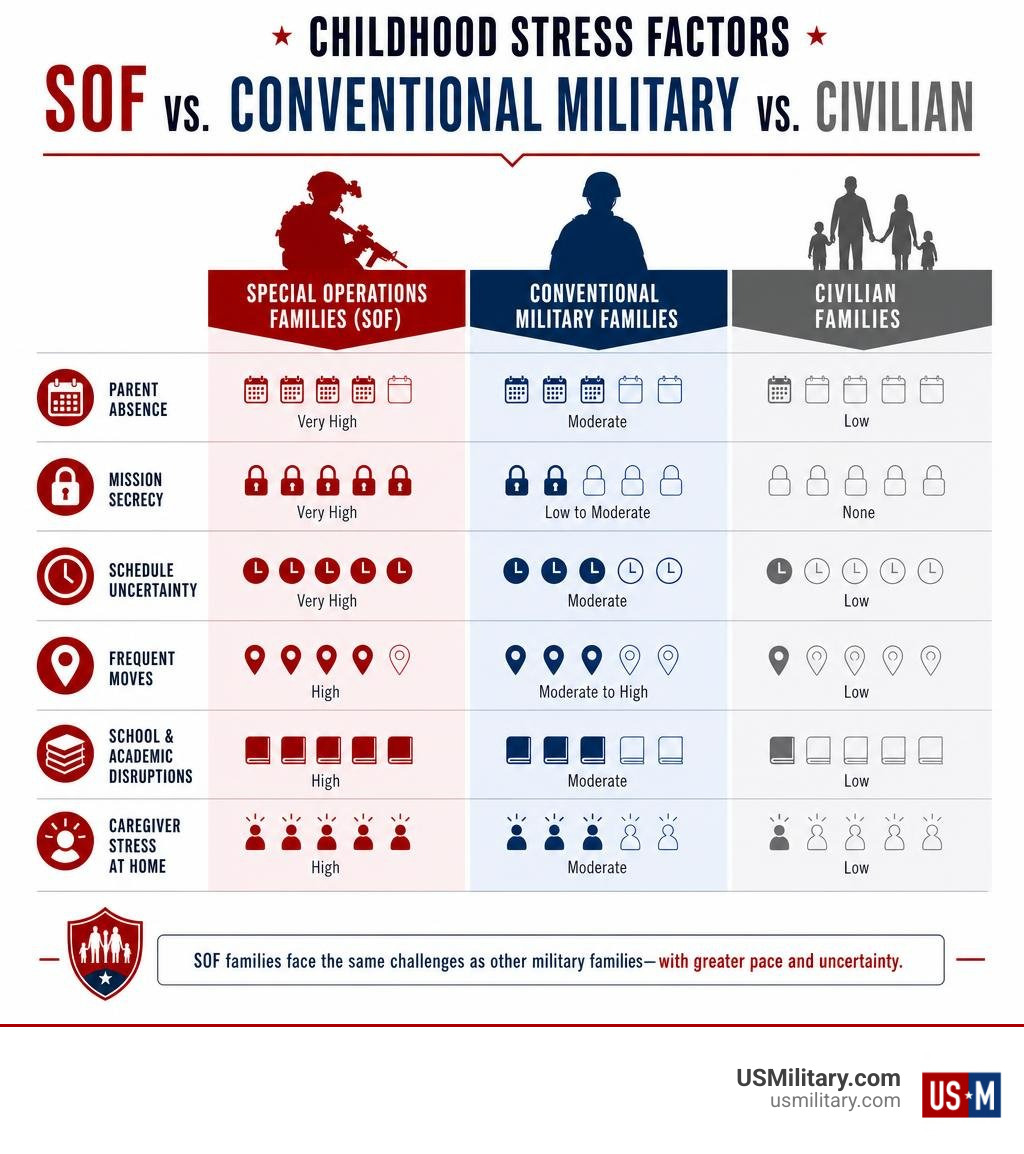
Often, yes - but not in every case. Children in Special Operations Forces (SOF) families can face the same deployment, moving, and school challenges as other military children, plus a tougher mix of short-notice absences, mission secrecy, and a higher day-to-day load on the parent at home. Compared with civilian children, these disruptions are far more common. Compared with conventional military families, the difference is usually the pace and uncertainty rather than a single deployment.
More Than 90% Of Clients Have Increased VA Disability Ratings! Why Settle For Less Than You Deserve? Expert Priority Help With Your VA Claim Today! Free Evaluation Call!
Research does not provide a complete nationwide scorecard comparing SOF children directly with every other group. Still, the evidence points to meaningful added risk: SOF spouses report poorer mental health than conventional-force spouses, and caregiver stress can strongly shape a child's well-being. Repeated moves, delayed school evaluations, interrupted therapy, and scarce local providers can add academic pressure, especially for children with learning or developmental needs.
That does not mean SOF children are destined to struggle. Strong support from the at-home parent, extended family, schools, peers, and military-aware counselors can protect children from many of these effects. Early academic records, consistent tutoring, and prompt mental-health support can make transitions less disruptive.
I am Larry Fowler, BUD/S Class 89, publisher of the NavySea.com and the USMilitary.com Network, where I have served military members, veterans, and families with practical service-related information since 2007. In examining Do Children of Special Forces Families Have It Tougher Than Other Military & Civilian Families, my goal is to help prospective service members and military families understand both the real risks and the support that can help children thrive.
For more perspective on elite military households, explore how Navy SEALs navigate marriage and parenting as well as the operational tempo detailed in a day in the life of a Navy SEAL operator.
Do Children Of Special Forces Families Have It Tougher Than Other Military & Civilian Families?
Growing up in the military always demands a healthy dose of flexibility. Yet when evaluating whether children of Special Operations Forces (SOF) households face greater obstacles, the key differences emerge in operational tempo, security protocols, and prolonged household unpredictability. While conventional military families often follow predictable deployment schedules with clear departure windows, SOF operators maintain a state of perpetual readiness. Operators can spend 7 to 10 months a year away from home between combat deployments, temporary duty assignments, and specialized training.
For families navigating military life, these chronic absences create distinct household pressures. A quantitative Study on SOF Spousal Mental Health and Stress reveals that between 47.7% and 84.3% of SOF spouses report severe work-family conflict due to their partner's operational demands. Furthermore, only 75.7% of SOF spouses report good mental health, compared to roughly 84% or higher among spouses in conventional military units.
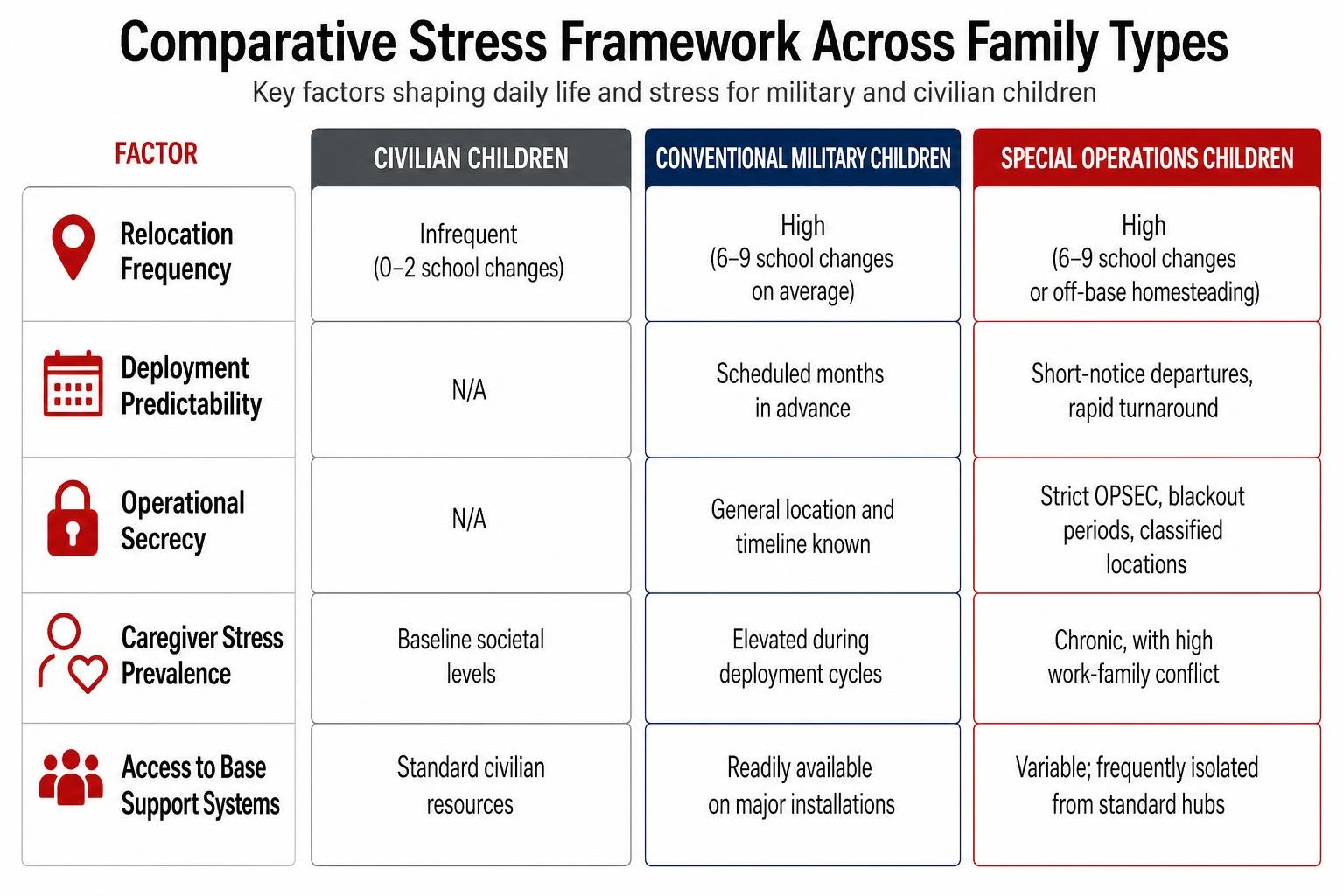
| Lifestyle Factor | Civilian Children | Conventional Military Children | Special Operations Forces (SOF) Children |
|---|---|---|---|
| Relocation Frequency | Infrequent (0–2 school changes) | High (6–9 school changes on average) | High (6–9 school changes or off-base homesteading) |
| Deployment Predictability | N/A | Scheduled months in advance | Short-notice departures, rapid turnaround |
| Operational Secrecy | N/A | General location and timeline known | Strict OPSEC, blackout periods, classified locations |
| Caregiver Stress Prevalence | Baseline societal levels | Elevated during deployment cycles | Chronic, with high work-family conflict |
| Access to Base Support Systems | Standard civilian resources | Readily available on major installations | Variable; frequently isolated from standard hubs |
Operational Secrecy and Unpredictable Deployments
In conventional military households, children usually know where their parent is deployed, what mission they are performing, and when they are scheduled to return. Special Operations families live under rigorous operational security (OPSEC) restrictions. Operators frequently deploy on classified missions with less than 24 hours of notice, leaving at-home parents and children with little information regarding their location, assignment, or return date.
This persistent information void leads to acute psychological strain. When communication blackouts occur, children cannot rely on regular video calls or phone check-ins. Over time, the repeated cycle of sudden departures and emotional detachment can lead to crossover stress, where an operator’s combat exhaustion and the at-home caregiver’s worry converge, inadvertently elevating anxiety throughout the home.
Caregiver Mental Load and Rural Isolation
The emotional health of children is deeply tied to the well-being of the primary caregiver at home. In SOF units, spouses frequently shoulder total parental responsibility, managing finances, home repairs, medical decisions, and education alone. This chronic caregiver mental load becomes especially acute when families choose to live in rural or remote areas away from major military installations.
Research indicates that SOF spouses residing in rural areas are substantially less likely to report good mental health (adjusted odds ratio = 0.29) compared to those in suburban or base-adjacent communities. Living far from specialized military clinics and established base support networks compounds feelings of loneliness and reduces access to practical childcare relief. According to an evaluation (Crouch et al., 2024) of the National Survey of Children's Health, children with military caregivers experience higher overall rates of mental health needs (12.4% vs. 9.8% in civilian households), demonstrating how systemic family stress directly touches dependent youth.
Mental Health and Developmental Pressures Across Military and Civilian Youth

Military-connected youth demonstrate remarkable adaptability, but repeated separations inevitably introduce psychological hurdles. Long-term studies indicate that approximately 30% of military children begin showing signs of anxiety, depression, or academic decline after repeated parental deployments. Furthermore, among military youth with an actively deployed parent, roughly 37% worry persistently about their loved one's physical safety, and depression is identified in nearly 1 in 4 children.
Addressing these issues requires understanding the pressures at play, as we explore when examining mental health challenges in modern military life. Data shows that outpatient mental health visits for children of active-duty service members doubled over an intensive five-year combat operations span, surging from 1 million to 2 million visits. When a parent returns with a severe physical injury or post-traumatic stress disorder (PTSD)—a reality reported by 30.4% of surveyed SOF spouses—children often experience an entirely new set of behavioral shifts.
Studies evaluating Adverse Childhood Experiences in Military and Civilian Families show that while civilian and military children share comparable exposure rates for issues like household poverty, children in veteran and combat-exposed homes face higher statistical odds of witnessing parental violence, substance misuse, or marital separation.
ACEs, Anxiety, and Behavioral Risks in High-Stress Environments
The physical toll of chronic separation extends beyond emotional worry. Research indicates that children undergoing parental deployments often show altered stress physiology, including elevated resting heart rates and heightened vulnerability to stress-related disorders. Behavioral regression—such as bedwetting in younger children or disciplinary struggles in adolescents—frequently surfaces during active deployment cycles.
A comprehensive policy analysis on the Trauma Faced by Children of Military Families documented that child maltreatment rates within active-duty military homes are 42% higher during combat deployments than during non-deployment periods. The strain of single parenting under extreme uncertainty can overwhelm even resilient caregivers, reshaping the evolving military brat experience into one that demands targeted psychological safeguards and community intervention.
Do Children Of Special Forces Families Have It Tougher Than Other Military & Civilian Families in Healthcare Continuity?
When military children require clinical psychological counseling, occupational therapy, or behavioral intervention, navigating TRICARE coverage and finding qualified local providers presents a substantial hurdle. A comprehensive Review of Military Children With Special Health Care Needs highlights that roughly 22% to 23% of military-connected children have diagnosed or suspected special health care needs.
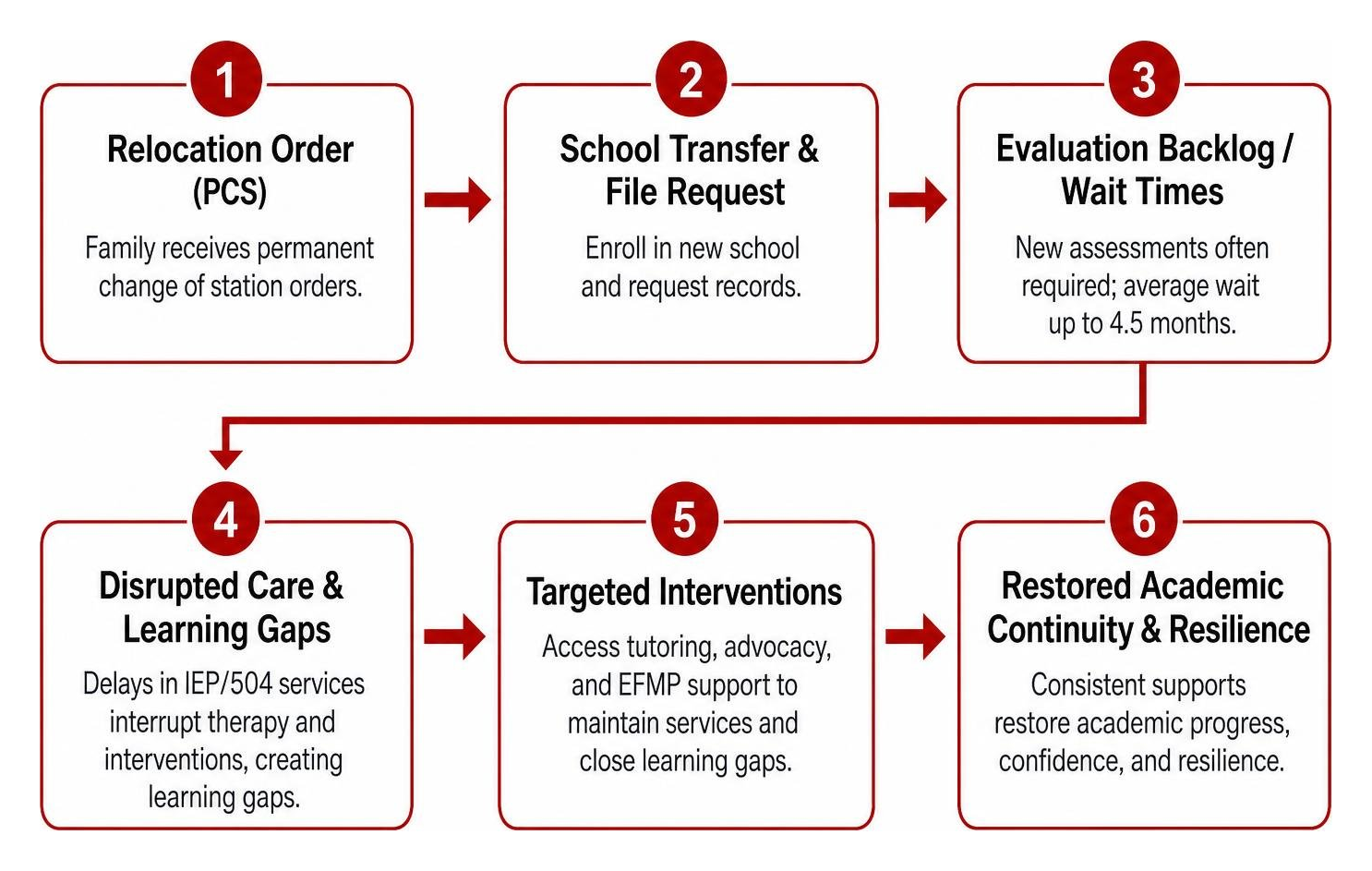
Despite having broad health insurance coverage, families frequently confront regional provider shortages and TRICARE panel limits. Four out of ten children enrolled in military special-needs programs face extended care interruptions following a permanent change of station (PCS), enduring an average wait time of 4.5 months to re-establish specialized services. For SOF families living far from military medical facilities, finding civilian providers trained in military family dynamics often lengthens these delays even further.
Academic Disruption, Special Needs, and Targeted Support Systems
Frequent relocations represent one of the most visible friction points for military children. Over the course of a K–12 education, the average military child changes schools between 6 and 9 times—more than triple the rate of their civilian peers. Each transition introduces structural discrepancies between state educational standards, graduation credit systems, and special education frameworks.
Academic difficulties emerge in roughly 1 in 5 military children during active deployment cycles. When a student requires an Individualized Education Program (IEP) or a 504 Plan, moving across state lines often resets administrative evaluation timelines. School districts frequently require completely new assessments before implementing specialized accommodations, causing students to lose months of speech therapy, behavioral coaching, or reading interventions. Data published in Impact Data from Children of Valor shows that targeted community funding for diagnostic testing, professional advocacy, and continuous tutoring directly mitigates these systemic roadblocks, helping over 1,400 special operations children achieve their educational goals since 2011.
Do Children Of Special Forces Families Have It Tougher Than Other Military & Civilian Families During School Relocations?
While the Interstate Compact on Educational Opportunity for Military Children was designed to ease school credit transfers and placement disputes, systemic friction persists. National surveys reveal that nearly 74% of military parents are unaware of the Compact's specific protections, leaving them to navigate bureaucratic resistance alone.
For SOF families, school transitions are often complicated by unpredictable deployment orders. When an operator departs mid-semester, the at-home parent must manage the administrative burden of school re-enrollment, diagnostic evaluations, and parent-teacher meetings solo. Specialized nonprofit programs provide critical educational continuity; reports on support programs for special operations youth highlight how paired tutoring and diagnostic testing grants close critical learning gaps, with participating students demonstrating measurable gains in overall academic proficiency.
Building Resilience Through Community and Specialized Tutoring
Protective factors play a decisive role in shielding SOF children from chronic stress. Strong social support within the Special Operations community acts as a primary buffer; spouses who maintain close connections with peer networks show significantly better mental health outcomes (adjusted odds ratio = 4.22) than isolated peers.
Initiatives run through USSOCOM’s Preservation of the Force and Family (POTFF) program, paired with independent educational organizations, provide specialized resources tailored to the operational community. By combining personalized academic tutoring with life-skills mentoring, families can neutralize educational disruptions. These interventions provide children with consistent mentors outside the immediate household, restoring academic confidence and emotional stability during parental absences.
Frequently Asked Questions About SOF Family Dynamics
What makes the operational tempo of Special Forces uniquely challenging for children?
Special Operations Forces operate under a continuous training and deployment tempo that leaves operators away from home for 7 to 10 months annually. Unlike conventional deployments that feature defined start and end dates, SOF missions frequently involve short-notice departures, classified durations, and communication blackouts under strict operational security (OPSEC). This persistent unpredictability prevents families from establishing reliable routines and requires children to manage chronic uncertainty regarding their parent's safety.
How does frequent relocation impact military children with special educational needs?
Moving an average of 6 to 9 times during primary and secondary school disrupts therapeutic care and special education services. When families move across state lines, receiving school districts often require comprehensive re-evaluations before honoring an Individualized Education Program (IEP) or 504 Plan. Because military families face average wait times of 4.5 months to connect with behavioral and developmental specialists after a move, children with autism, ADHD, or learning differences often experience substantial setbacks in their development.
What resources exist to help SOF kids succeed academically and emotionally?
SOF families can access several layers of tailored assistance:
- USSOCOM POTFF Programs: Base-level initiatives offering embedded family psychological counselors, cognitive performance coaches, and family resilience workshops.
- Dedicated Nonprofits: Organizations providing grants for private neuropsychological testing, specialized therapies, and long-term one-on-one tutoring.
- Military and Family Life Counseling (MFLC): Confidential, free short-term counseling services offered in schools and installations to help youth manage deployment anxiety.
- Interstate Compact Protections: State-level agreements ensuring smooth credit transfers, course placement, and extracurricular eligibility across school districts.
Conclusion
Children in Special Operations families navigate a childhood shaped by exceptional demands—from classified deployments and frequent moves to heightened caregiver stress and systemic healthcare delays. Yet with targeted educational advocacy, robust community peer networks, and military-aware mental health care, these young people build extraordinary adaptability, empathy, and maturity.
At USMilitary.com, we provide active-duty personnel, veterans, and military families with clear, actionable resources on military benefits, healthcare systems, and family programs. For a deeper look into the career paths, elite selection pipelines, and operational realities that shape the Special Operations community, explore our complete guide to Navy SEALs and Special Operations career paths.
References
Elizabeth Crouch, Kevin Bennett, Emma Boswell, Cassie Odahowski. "The Health of Children in U.S. Military Families: Evaluation of the 2020-21 National Survey of Children’s Health." Military Medicine, 2024. DOI 10.1093/milmed/usae424.