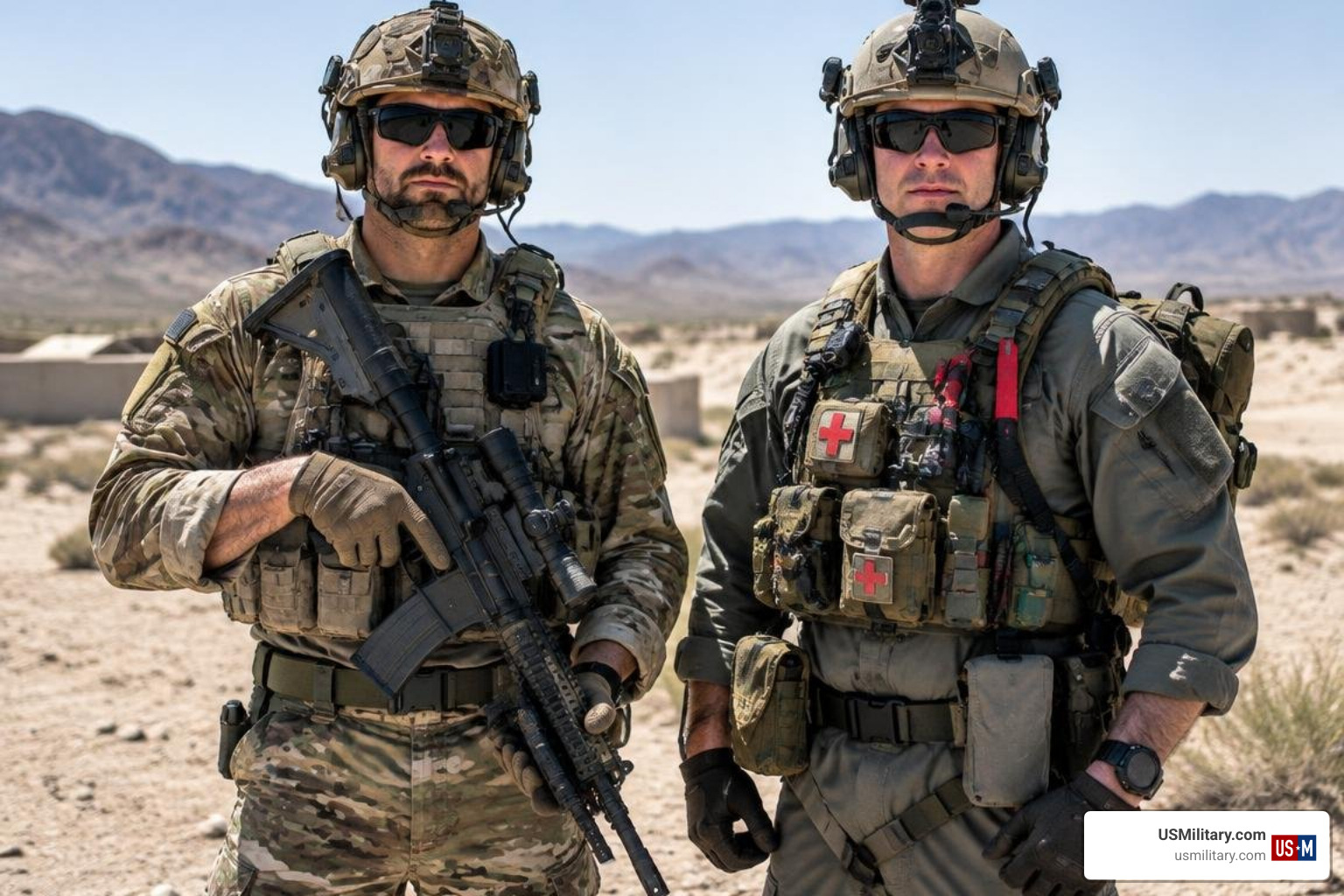
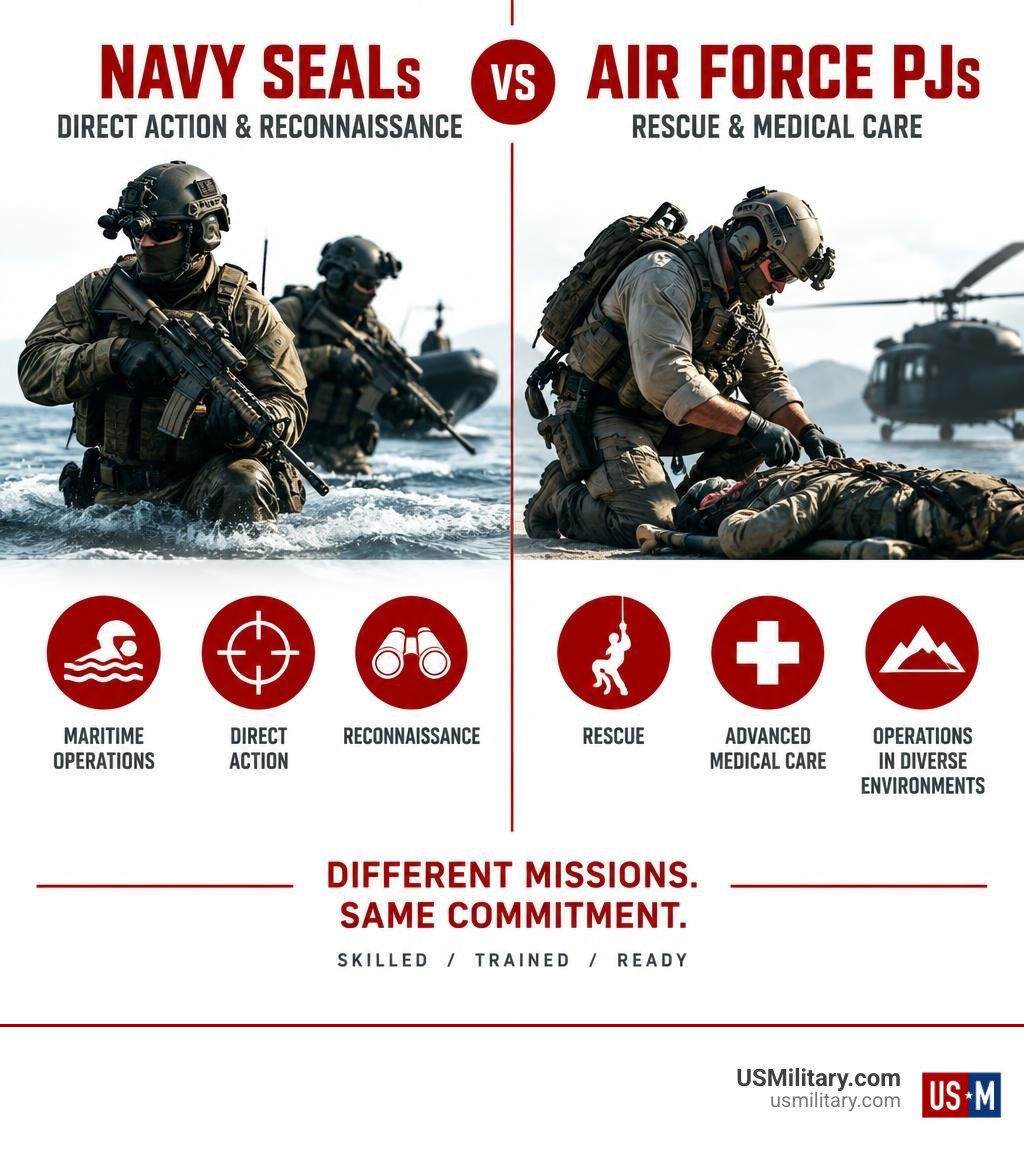
Navy SEALs carry out raids and reconnaissance, with a strong focus on maritime operations. Air Force pararescuemen, or PJs, recover people in danger and provide advanced medical care. Both face demanding training and may work in combat, but neither is “better” at the other’s main job. If you are choosing a path, start with the mission you want: direct action or rescue and medicine.
I’m Larry Fowler, BUD/S class 89, publisher of NavySeal.com and the privately owned USMilitary.com network, which has covered military career decisions since 2007. That experience guides this Navy SEALs vs Air Force Pararescue comparison, starting with what each role is built to do.
Handy Navy SEALs vs Air Force Pararescue terms:
- Air Force Pararescuemen (PJs) vs Navy SEALs
- Navy SEALs BUD/S Training Requirements
- What are the 3 phases of Navy SEAL training, and why is it so tough
For broader context on how these roles fit into the wider special operations community, see the United States special operations forces overview.
Navy SEALs vs Air Force Pararescue: Core Missions and Operational Roles
When we examine the broader landscape of American special operations, Navy SEALs and Air Force Pararescue stand out as two of the world's most capable forces. However, they were engineered for entirely different battlefield objectives.
Navy SEALs serve primarily as an offensive weapon—the "tip of the spear." They conduct direct action raids, capture or neutralize enemy targets, conduct covert reconnaissance, and secure maritime operational environments. In contrast, Air Force Pararescuemen (PJs) are dedicated personnel recovery and combat search and rescue (CSAR) specialists. Known as "Guardian Angels," their primary mandate is embodied in their motto: "That Others May Live."
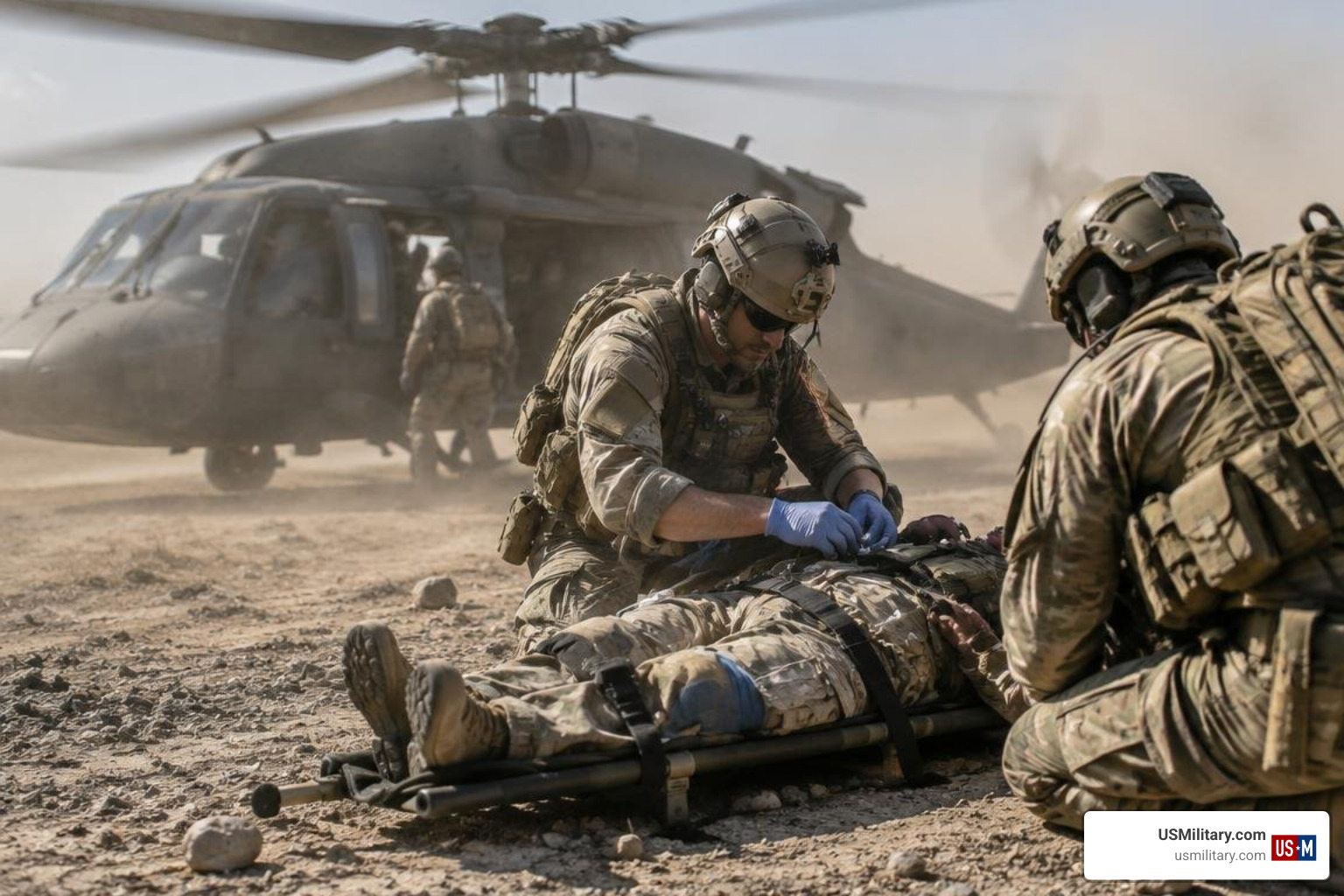
While SEALs infiltrate denied territory to strike targets or extract high-value assets, PJs deploy into those same high-threat environments to rescue downed pilots, isolated combat units, or critically wounded operators under intense fire.
| Feature / Metric | Navy SEALs (Sea, Air, Land) | Air Force Pararescue (PJs) |
|---|---|---|
| Primary Mission | Direct Action (DA), Counterterrorism, Special Reconnaissance | Combat Search and Rescue (CSAR), Advanced Trauma Care |
| Branch & Command | U.S. Navy / Naval Special Warfare Command (NSWC) | U.S. Air Force / Air Force Special Operations Command (AFSOC) |
| Active Force Size | Approximately 2,500 – 3,000 operators | Approximately 300 active-duty operators |
| Core Operational Focus | Offensive raids, maritime interdiction, target destruction | Personnel extraction, emergency field surgery, triage |
| Pipeline Length | 18 to 24 months (BUD/S + SQT) | 24+ months (A&S + Paramedic + Technical Rescue) |
| Historical Selection Attrition | ~70% – 80% | ~90%+ |
| Medical Qualification | Tactical Combat Casualty Care (TCCC) / SOCOM Medic (some) | Nationally Registered EMT-Paramedic (All operators) |
Direct Action and Maritime Warfare: The SEAL Mission
To understand what does a Navy SEAL do, one must look at offensive warfare across land and sea. SEALs specialize in maritime interdiction, underwater demolition, amphibious raids, and small-unit tactics designed to eliminate hostile threats.
Whether executing a nighttime visit, board, search, and seizure (VBSS) operation on an enemy vessel or conducting long-range reconnaissance behind enemy lines, SEALs are trained to apply overwhelming, targeted violence of action. Their squads operate as tightly knit offensive units built to breach compounds, eliminate threats, and disappear into the darkness before the enemy can coordinate a response.
Combat Search and Rescue: The PJ Mission
Air Force Pararescue operators represent the only Department of Defense specialty specifically trained and equipped to conduct both conventional and unconventional personnel recovery. As outlined in the complete guide to Air Force Pararescuemen PJs, these operators are elite trauma practitioners who double as tactical rescue specialists.
PJs can fast-rope from an HH-60W Jolly Green II helicopter, parachute into open ocean swells, or scale a sheer cliff in Arctic conditions to reach stranded personnel. Once on scene, they manage catastrophic polytrauma—performing surgical procedures under direct enemy fire—and maintain patient stability until emergency extraction is completed.
Training Pipelines, Attrition Rates, and Physical Demands
Both pipelines are designed to push candidates past their absolute physical and psychological limits. However, the structure and reasons for attrition vary significantly between the Navy and Air Force selections.
Navy SEALs vs Air Force Pararescue Training Pipeline Breakdown
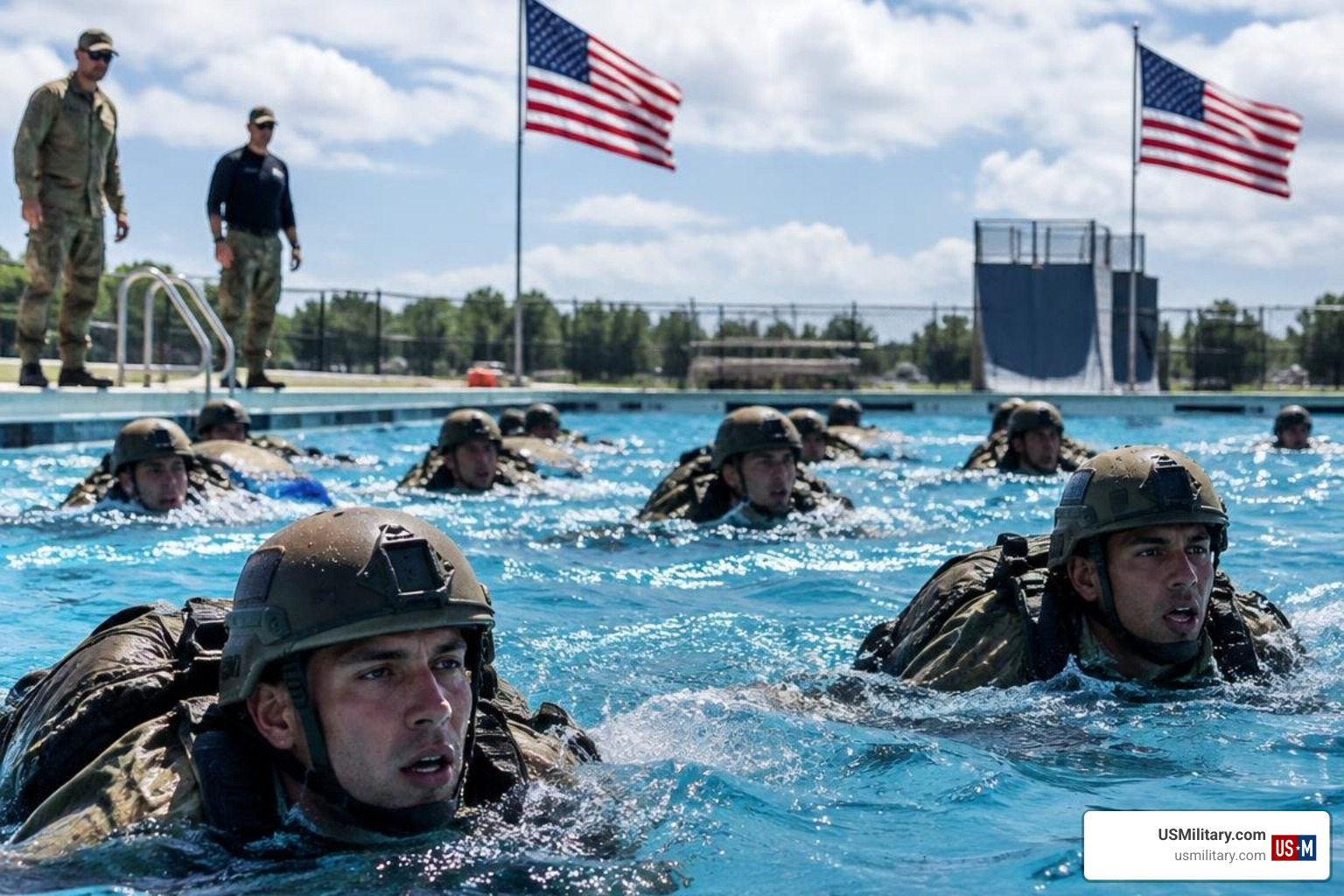
The path to earning the Navy SEAL Trident centers around Basic Underwater Demolition/SEAL training, universally known as BUDs training. This 24-week course in Coronado, California, tests grit through three distinct phases: First Phase (Physical Conditioning), Second Phase (Combat Diving), and Third Phase (Land Warfare).
The psychological crucible of BUD/S occurs during the First Phase: Navy SEAL Hell Week. Candidates endure five and a half continuous days of physical labor, cold ocean exposure, and boat carrying with fewer than four hours of total sleep. BUD/S historically produces an attrition rate of approximately 70%, with most drops occurring voluntarily through "ringing the bell" during Hell Week. Those who finish BUD/S advance to SEAL Qualification Training (SQT) for tactical marksmanship, airborne training, and cold-weather survival before reporting to an operational SEAL Team.
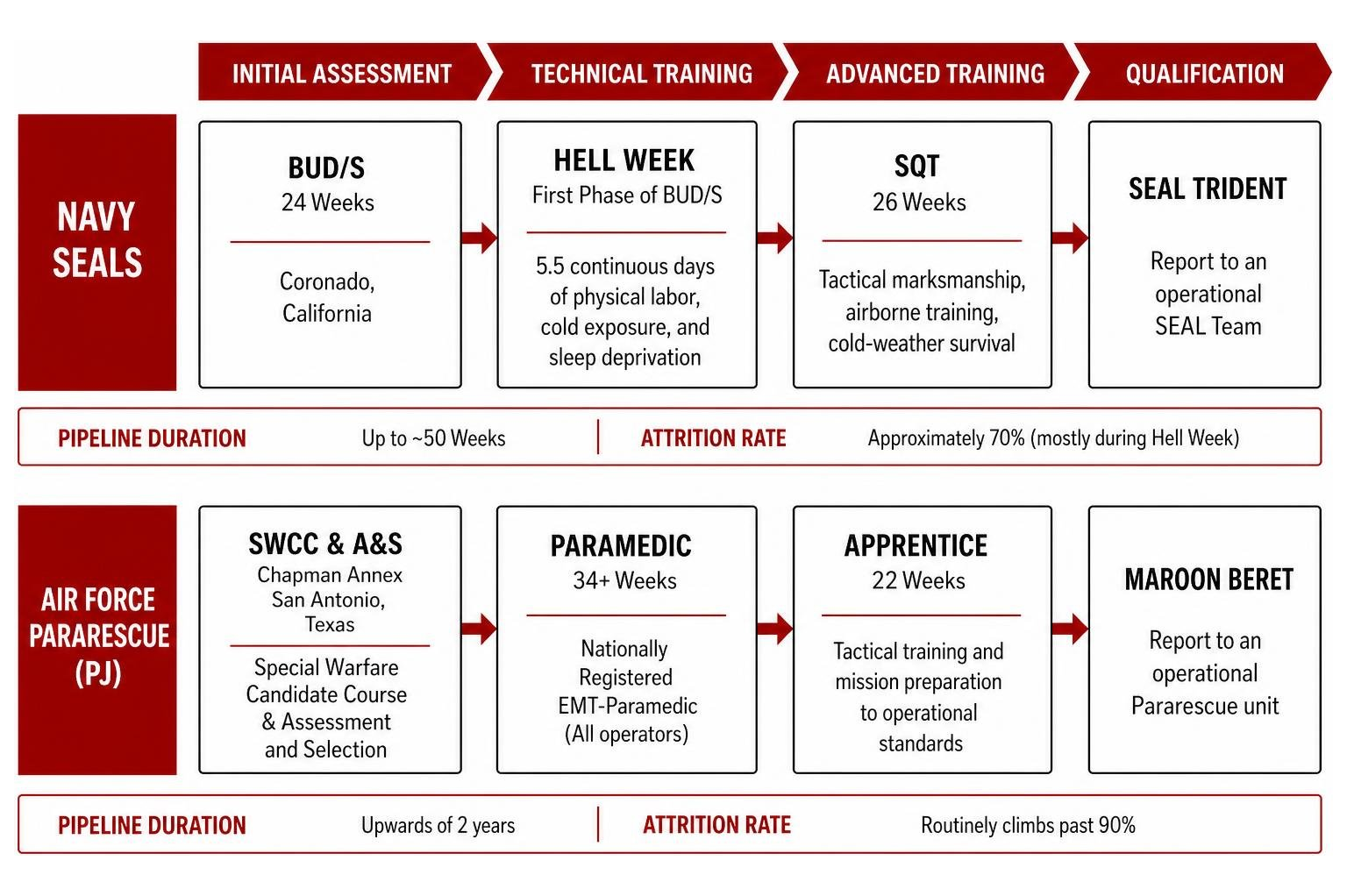
The Air Force Pararescue pipeline—often nicknamed "Superman School"—lasts more than two years and routinely sees attrition rates climb past 90%. Candidates begin with the Special Warfare Candidate Course (SWCC) and Special Warfare Assessment & Selection (A&S) at Chapman Annex in San Antonio, Texas.
Following selection, PJ candidates do not simply learn small-unit tactics; they must pass rigorous technical pipelines including:
- Air Force Combat Dive School (Panama City, Florida)
- Military Freefall and Static Line Parachutist Schools (Fort Moore and Yuma Proving Ground)
- Survival, Evasion, Resistance, and Escape (SERE) Training (Fairchild AFB)
- 34-week EMT-Paramedic Course (Kirtland AFB), earning National Registry EMT-P credentials
- 22-week Pararescue Recovery Specialist Course
While BUD/S eliminates most candidates in the first month through concentrated physical exhaustion, the PJ pipeline maintains a sustained, attrition-heavy academic and technical filter over two years. A candidate can be an Olympic-level swimmer and still wash out 18 months into the pipeline if they fail a pharmacology exam or botch a high-angle rope rescue system.
Fitness Standards and Water Survival Demands
Both units demand elite aquatic competence, but their testing protocols emphasize different physiological stressors. Meeting the baseline Navy SEALs BUDs training requirements requires exceptional swimming and running endurance alongside upper-body calisthenic output.
In the PJ pipeline, water confidence (colloquially called "water con") is notoriously brutal. Pararescue instructors evaluate candidates under severe hypoxic conditions. Standard benchmarks include:
- Surface swimming 4,000 meters in under 80 minutes
- Swimming 50 meters underwater on a single breath
- Underwater knot-tying and mask clearing while instructors actively harass the candidate ("drown-proofing")
- "Buddy breathing" drills with blacked-out masks under simulated drowning conditions
SEAL training similarly requires extreme comfort in the surf zone through drown-proofing (swimming with hands and feet bound) and 50-meter underwater swims, while exposing operators to hours of cold-water immersion designed to test mental control under mild hypothermia.
Joint Operations and Real-World Battlefield Synergy
In real-world combat environments, Navy SEALs and Air Force PJs do not compete; they complement each other as components of the broader joint special operations framework.
During high-intensity conflicts across the Middle East, Africa, and global maritime corridors, PJs regularly integrate with Joint Special Operations Task Forces. When a SEAL platoon executes a direct-action raid against a fortified compound, Air Force Special Tactics Squadrons—including PJs and Combat Controllers (CCTs)—often provide the dedicated casualty evacuation (CASEVAC) umbrella.
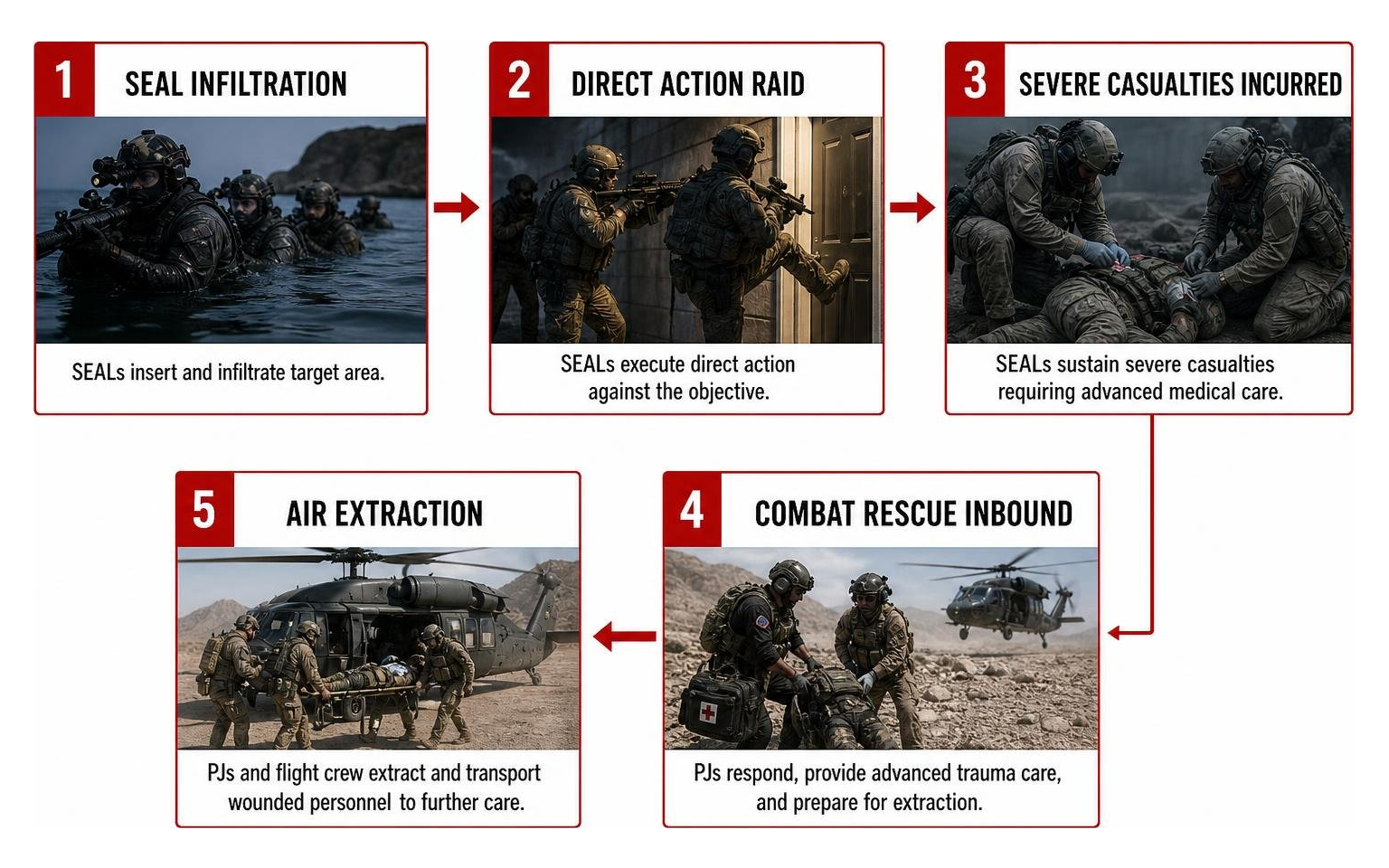
Battlefield Medicine and Joint Deployments
The presence of PJs on the modern battlefield has fundamentally transformed combat survivability. As highlighted in our look at Guardian Angels mastering the art of Pararescue training, PJs bring hospital-grade emergency medical capabilities directly into the line of fire.
During operations in Afghanistan, the wounded-to-killed ratio for U.S. forces improved dramatically, nearly doubling to 12.4. Military analysts directly attribute this historic survival metric to aggressive tactical casualty collection by PJs and rapid helicopter extraction teams.
When an assault team suffers catastrophic trauma, PJs perform emergency airway interventions (such as surgical cricothyrotomy), needle thoracostomy for collapsed lungs, blood transfusions, and even surgical escharotomies in austere field environments. By stabilizing severely wounded SEALs, Rangers, or coalition fighters within the "Golden Hour," PJs ensure that operators survive the flight back to surgical facilities.
Choosing Your Special Operations Career Path
Deciding between joining the Navy SEALs or Air Force Pararescue requires deep introspection regarding your core passions, aptitudes, and operational mindset. A thorough look at Air Force PJs vs. Navy SEALs reveals that the fundamental difference comes down to the operational mandate you wish to live by every single day.
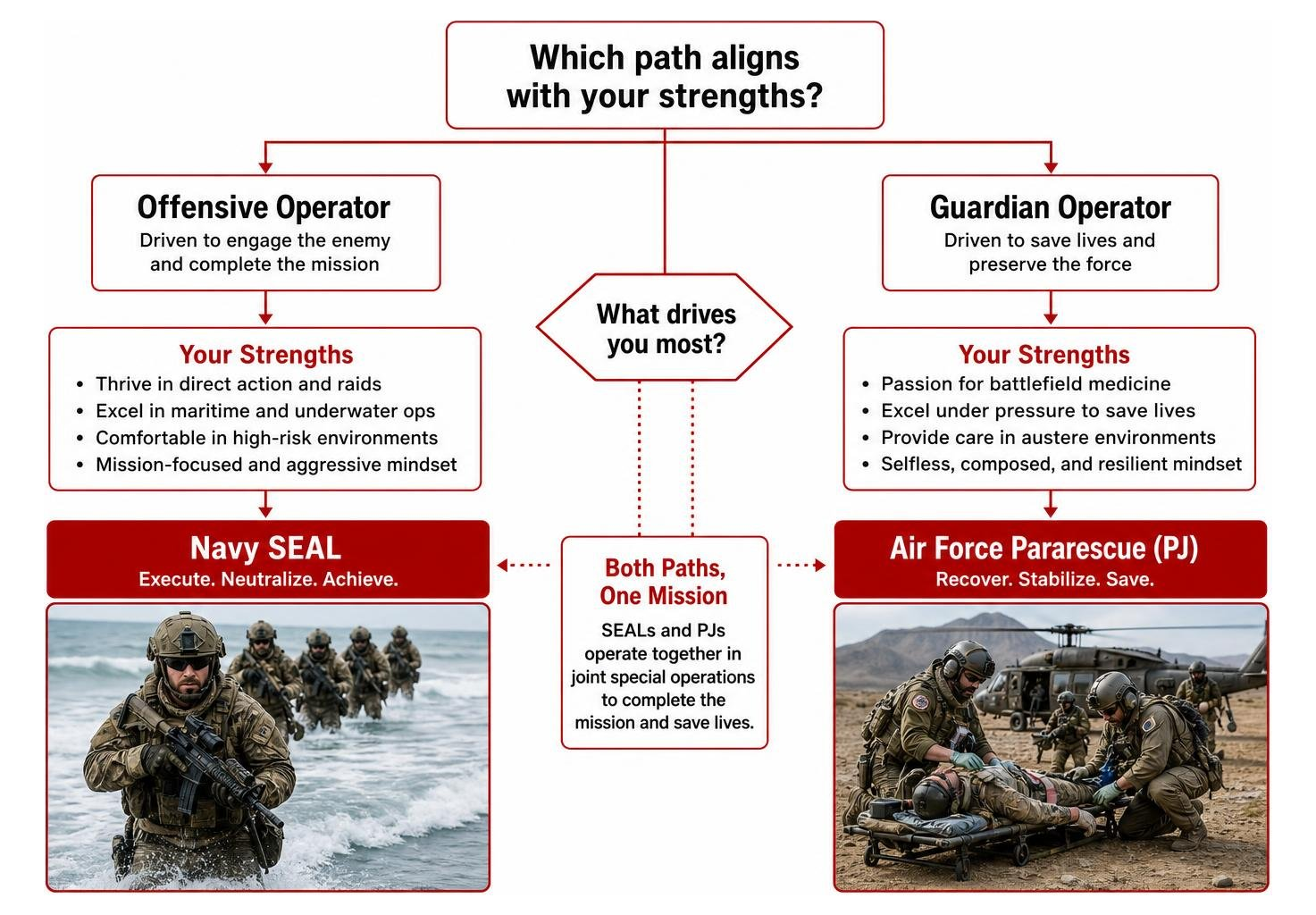
Navy SEALs vs Air Force Pararescue: Which Career Path Fits You?
If you are evaluating which career path aligns with your natural strengths:
- The Tactical Mindset (Offense vs. Preservation): If you are driven by the desire to engage the enemy offensively, execute raids, conduct urban warfare, and master maritime combat diving, the Navy SEAL path is your lane. Ensure you review the official requirements to be a Navy SEAL to prepare for the administrative and physical gates.
- The Medical and Rescue Calling: If you possess a deep passion for emergency medicine, trauma surgery, technical rescue, and the personal reward of saving lives in worst-case scenarios, the PJ pipeline offers the most comprehensive rescue training on earth.
- Academic and Technical Aptitude: PJs must master complex medical pharmacology, civilian paramedic certifications, and intricate rope/rigging physics. SEALs must master advanced demolitions, tactical navigation, small-unit weapons manipulation, and maritime combat diving.
- Community Size and Culture: With roughly 300 active operators, the PJ community is exceptionally small, close-knit, and often deployed in small elements attached to broader task forces. The Navy SEAL community is larger, operating out of organized SEAL Teams with distinct regional deployments.
Frequently Asked Questions About SEALs and PJs
Which force is considered tougher, Navy SEALs or Air Force PJs?
Asking which unit is "tougher" fundamentally misinterprets the nature of special operations. BUD/S is widely recognized for delivering the most concentrated physical shock and sleep deprivation through Hell Week, resulting in high early attrition.
Conversely, the Pararescue pipeline is longer (often lasting over two years) and requires candidates to maintain peak physical and academic standards across medical, skydiving, diving, and technical rescue schools, leading to a cumulative attrition rate exceeding 90%. Both forces produce world-class operators whose toughness is tailored to their specific operational missions.
Do Air Force PJs go into direct combat alongside SEALs?
Yes. While the primary mission of a PJ is rescue and medical care, they are fully trained in combat marksmanship, small-unit tactics, and close-quarters battle. When deploying on Combat Search and Rescue (CSAR) or Special Tactics teams, PJs regularly operate under heavy hostile fire to establish security perimeters around casualties and fight their way out of hot landing zones.
Can an Air Force PJ perform surgery on the battlefield?
PJs are certified National Registry EMT-Paramedics with extensive surgical training tailored for austere environments. While they do not perform non-emergent elective surgeries, they routinely execute invasive emergency procedures under fire that go far beyond standard civilian paramedic practice. These include surgical airways (cricothyrotomy), needle decompressions, field chest tube insertions, blood product administration, and surgical management of catastrophic blast and burn wounds.
Conclusion
Both the Navy SEALs and Air Force Pararescue represent the pinnacle of American military capability. Whether carrying out precision direct-action strikes in the maritime domain or braving hostile enemy fire to pull a wounded comrade from burning wreckage, the men of these communities perform duties few humans on earth can endure.
At USMilitary.com, our mission is to support our nation's service members, prospective recruits, and veterans through every stage of their military career. If you are preparing to pursue one of these elite special operations pipelines, explore our comprehensive Navy SEALs complete guide to begin building the physical and mental foundation required to earn your place among America's finest warriors.