Who Leads Navy SEALs and Special Warfare?
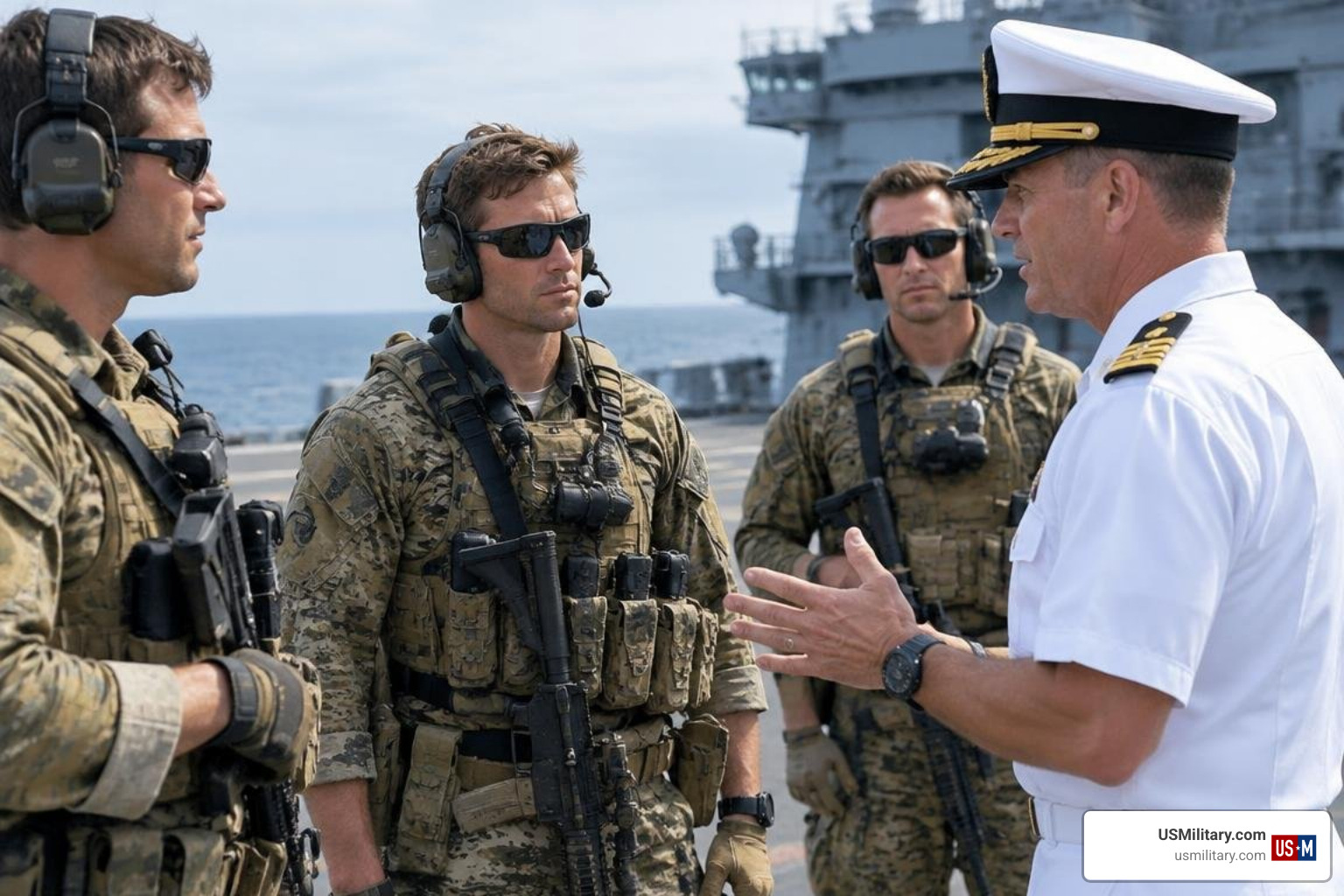
Adm. Frank M. Bradley leads U.S. Special Operations Command (USSOCOM), the joint command that oversees special operations across the military. A Naval Special Warfare leadership listing identifies Rear Adm. Walter H. Allman III as its commander and Rear Adm. Andrew J. Schreiner as deputy commander. They guide the SEAL and Special Warfare Combatant-Craft Crewman force's training, readiness, and maritime capabilities.
Leadership lists can change quickly. Earlier Navy news releases name Rear Adm. Milton J. Sands III as the Naval Special Warfare commander after an August 2024 change of command, so readers should check the Navy's flag officer biographies for the latest appointments.
I'm Larry Fowler, a Navy veteran and BUD/S Class 89 graduate. I wrote this guide to answer "Who Are The Highest Ranking Navy SEAL Admirals Dictating Special Warfare Today" and explain what their command roles mean for the force.
Who Are The Highest Ranking Navy SEAL Admirals Dictating Special Warfare Today terms to learn:
Who Are the Highest-Ranking Navy SEAL Admirals Dictating Special Warfare Today

Flag officers within the Naval Special Warfare (NSW) pipeline hold critical authority across our armed forces. Today, Navy SEAL admirals steer both component commands and multi-service combatant headquarters.
| Leader | Current Role / Component | Primary Responsibilities |
|---|---|---|
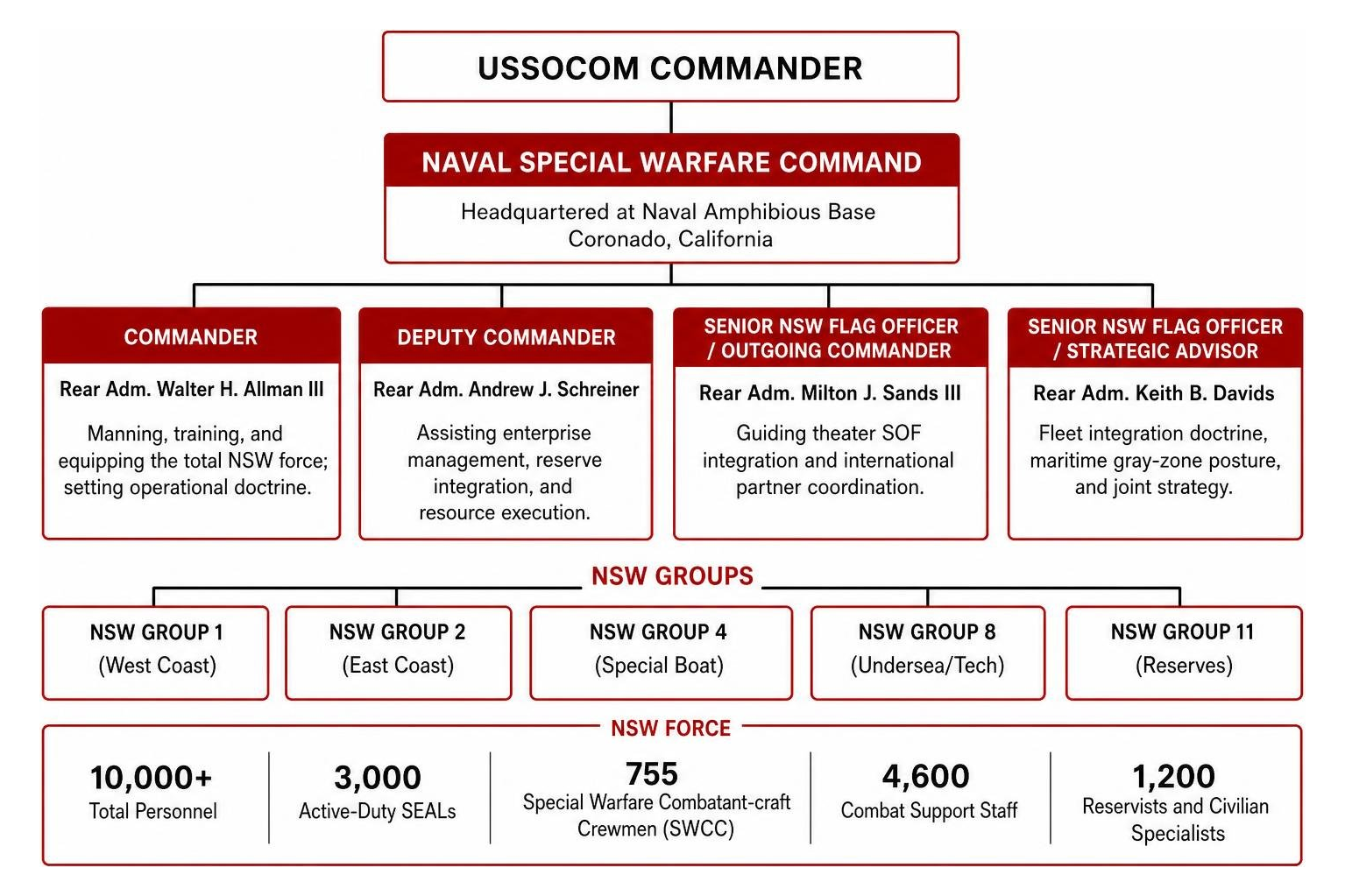
| Rear Adm. Walter H. Allman III | Commander, Naval Special Warfare Command | Manning, training, and equipping the total NSW force; setting operational doctrine. |
| Rear Adm. Andrew J. Schreiner | Deputy Commander, Naval Special Warfare Command | Assisting enterprise management, reserve integration, and resource execution. |
| Rear Adm. Milton J. Sands III | Senior NSW Flag Officer / Outgoing Commander | Guiding theater SOF integration and international partner coordination. |
| Rear Adm. Keith B. Davids | Senior NSW Flag Officer / Strategic Advisor | Fleet integration doctrine, maritime gray-zone posture, and joint strategy. |
These leaders manage a community of over 10,000 personnel, including approximately 3,000 active-duty SEALs, 755 Special Warfare Combatant-craft Crewmen (SWCC), 4,600 combat support staff, and 1,200 reservists and civilian specialists.
Who Are the Highest-Ranking Navy SEAL Admirals Dictating Special Warfare Today at Naval Special Warfare Command
Headquartered at Naval Amphibious Base Coronado, California, United States, Naval Special Warfare Command serves as the Navy component of USSOCOM. The command prepares maritime special operations forces to deploy alongside carrier strike groups, amphibious ready groups, and joint task forces.
Rear Adm. Milton J. Sands III assumed command of NSW in August 2024, relieving Rear Adm. Keith B. Davids. Under their tenure, alongside incoming leadership such as Rear Adm. Walter H. Allman III, NSW shifted its core focus from land-locked counterinsurgency to distributed maritime warfare.
For sailors interested in joining the special operations community, these admirals define current physical screening standards, recruit assessment command directives, and tactical school pipelines across every group echelon.
Who Are The Highest Ranking Navy SEAL Admirals Dictating Special Warfare Today Across Joint USSOCOM Commands
Navy SEAL flag officers also serve in joint positions at U.S. Special Operations Command (USSOCOM), Joint Special Operations Command (JSOC), and Theater Special Operations Commands (TSOCs).
This joint career path was pioneered by leaders like Adm. Eric T. Olson, the first Navy SEAL to reach three-star and four-star rank and serve as USSOCOM commander. Today, senior SEAL admirals at MacDill Air Force Base, Florida, manage a unified command budget of over $10.5 billion—roughly 1.6 percent of the Department of Defense budget — while supporting more than 13,000 deployed personnel globally.
These joint commanders oversee the global SOF network, synchronize interagency intelligence, and balance direct-action readiness with foreign internal defense. To understand how operators earn their tridents before advancing through this command structure, explore our comprehensive guide to US Navy SEALs and the DEVGRU requirements that define Tier 1 selection.
Command Oversight, Training Controversies, and Force Pressures
Naval Special Warfare leadership operates under close congressional scrutiny. Over the past decade, lawmakers have raised tough questions regarding acquisitions, ethical culture, and fiscal stewardship.
A notable dispute arose when congressional leaders, including former Rep. Duncan Hunter, scrutinized NSW combat training contracts. In 2011, the command replaced its traditional close-quarters combat curriculum with a mixed martial arts program that cost $2,900 per SEAL, compared to $345 under the previous contract.
Leadership transitions have also faced friction. Rear Adm. Brian Losey retired after Senate leadership blocked his promotion to two-star admiral following whistleblower reprisal inquiries. Senior leaders have also implemented findings from the "Pressure on the Force Task Force"—which surveyed 7,000 operators and 1,000 spouses—to tackle chronic wear and tear, family stress, and retention hurdles.
Preserving operational security remains another core focus. As public debate grew over whether SEAL secrets were being made public, NSW flag officers updated media engagement standards and reinforced operational security. Today, navigating these legal and organizational requirements is essential to military officer career progression.
Strategic Shifts and Future Trajectory of Naval Special Warfare Leadership
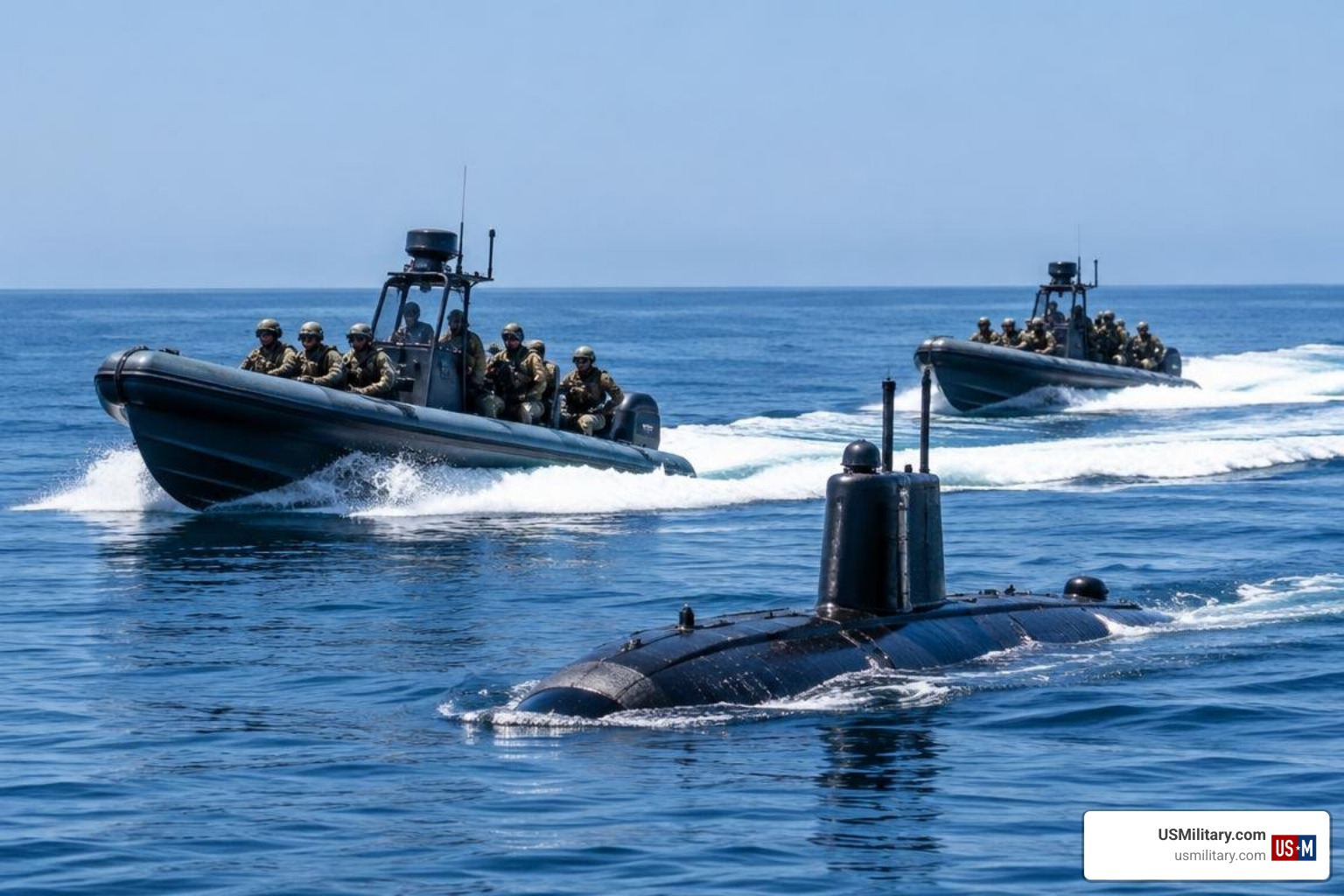
Naval Special Warfare has reorganized to address great-power competition, moving beyond isolated counterterrorism actions to integrate directly with broader fleet operations.
Pivoting from Counterterrorism Raids to Great-Power Maritime Operations
For two decades after 9/11, SOCOM doubled its personnel to 58,000, tripled its budget, and quadrupled its overseas deployments—with roughly 85 percent of deployed forces focused on the CENTCOM area of responsibility.
Under recent commanders, the community began returning to its maritime foundation. Rather than operating strictly as a land-based force, SEALs now support maritime domain awareness, carrier strike groups, and amphibious operations. In theater actions ranging from the Red Sea to the Indo-Pacific, SEALs conduct visit, board, search, and seizure (VBSS) operations, coastal reconnaissance, and island-denial missions.
To learn more about the roots of this tactical evolution, review how the SEALs became an elite force and examine the history of SEAL Team Six.
Modernizing Undersea Capabilities, Emerging Tech, and Fleet Integration
To meet high-end maritime demands, the command merged NSWG-3 and NSWG-10 to create Naval Special Warfare Group 8 (NSWG-8). This group unifies undersea mobility, dry combat submersibles, intelligence, reconnaissance, and cyber tools under a single operational command.
Senior admirals are currently driving several key technological priorities:
- Undersea Platforms: Deploying Dry Combat Submersibles (DCS) and Shallow Water Combat Submersibles (SWCS) from nuclear-powered attack submarines.
- Unmanned Systems: Fielding autonomous aerial and underwater reconnaissance drones to extend the fleet's surveillance range.
- Electronic Warfare: Equipping forward teams with compact jamming systems to disrupt enemy coastal defenses and anti-ship missile sites.
- Partner Capacity: Conducting multinational exercises with allied forces across the Baltic, Indo-Pacific, and Arctic theaters.
From the early days of Underwater Demolition Teams to the modern operators profiled among the Navy SEALs who impacted America, this community's strength has always relied on disciplined leadership. Today's admirals continue to modernize the force while preserving its core warfighting ethos.
Explore NavySeal.com and the USMilitary.com Network for detailed guides on special warfare pipelines, military benefits, and career insights, or read our complete Navy SEALs guide to learn more.
— Larry Fowler, Navy Veteran & BUD/S Class 89 Graduate
The Only Easy Day Was Yesterday: BUD/S Class 89