How 9/11 Changed Navy SEAL Missions for a Generation
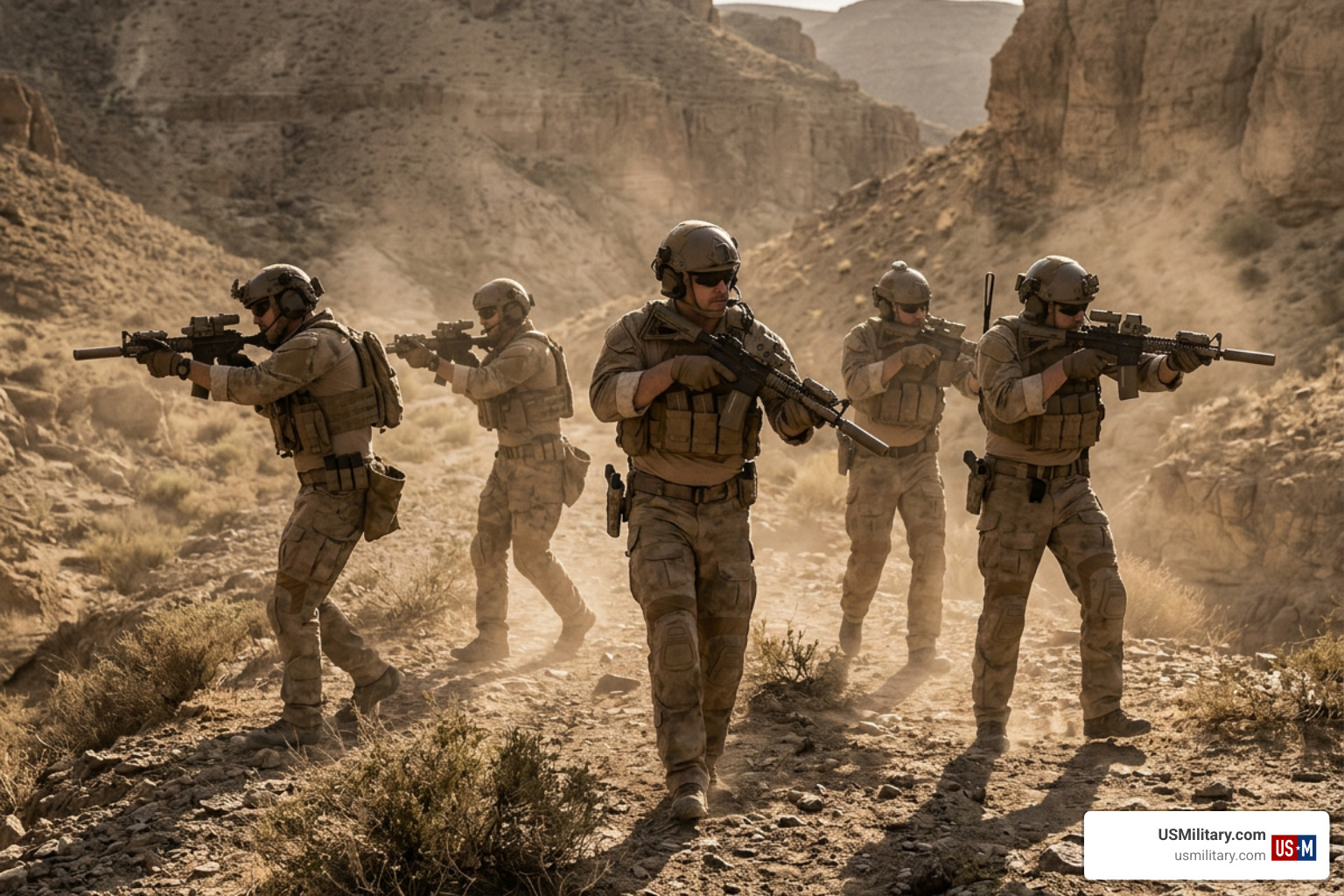
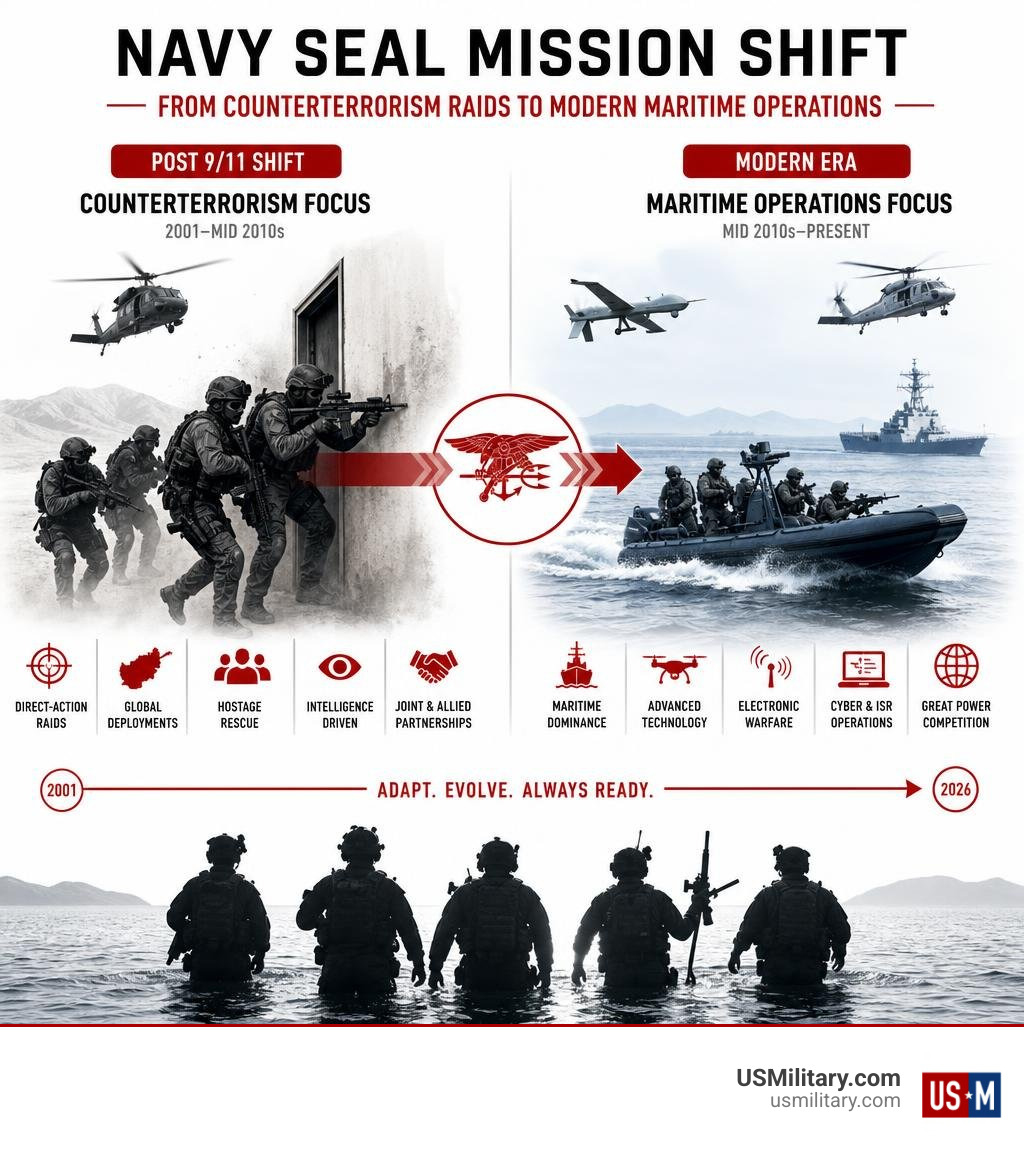
The 9/11 attacks moved Navy SEAL teams from a largely maritime special-operations role into a sustained global counterterrorism fight. Over the next 25 years, SEALs faced faster deployment cycles, more direct-action raids, special reconnaissance, hostage rescue, intelligence-driven targeting, and closer work with joint and allied forces.
Within weeks of the attacks, SEALs deployed to Afghanistan. Their mission later expanded across Iraq, the Horn of Africa, the Philippines, and the campaign against ISIS. The 2011 Abbottabad raid that killed Osama bin Laden became the best-known example, but it was one part of a much broader shift in how Naval Special Warfare operated.
More Than 90% Of Clients Have Increased VA Disability Ratings! Why Settle For Less Than You Deserve? Expert Priority Help With Your VA Claim Today! Free Evaluation Call!
That growth brought real tradeoffs: repeated combat deployments, injuries and invisible wounds, public attention that challenged a culture of secrecy, and hard questions about the limits of counterterrorism campaigns. Today, SEAL teams are also rebuilding maritime skills while preparing for drones, cyber-enabled threats, electronic warfare, and competition with major powers.
I am LARRY FOWLER, BUD/S Class 89, publisher of NavySeal.com and the USMilitary.com Network, which has served active-duty personnel and veterans with military career and benefit information since 2007. In examining How 9/11 Affected Navy SEAL Teams and Their Mission The Last 25 Years, this case study connects the operational record to what sustained war meant for the people who served.
How 9/11 Affected Navy SEAL Teams and Their Mission: The Last 25 Years terms to know:
- Navy SEALs Complete Guide
- A Day In The Life Of A Navy SEAL Operator
- How SEAL Team 6 and Other Special Forces Rescued F-15 Pilot
How 9/11 Affected Navy SEAL Teams and Their Mission The Last 25 Years
Before September 11, 2001, Naval Special Warfare maintained a distinct, highly specialized footprint focused on maritime special operations, hydrographic reconnaissance, combat diving, coastal interdiction, and amphibious raids. While the teams possessed extensive direct-action capabilities, their primary operational doctrine remained anchored to naval platforms, littoral environments, and foreign internal defense missions.
The attacks on the World Trade Center and the Pentagon dismantled those operational boundaries overnight. The United States committed over $21 trillion in national defense spending over the following 25 years, reshaping the strategic role of elite operators. In response to skyrocketing demands from geographic combatant commanders and the Joint Special Operations Command (JSOC), the Department of Defense rapidly expanded special operations capabilities. Across the military, SOCOM force growth post-9/11 saw enterprise personnel jump from approximately 38,000 in 2001 to over 73,000, supported by a budget increase from $2.3 billion to nearly $14 billion.
Naval Special Warfare adapted immediately. By March 2002, the Navy commissioned two new active SEAL teams (SEAL Teams 7 and 10), balancing the force to four East Coast and four West Coast teams before adding further specialized units. This represented a 50 percent personnel growth over late-Cold-War numbers. Understanding current SEAL force size helps contextualize how a community comprising less than 1 percent of overall Navy personnel carried an outsized share of front-line combat engagements.
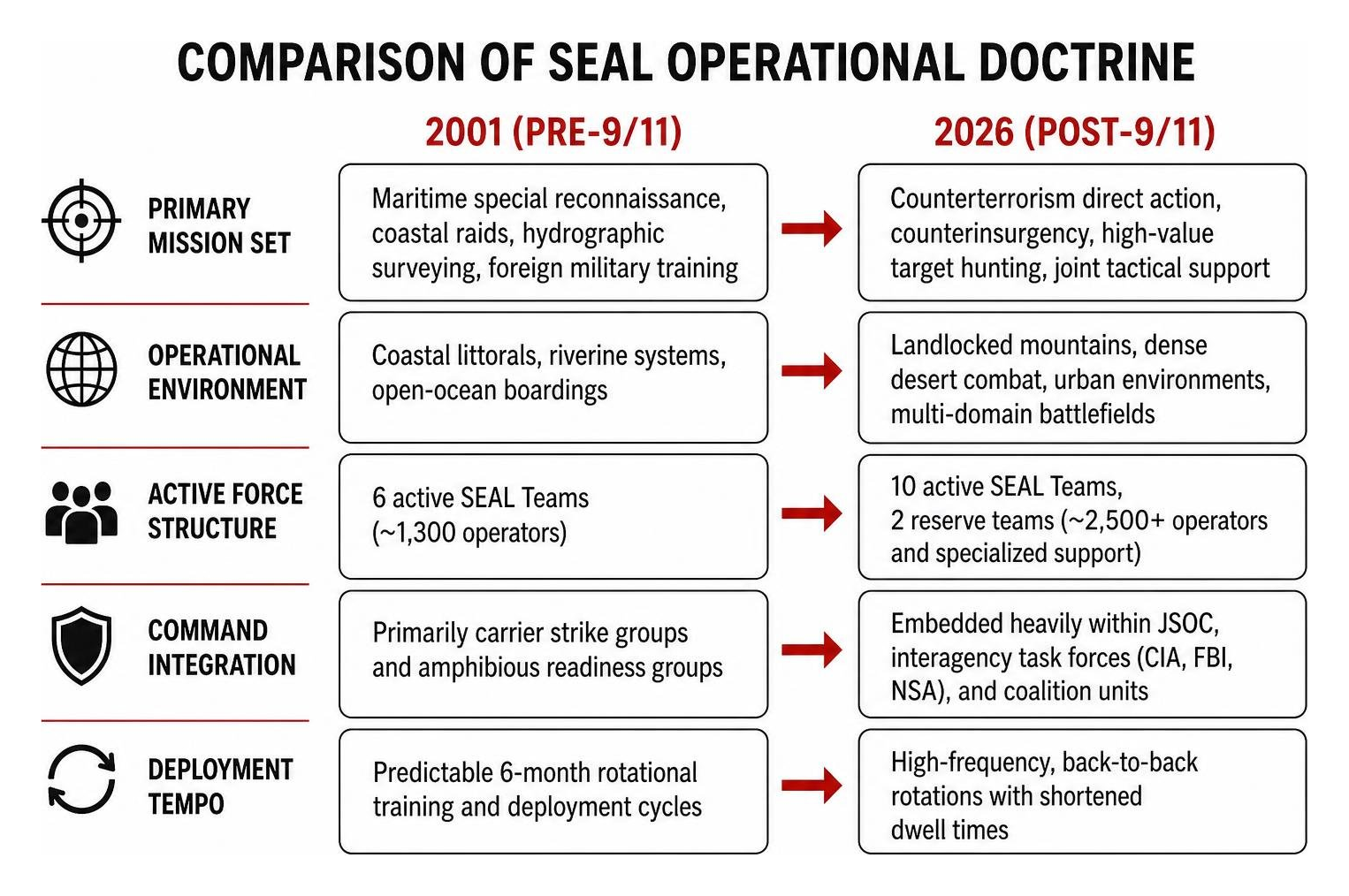
| Metric / Dimension | Pre-9/11 Navy SEAL Operations | Post-9/11 (GWOT Era: 2001–2026) |
|---|---|---|
| Primary Mission Set | Maritime special reconnaissance, coastal raids, hydrographic surveying, foreign military training | Counterterrorism direct action, counterinsurgency, high-value target hunting, joint tactical support |
| Operational Environment | Coastal littorals, riverine systems, open-ocean boardings | Landlocked mountains, dense desert combat, urban environments, multi-domain battlefields |
| Active Force Structure | 6 active SEAL Teams (~1,300 operators) | 10 active SEAL Teams, 2 reserve teams (~2,500+ operators and specialized support) |
| Command Integration | Primarily carrier strike groups and amphibious readiness groups | Embedded heavily within JSOC, interagency task forces (CIA, FBI, NSA), and coalition units |
| Deployment Tempo | Predictable 6-month rotational training and deployment cycles | High-frequency, back-to-back rotations with shortened dwell times |
Case Study: How 9/11 Affected Navy SEAL Teams and Their Mission The Last 25 Years in Afghanistan and Iraq
When the campaign in Afghanistan began, SEAL operators found themselves operating thousands of feet above sea level in harsh, landlocked terrain. Deploying to the theater within a month of 9/11, SEAL units executed more than 75 direct-action and special reconnaissance operations during the opening phase of Operation Enduring Freedom. Operators adjusted from combat diving and waterborne insertions to high-altitude mountain patrols, dynamic vehicle interdictions, and combined-arms raids.
The operational scope widened further during Operation Iraqi Freedom, which became the largest operational deployment of SEALs in history. Operating across Baghdad, Fallujah, Ramadi, and Najaf, SEAL sniper elements, breachers, and assault teams dismantled complex insurgent networks. In urban battlegrounds such as the Battle of Najaf, SEALs coordinated dynamic close-air support, urban mobility tactics, and room-to-room clearing alongside conventional Marine Corps and Army formations.
This transformation honored the fundamental history of Naval Special Warfare, which began with World War II Naval Combat Demolition Units (NCDUs) and Underwater Demolition Teams (UDTs), while fundamentally redefining what it meant to conduct special operations in the 21st century.
Key Deployments: How 9/11 Affected Navy SEAL Teams and Their Mission: The Last 25 Years from Neptune Spear to Modern Operations
Over two and a half decades of continuous combat, several landmark operations defined the capabilities and high stakes of Naval Special Warfare:
- The Rescue of Captain Richard Phillips (2009): When Somali pirates hijacked the container ship Maersk Alabama, SEAL snipers operating from the stern of the USS Bainbridge eliminated three captors simultaneously in rolling seas. The mission proved that maritime precision remained unmatched within the teams.
- Operation Neptune Spear (2011): The raid on Osama bin Laden's compound in Abbottabad, Pakistan, demonstrated a decade's worth of refined intelligence integration, joint aviation support, and surgical direct action. The historic raid of Operation Neptune Spear involved two dozen SEAL operators, an intelligence translator, and a specialized combat assault dog, eliminating the al-Qaeda mastermind in under 40 minutes without American combat casualties.
- The Tragedy of Extortion 17 (2011): Three months after the Abbottabad raid, a CH-47 Chinook helicopter carrying 30 American service members—including 17 SEALs and 5 Naval Special Warfare support personnel—was shot down by an insurgent rocket-propelled grenade in Wardak Province, Afghanistan. The tragic loss of Extortion 17 stands as the single deadliest day in Naval Special Warfare history, serving as a solemn reminder of the severe risks inherent to airborne insertion in contested areas.
- Counter-ISIS Operations (2014–2019): From advising local forces in northern Iraq to the liberation of Mosul and the Battle of Tel Skuf in 2016, SEALs leveraged precision strike coordination, advanced counter-unmanned aerial systems, and joint allied tactics—regularly partnering with elite units such as the Polish GROM.
The Cultural, Tactical, and Training Transformation of Naval Special Warfare

The expanded mandate required substantial updates to training pipelines. Basic Underwater Demolition/SEAL (BUD/S) training kept its legendary physical demands—including Hell Week, which traces back to Lt. Cmdr. Draper Kauffman's WWII training methods—while modernizing tactical instruction.
Candidates navigating the rigorous BUD/S training pipeline now encounter expanded instruction in close-quarters battle (CQB), dynamic marksmanship, tactical combat casualty care (TCCC), combat drone operation, and advanced digital communications before earning the Navy SEAL Trident. The training pipeline shifted from producing specialized coastal demolitionists to developing multi-threat operators capable of leading intelligence fusion cells, coordinating multi-branch airstrikes, and deploying cutting-edge battlefield technology.
The Human Cost: Sustained Combat, Public Scrutiny, and Invisible Wounds
The high operational tempo of the 25-year post-9/11 era placed extraordinary strain on operators and their families. Constant six-month deployments with minimal dwell time led to acute physical wear and cumulative blast injuries.

Addressing mental health and PTSD challenges in SEALs became a primary command focus as research illuminated the long-term consequences of repeated sub-concussive blast exposures, traumatic brain injury (TBI), and severe combat stress. Specialized recovery initiatives—such as the Navy's Warrior Care Program and veteran-focused health clinical trials—were introduced to treat the physical and neurological toll sustained during continuous combat rotations.
The era also generated unprecedented media exposure. High-profile books, feature films, and public notoriety challenged the SEAL ethos of the "quiet professional." Naval Special Warfare leadership responded by reasserting strict baseline accountability, ethics reinforcement, and mission integrity across all ranks.
Adapting to the Next Era: Drones, Cyber Warfare, and the Maritime Pivot
As national defense priorities shift from counterinsurgency to strategic competition with near-peer adversaries, Naval Special Warfare is actively returning to its maritime and littoral origins. Today's mission set focuses on supporting fleet operations, securing sea lines of communication, and neutralizing anti-access/area-denial (A2/AD) capabilities.
Modern SEAL platoons integrate cutting-edge capabilities to deter peer adversaries across contested waters:
- Counter-Unmanned Aerial Systems (C-UAS) and Autonomous Swarms: Deploying hand-launched reconnaissance drones alongside automated tracking and directed-energy counter-drone systems.
- Maritime Interdiction and Vessel Boarding: Executing high-risk boardings in contested waterways, illustrated by interdiction missions in the Red Sea seizing advanced conventional munitions and illicit missile components.
- Electromagnetic Warfare and Signals Jamming: Denying adversary communications and providing covert target identification for long-range naval surface and air strikes.
- Sub-Surface Coastal Insertion: Leveraging advanced Swimmer Delivery Vehicles (SDVs) and stealth combat submersibles to map underwater minefields and place intelligence sensors in heavily monitored coastal environments.
Frequently Asked Questions About How 9/11 Affected Navy SEALs
How did the 9/11 attacks immediately alter Navy SEAL deployments?
Within four weeks of the September 11 attacks, SEAL units deployed directly to Afghanistan under Operation Enduring Freedom. They conducted over 75 direct-action and special reconnaissance missions during the opening phases of the conflict, transitioning from maritime environments to high-altitude mountain warfare.
How did Naval Special Warfare expand its force structure after 2001?
In March 2002, the Navy established two additional active-duty SEAL teams (Teams 7 and 10), expanding the active force to eight teams (and later ten active teams plus two reserve units). This institutional growth was accompanied by a major increase in funding and personnel expansion across USSOCOM.
What is the primary focus of Navy SEAL missions today compared to post-9/11?
While counterterrorism and hostage rescue capabilities remain fully operational, the primary focus has pivoted toward peer adversary deterrence, maritime interdiction, electronic warfare, and direct naval fleet integration. Understanding the foundational Navy SEAL roles illustrates how the community continues to safeguard the maritime domain across air, sea, and land.
Conclusion
The 25 years following September 11, 2001, reshaped Naval Special Warfare from the ground up. The operational demands of the Global War on Terror proved the extraordinary adaptability of Navy SEALs across desert, mountain, and urban environments.
Today, as new geopolitical challenges emerge across the global maritime commons, the teams are leveraging the hard-won lessons of continuous combat to pioneer the next generation of special operations. For service members, veterans, and military families seeking comprehensive benefits assistance, educational guidance, and defense news, explore USMilitary.com and read our Navy SEALs Complete Guide.
For more information on military careers, benefits, and special operations guides, visit the USMilitary.com homepage or explore our curated veteran resources.