Could a Democrat Majority Cut the Naval Special Warfare Budget?
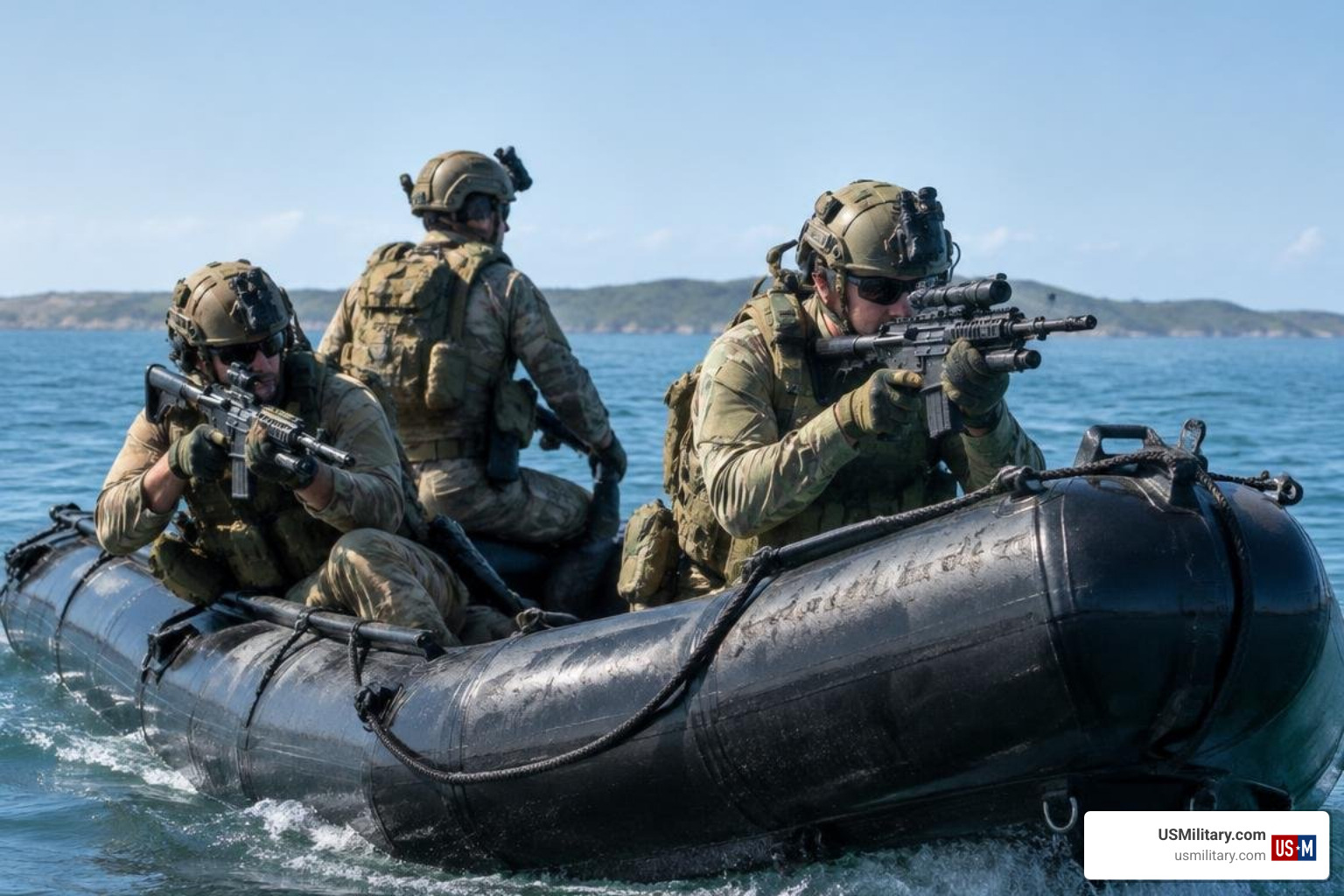
Could a Democrat majority cut the Naval Special Warfare budget? Yes, but blocking a proposed defense increase is more likely than cutting existing funding for Navy SEALs and other Naval Special Warfare forces. Congress could also delay new programs or place conditions on spending.
The key question for fiscal year 2027 is whether lawmakers reduce current funding or simply approve less of a proposed increase. Either choice could affect training, equipment, and plans for new capabilities.
I'm Larry Fowler, a Navy veteran and graduate of BUD/S Class 89. That experience shapes how I approach "Could There Be Cuts in Naval Special Warfare Budget With a Democrat Majority", starting with how Congress funds special operations.
Could There Be Cuts in Naval Special Warfare Budget With a Democrat Majority? vocab explained:
Could There Be Cuts in Naval Special Warfare Budget With a Democrat Majority?
When analyzing whether military spending shifts under changing legislative control, we have to look past campaign-trail rhetoric and evaluate how the legislative appropriations process actually works. As we look at the fiscal year 2027 budget debates in October 2026, the White House has pushed an ambitious defense blueprint requesting $1.15 trillion in base discretionary funding and $350 billion in mandatory reconciliation spending—a total top-line package reaching $1.5 trillion.
A Democratic majority in either the House or the Senate dramatically reshapes this negotiation. However, reducing the White House's requested growth is fundamentally different from gutting the existing baseline that funds U.S. Navy SEAL capabilities.
According to the Congressional Research Service report, U.S. Special Operations Forces (SOF) represent less than 2% of the total defense budget. Because special operations deliver outsized strategic leverage at a tiny fraction of top-line spending, lawmakers rarely target them for primary budget slashing.
Discretionary Caps vs. Targeted NSW Appropriations
When Democrats take the gavel, party leadership traditionally prioritizes domestic non-defense programs and insists on parity between defense and social spending.
This dynamic leads lawmakers to reject massive top-line surges rather than execute line-item surgical cuts to Naval Special Warfare (NSW). For instance, the House Appropriations Committee previously approved a $1.07 trillion defense discretionary package—trimming roughly $80 billion from the administration's top-line request. Yet, these top-level trims apply across major procurement programs rather than to operational SEAL platoons.
Title 10 Section 167 and MFP-11 Budget Protections
Naval Special Warfare enjoys a powerful structural shield that conventional units lack: Title 10, Section 167 of the United States Code. This statute gives U.S. Special Operations Command (USSOCOM) independent budgetary authority, known as Major Force Program 11 (MFP-11).
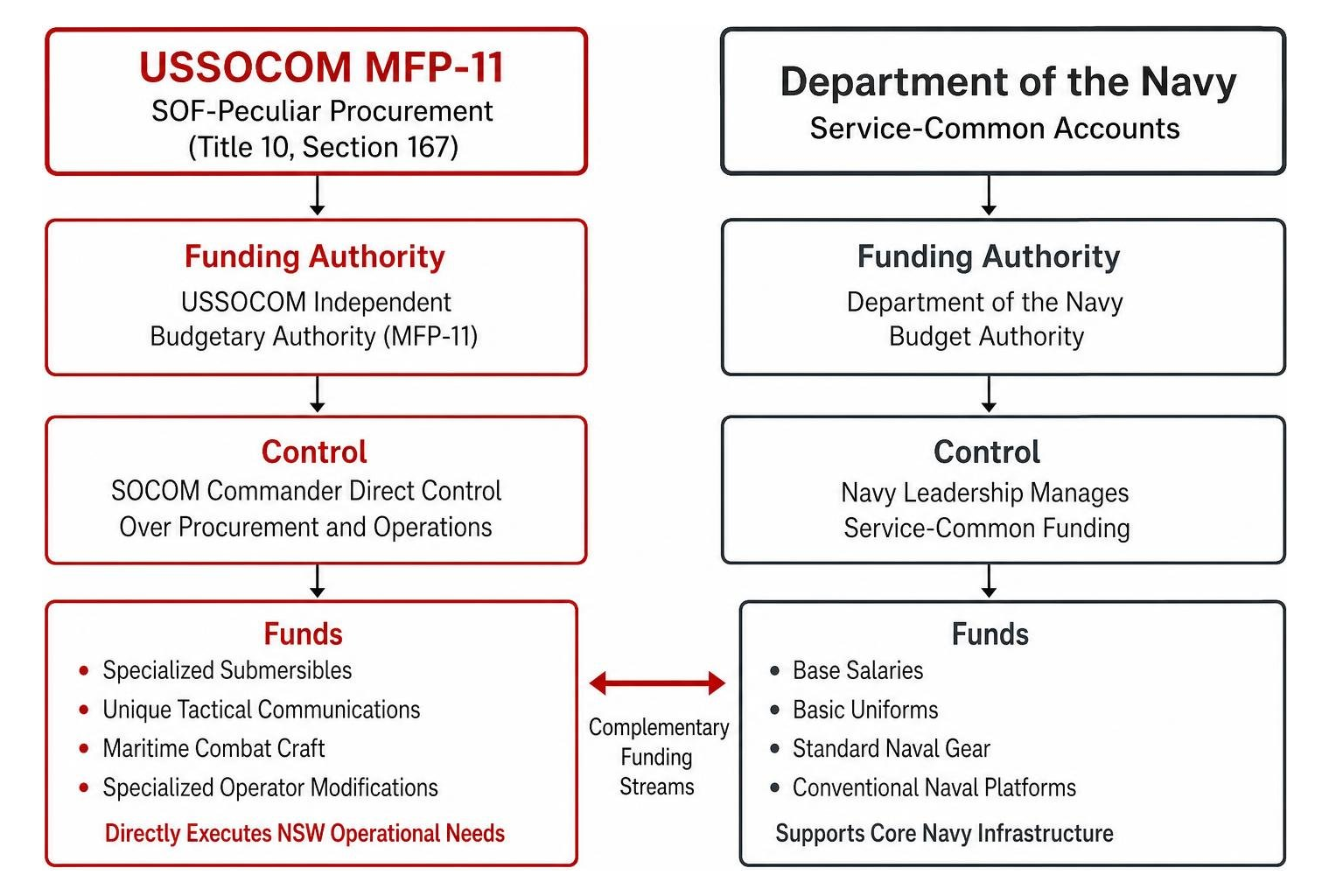
Under this structure:
- Service-Common Funding: The Department of the Navy pays for base salaries, basic uniforms, standard naval gear, and conventional naval platforms.
- SOF-Peculiar Procurement (MFP-11): USSOCOM directly funds specialized submersibles, unique tactical communications, maritime combat craft, and specialized operator modifications.
Because MFP-11 gives the SOCOM Commander direct control over procurement and operational funding, a congressional majority cannot easily alter NSW operational funding without explicitly confronting USSOCOM leadership during open committee hearings.
Congressional Mechanics: Reconciliation, Continuing Resolutions, and Defense Toplines
To understand how funding flows to the fleet, we must compare the three primary mechanisms Congress uses to finance national defense.
| Funding Mechanism | Procedural Hurdle | Direct Impact on SOF / NSW | Typical Partisan Outcome |
|---|---|---|---|
| Regular Appropriations | Requires 60 votes in the Senate to overcome filibuster | Provides stable, multi-year funding for NSW modernization and training | Bipartisan compromises shaping the National Defense Authorization Act (NDAA) |
| Budget Reconciliation | Simple majority (51 Senate votes); bypasses filibuster | Targets mandatory spending; can inject one-time supplemental funds | Highly partisan; vulnerable to reversal when majorities shift |
| Continuing Resolutions (CR) | Simple majority stopgap to keep government open | Freezes funding at prior-year levels; bars "new-start" procurement | Causes operational bottlenecks, delayed contracts, and maintenance backlogs |
Could There Be Cuts in Naval Special Warfare Budget With a Democrat Majority Through Reconciliation?
The White House proposed funding a historic $350 billion defense initiative using budget reconciliation, bypassing the Senate's 60-vote filibuster threshold. However, analysts at Capital Alpha Partners and the American Enterprise Institute estimated only a 15% chance of such a massive defense reconciliation package clearing Congress.
If Democrats control either chamber, that $350 billion reconciliation package is essentially off the table. A Democratic majority would decline to use fast-track reconciliation for unilateral defense increases, opting instead for smaller supplemental spending packages, such as the $60 billion defense supplemental enacted to address Middle Eastern contingencies. Halting a $350 billion reconciliation expansion is not a "cut" in statutory terms, but it limits the surplus capital available for experimental Navy acquisitions.
Impact of Stopgap Funding on Navy SEAL Readiness and RDT&E
The most real and immediate danger to Naval Special Warfare is not an ideological budget cut, but legislative gridlock. The Department of Defense has operated under a Continuing Resolution (CR) almost every fiscal year from FY10 through FY26, with FY19 as the lone exception.
When Congress relies on stopgap measures, the Defense Security Monitor notes how CRs prolong DoD funding shortfalls. A full-year CR creates multi-billion-dollar shortfalls in research, development, test, and evaluation (RDT&E). For NSW, CRs freeze production on next-generation submersibles, throttle funding for classified Special Access Programs like Link Plumeria, and complicate logistics across the Navy SEAL training and operational pipeline.
Strategic Rebalancing: Great-Power Competition vs. Counterterrorism Priorities
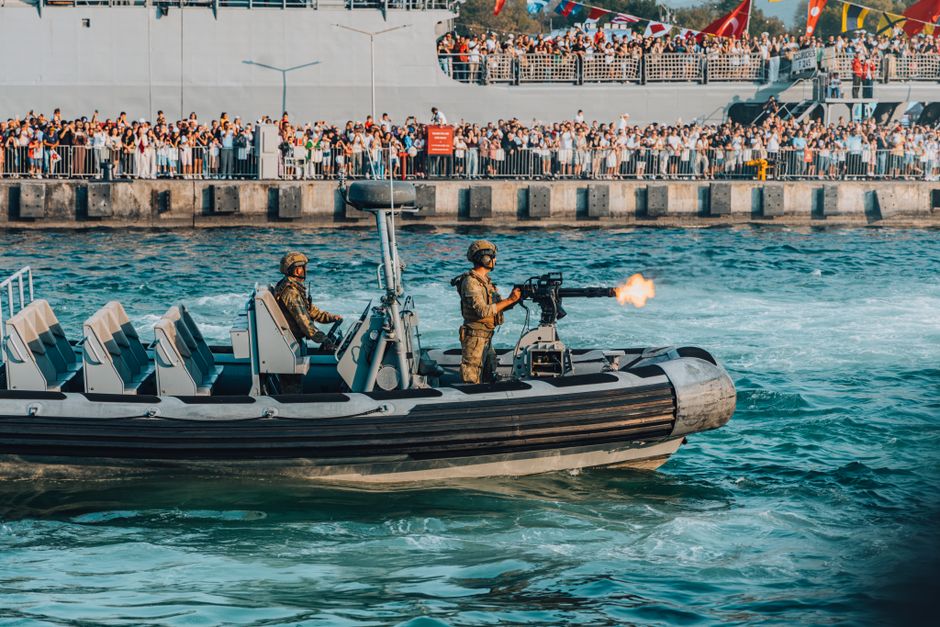
The strategic landscape has shifted decisively away from the post-9/11 counterinsurgency framework toward high-end deterrence in the Indo-Pacific. Over the decades, units like Navy SEAL Team 4 carried out extensive direct-action raids across the Middle East and Central Asia. Today, the strategic mandate centers on great-power competition against near-peer adversaries.
Could There Be Cuts in Naval Special Warfare Budget With a Democrat Majority Amid the Pivot to China?
As the Department of Defense prioritizes long-range precision fires, hypersonics, and shipbuilding, certain ground-centric special operations elements face pressure. For example, the Total Army Analysis (TAA) sparked intense debate over a projected 10% reduction to Army Special Operations Command support and enabler billets, as reported when lawmakers expressed concern over SOCOM cuts and potential mission risk.
However, Naval Special Warfare occupies a privileged maritime niche. In an Indo-Pacific scenario characterized by vast maritime littoral zones, NSW capabilities are vital for:
- Over-the-beach reconnaissance and beachhead clearing.
- Ingress via undersea delivery systems to contest anti-access/area-denial (A2/AD) envelopes.
- Placing remote sensor grids across island chains.
Because both Democratic and Republican defense planners prioritize Pacific deterrence, NSW remains well insulated from structural force cuts.
Fleet Integration, Maritime Interdiction, and Operational Shifts
Naval Special Warfare has transitioned from standalone counterterrorism raids back to integrated fleet support. In the Red Sea and Gulf of Oman, SEALs and Special Warfare Combatant-craft Crewmen (SWCC) have conducted high-risk visit, board, search, and seizure (VBSS) operations against illicit weapons shipments and intercepted hostile drone and missile networks.
This operational shift directly reinforces why NSW remains central to naval doctrine. By linking special operators directly to Carrier Strike Groups and Expeditionary Strike Groups, NSW provides low-cost, high-return maritime interdiction that lawmakers on both sides of the aisle view as essential.
Political Realities, Voter Sentiment, and Congressional Committee Oversight
Leaders of the House and Senate Armed Services Committees (HASC and SASC) guide defense policy on Capitol Hill. Even under Democratic control, these committees are historically led by moderate, defense-minded lawmakers who collaborate closely with military brass to pass the National Defense Authorization Act (NDAA)—a bill that has passed with bipartisan support for over six consecutive decades.
Public Opinion Trends on Defense Spending and Special Operations
Public polling consistently shows a nuanced view of military expenditures:
- In broad surveys by the Center for Public Integrity, 90% of Democrats and 67% of Republicans supported general reductions to top-line defense spending to address fiscal deficits.
- However, when polls evaluate specific line items, a clear majority of voters favor keeping elite special operations forces budgets stable while looking for savings in broad administrative overhead or delayed conventional weapons programs.
Voters understand that maintaining elite operators earning standard military compensation and special pay is vastly cheaper than fielding major conventional platforms.
Committee Oversight: NDAA Conditions and SASC Authorization Controls
Rather than enacting direct budgetary cuts, a Democratic-controlled Congress typically exerts power through rigorous statutory oversight. Lawmakers frequently include provisions within the annual Committee on Appropriations defense reports that impose accountability measures, such as:
- Mandatory reporting on special access programs and sensitive deployment authorizations.
- Enhanced oversight regarding civilian harm mitigation and rules of engagement.
- Audits of contractor supply chains and high-cost maritime technology acquisitions.
These oversight mechanisms shape how funds are spent without reducing the operational top-line of Naval Special Warfare units.
Frequently Asked Questions About Naval Special Warfare Funding
Can Congress unilaterally cut Navy SEAL funding without presidential approval?
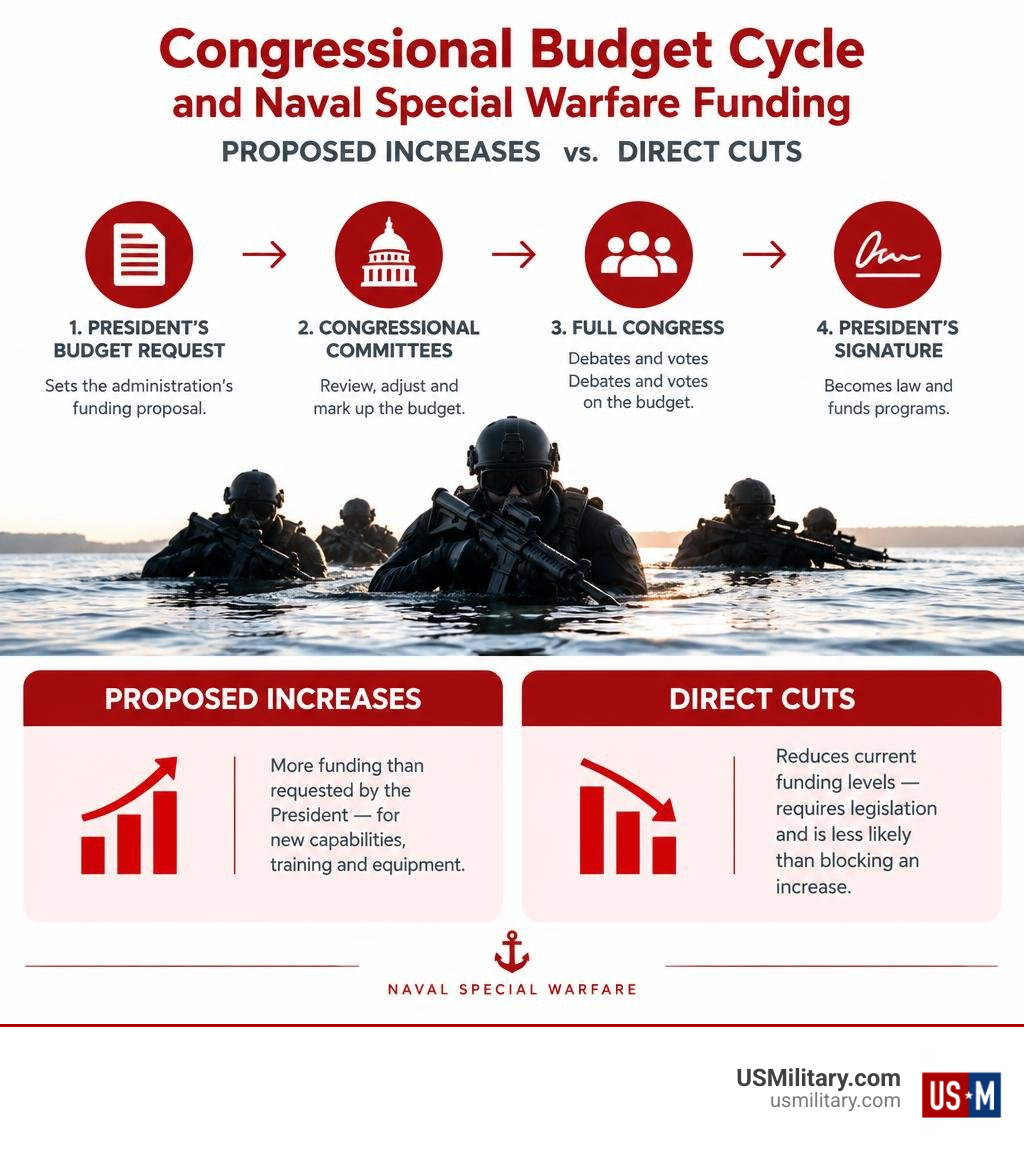
No. Congress cannot defund special operations by decree. Modifying military spending requires passing appropriations legislation through both the House and Senate, followed by the President's signature. If the President vetoes an appropriations measure, Congress needs a two-thirds supermajority in both chambers to override it.
How does the 10% Army SOF reduction debate affect Naval Special Warfare?
The Army's proposed reduction primarily targets non-combat support and intelligence enablers within Army Special Operations Command to free up conventional recruiting billets. Because Naval Special Warfare is maritime-focused and critical to Indo-Pacific strategy, USSOCOM and Navy leadership have shielded NSW force structure from corresponding reductions.
How do continuing resolutions harm special warfare procurement pipelines?
Continuing resolutions ban "new-start" procurement programs and lock funding into the previous year's allocation levels. For NSW, this delays production schedules for advanced combat submersibles, prevents the rapid acquisition of commercial uncrewed systems, and limits dry-dock maintenance availability.
Conclusion
When asking whether a Democratic majority would lead to budget cuts for Naval Special Warfare, the legislative evidence points to stability rather than reductions. While a Democratic-led Congress is likely to push back against massive top-line defense expansions and reject unilateral $350 billion reconciliation requests, targeted reductions to Navy SEAL budgets remain improbable.
Naval Special Warfare operates as a cost-effective, high-yield maritime instrument that aligns directly with bipartisan Pacific deterrence objectives. Protected by USSOCOM's Title 10 MFP-11 statutory budgeting authority and backed by strong bipartisan committee leadership, NSW is well positioned to sustain its modernization and operational readiness.
At USMilitary.com, we provide comprehensive, unbiased resources for active service members, veterans, and military families—covering everything from VA benefits and disability ratings to in-depth career guides. To learn more about elite naval careers, explore our complete guide to Navy SEAL careers, requirements, and operations.