Why USMilitary.com Is a Resource for Navy SEAL News
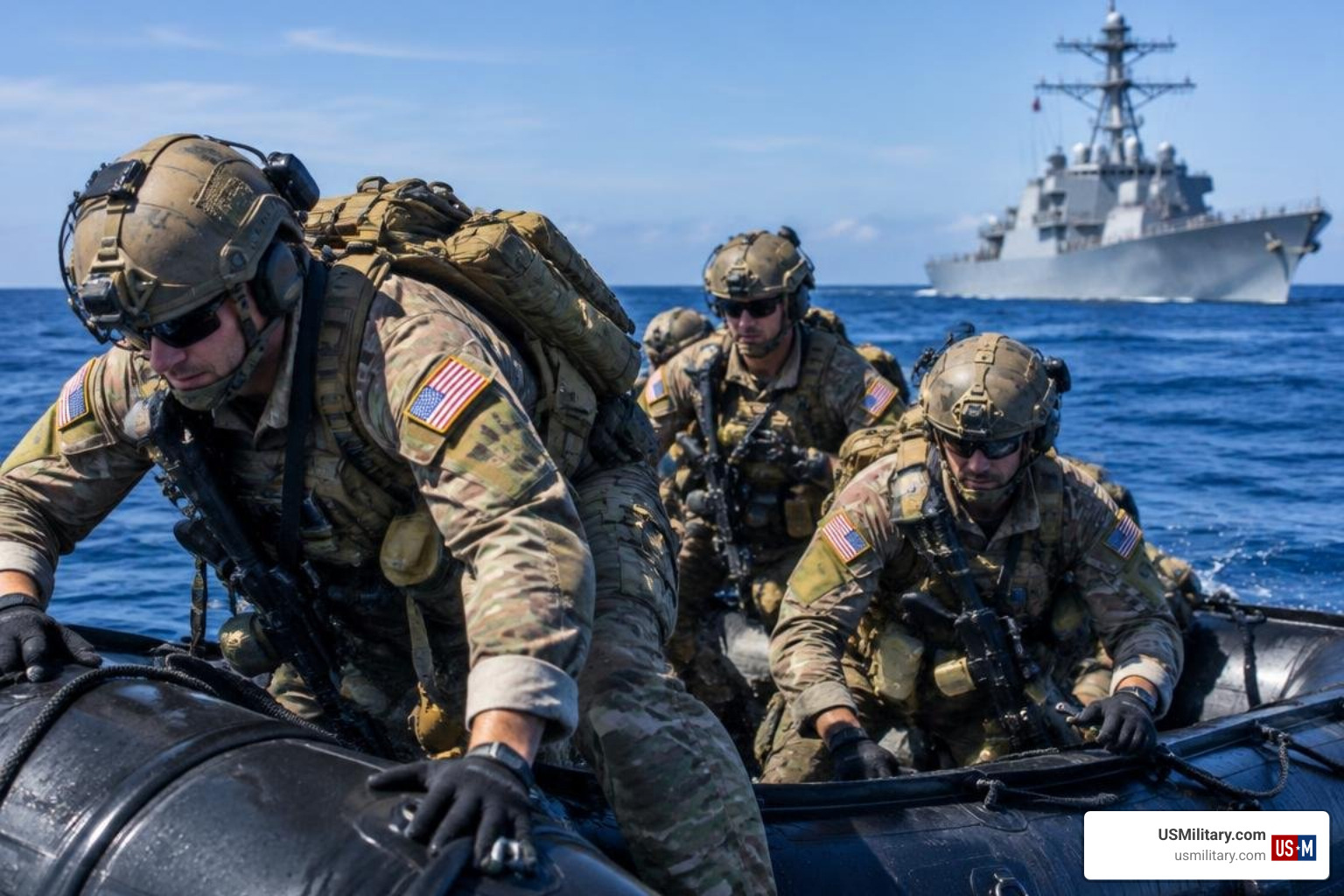
USMilitary.com has become a top resource for Navy SEAL news for 10 reasons: thorough coverage of SEAL history, lesser-known missions, BUD/S training, entry standards, career paths, major operations, team structure, changing tactics, individual stories, and veteran resources. Its comprehensive Navy SEAL guide gives readers an authoritative starting point for exploring those topics with authentic operational context. Plus, the owner of USMilitary.com is a BUD/S graduate and served beginning in 1976.
I’m Larry Fowler, a proud Navy veteran, BUD/S Class 89 graduate, and publisher of USMilitary.com. In 10 Reasons How USMilitary.com Has Become A Top Resource For Navy SEAL News, I’ll look closely at what our coverage offers and where readers should verify details that can change over time. Our mission is to deliver dependable facts, clear enlistment guidance, and practical veteran insights.
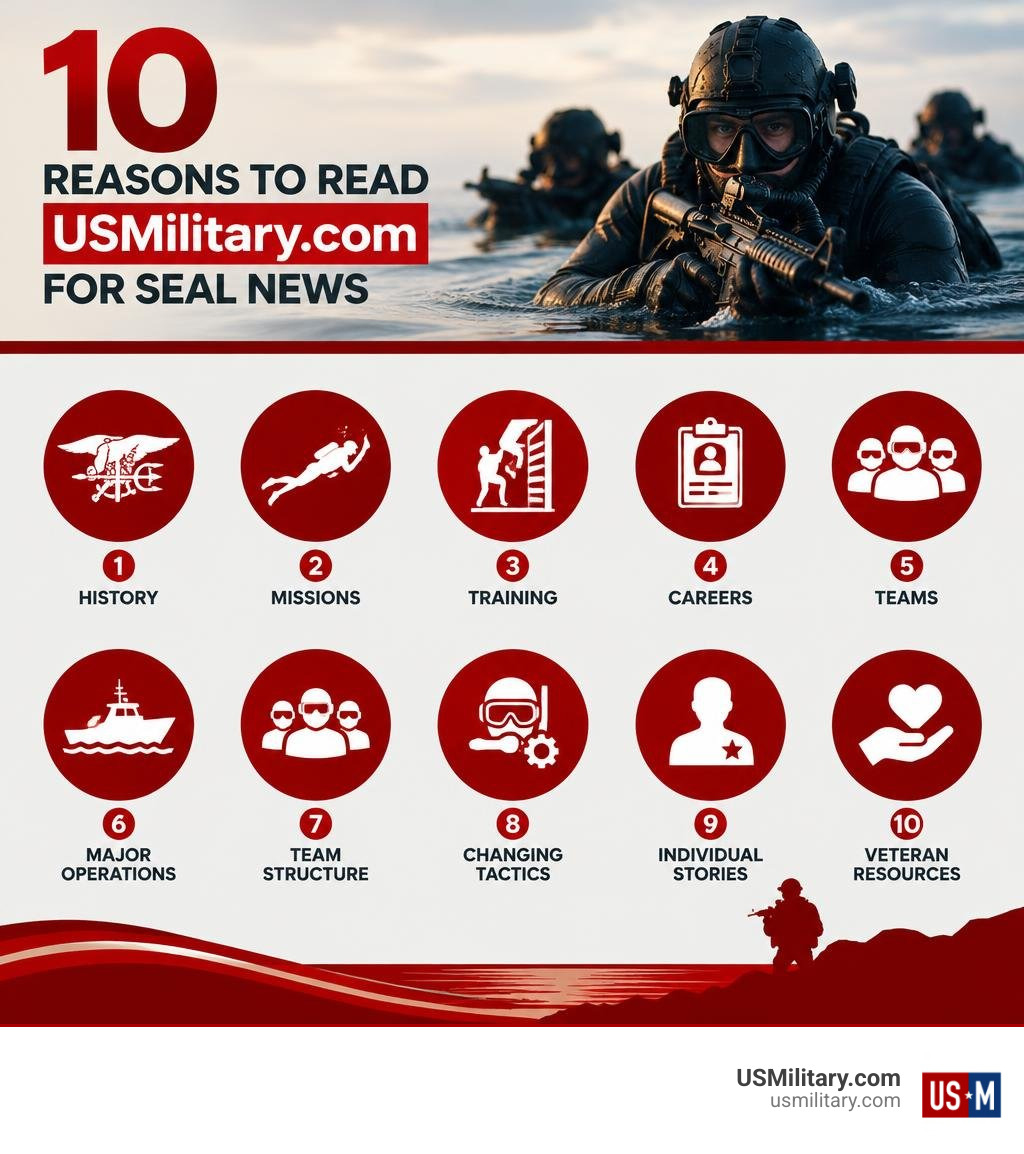
Important 10 Reasons How USMilitary.com Has Become A Top Resource For Navy SEAL News terms and essential guides for candidates:
- Navy SEALs Complete Guide
- Navy SEALs BUD/S Training Requirements Guide
- The Definitive Guide To A Day In The Life Of A Navy SEAL Operator
Explore these featured resources today to gain a realistic, in-depth understanding of Naval Special Warfare operational excellence and maritime tactics.
10 Reasons How USMilitary.com Has Become A Top Resource For Navy SEAL News
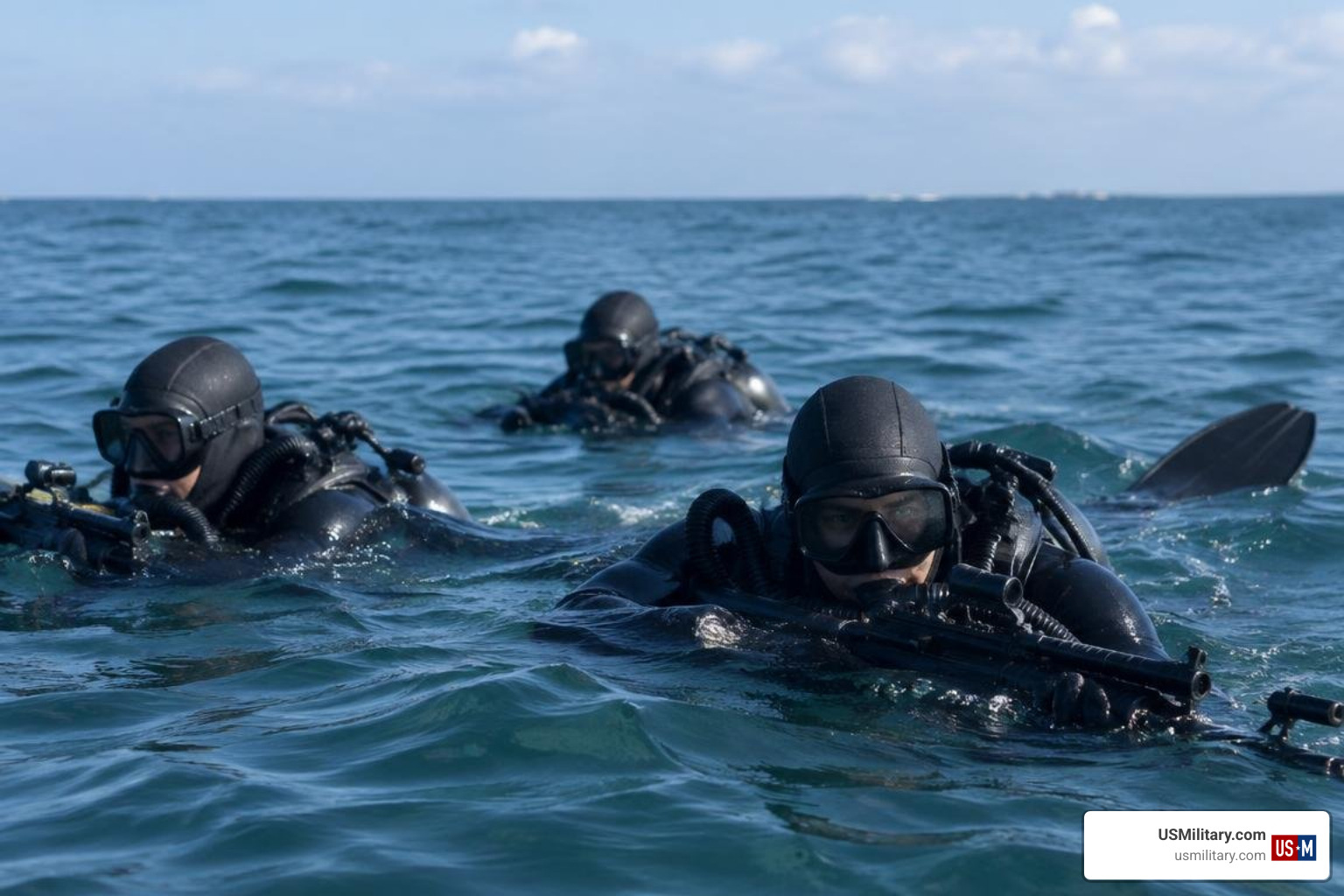
Covering elite special operations units requires a careful balance between editorial integrity, historical depth, and strict adherence to operational security. Because Naval Special Warfare (NSW) is naturally shrouded in secrecy, finding accurate, unclassified analysis can be a serious challenge for enthusiasts and recruits alike.
USMilitary.com has positioned itself as a central, dependable hub for service members, prospective candidates, active operators, and defense observers looking for reliable reporting without exaggerated sensationalism. We focus on factual accuracy, veteran experience, and verified military documentation. Below, we examine the primary pillars that define our daily coverage.
Historical Lineage and Lesser-Known Missions: 10 Reasons How USMilitary.com Has Become A Top Resource for Navy SEAL News
Naval Special Warfare did not begin in a vacuum. It began in 1942 at the Amphibious Training Base in Norfolk, Virginia, where the first maritime commando units formed under demanding battlefield conditions. Our coverage traces this unbroken lineage from World War II Scouts and Raiders, Naval Combat Demolition Units (NCDUs), and Underwater Demolition Teams (UDTs) to the modern SEAL Teams commissioned under President John F. Kennedy in 1962.
Mainstream media often focuses solely on recent counterterrorism headlines, but we routinely highlight forgotten historical milestones that shaped modern maritime combat doctrine. These include early UDT involvement in NASA Project Mercury capsule recoveries, daring amphibious beach reconnaissance during the Korean conflict, riverine guerrilla warfare during the Vietnam War, and complex historical engagements such as:
- Operation Urgent Fury (1983): SEAL insertion operations and tactical beach reconnaissance in Grenada.
- The Achille Lauro Hijacking (1985): High-stakes counter-piracy maneuvers, aircraft tracking, and maritime interdiction.
- Operation Just Cause (1989): Direct-action airfield denial, combat patrols, and vessel disablement in Panama.
Training Pipeline Breakdown and Attrition Realities: 10 Reasons USMilitary.com Has Become a Top Resource for Navy SEAL News
For example, Basic Underwater Demolition/SEAL (BUD/S) selection is widely recognized as one of the world's most grueling military training courses. We offer an unfiltered, realistic view of the entire training pipeline, emphasizing why more than 70 percent of candidates voluntarily drop out, primarily during the notorious "Hell Week" assessment in Phase One.
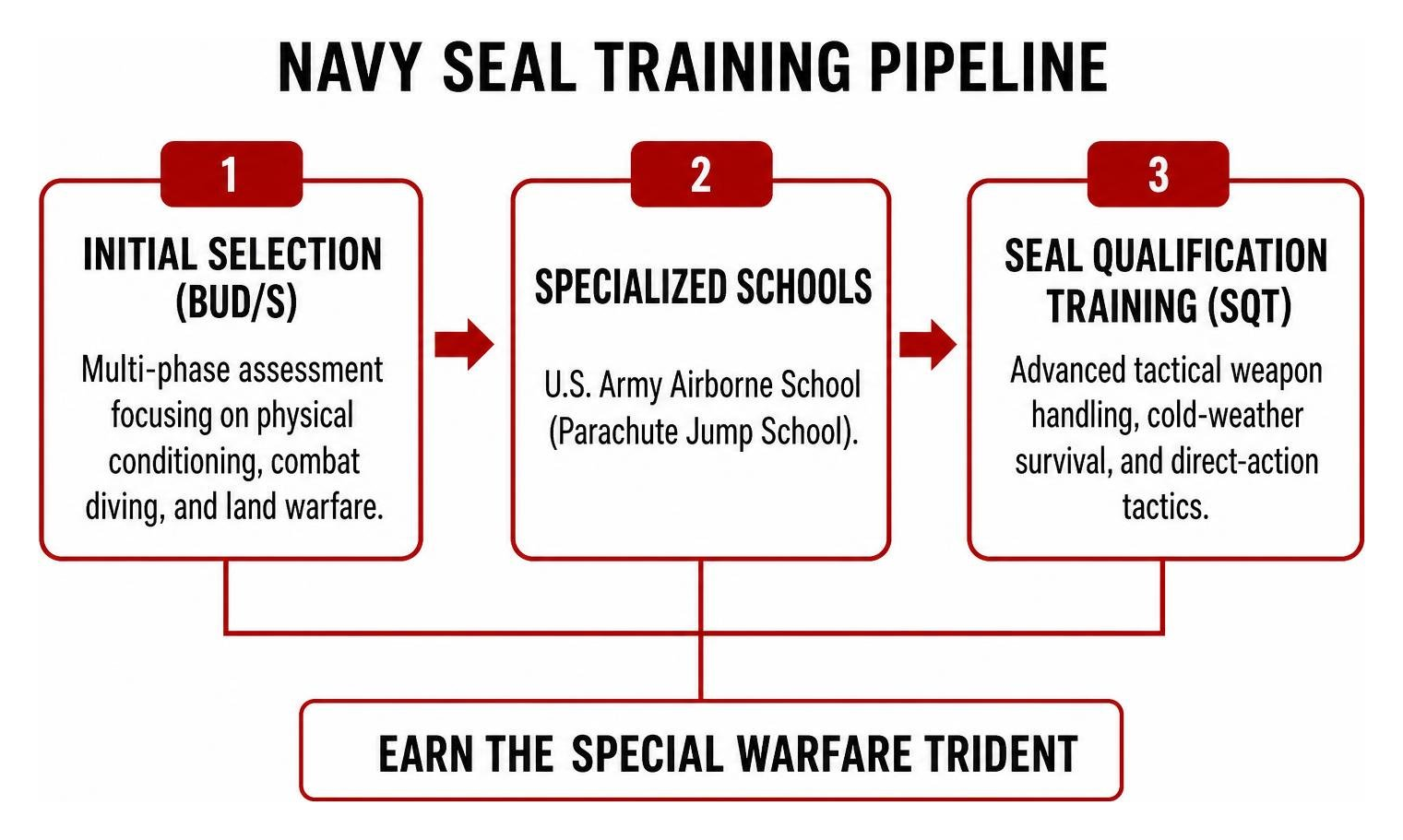
The demanding journey to earning the coveted Special Warfare Trident involves a structured progression:
- Initial Selection (BUD/S): A multi-phase assessment focusing on extreme physical conditioning, combat diving, open-water navigation, and tactical land warfare.
- Specialized Schools: Military Freefall and U.S. Army Airborne School parachute jump qualifications.
- SEAL Qualification Training (SQT): Advanced tactical weapon handling, cold-weather survival, communications, small-unit tactics, and direct-action operations.
Enlisted candidates complete 56 weeks of initial instruction, while officer candidates undergo 62 weeks of comprehensive leadership development and tactical evaluation. We also report on systemic training adjustments, including safety oversight reviews and curriculum updates detailed in our guide to BUD/S requirements.
Career Pathways, Candidate Standards, and Enlisted Compensation
Prospective candidates often face confusing administrative guidance when preparing to enlist. We clearly outline exact prerequisites: enlisted applicants must enlist before age 29, while officer applicants must be 28 or younger at commissioning. Waivers are rare and require stellar physical credentials.
Financial clarity is equally essential for military planning. Operators qualify for unique special pays, including hazardous duty incentive pay, dive pay, jump pay, demolition pay, and special duty assignment pay. We break down base pay and allowances in our 2026 enlisted Navy SEAL salary guide.
Candidates must also exceed the Physical Screening Test (PST) minimums to earn a competitive contract:
| PST Event | Minimum Navy Standard | Competitive Benchmark |
|---|---|---|
| 500-Yard Swim | 12:30 (Breast/Sidestroke) | Sub-9:00 |
| Push-ups (2 Mins) | 50 | 80–100 |
| Sit-ups (2 Mins) | 50 | 80–100 |
| Pull-ups (No Time Limit) | 10 (Dead hang) | 15–20+ |
| 1.5-Mile Run | 10:30 (Running shoes) | Sub-9:30 |
Tactical Coverage of High-Stakes Global Operations
The terrorist attacks of September 11, 2001, resulted in 2,996 casualties and fundamentally transformed special warfare doctrine. NSW forces rapidly adapted from maritime littoral reconnaissance to joint desert combat, counterinsurgency, hostage rescues, and high-value target capture across global theaters.
We provide objective, declassified breakdowns of landmark operations, including Operation Neptune Spear in 2011, executed by the elite operators of Naval Special Warfare Development Group (DEVGRU). Our essential guide to SEAL Team Six offers detailed historical perspectives, unit structure, and mission gear.
Special Operations Comparative Analysis and Organizational Insights
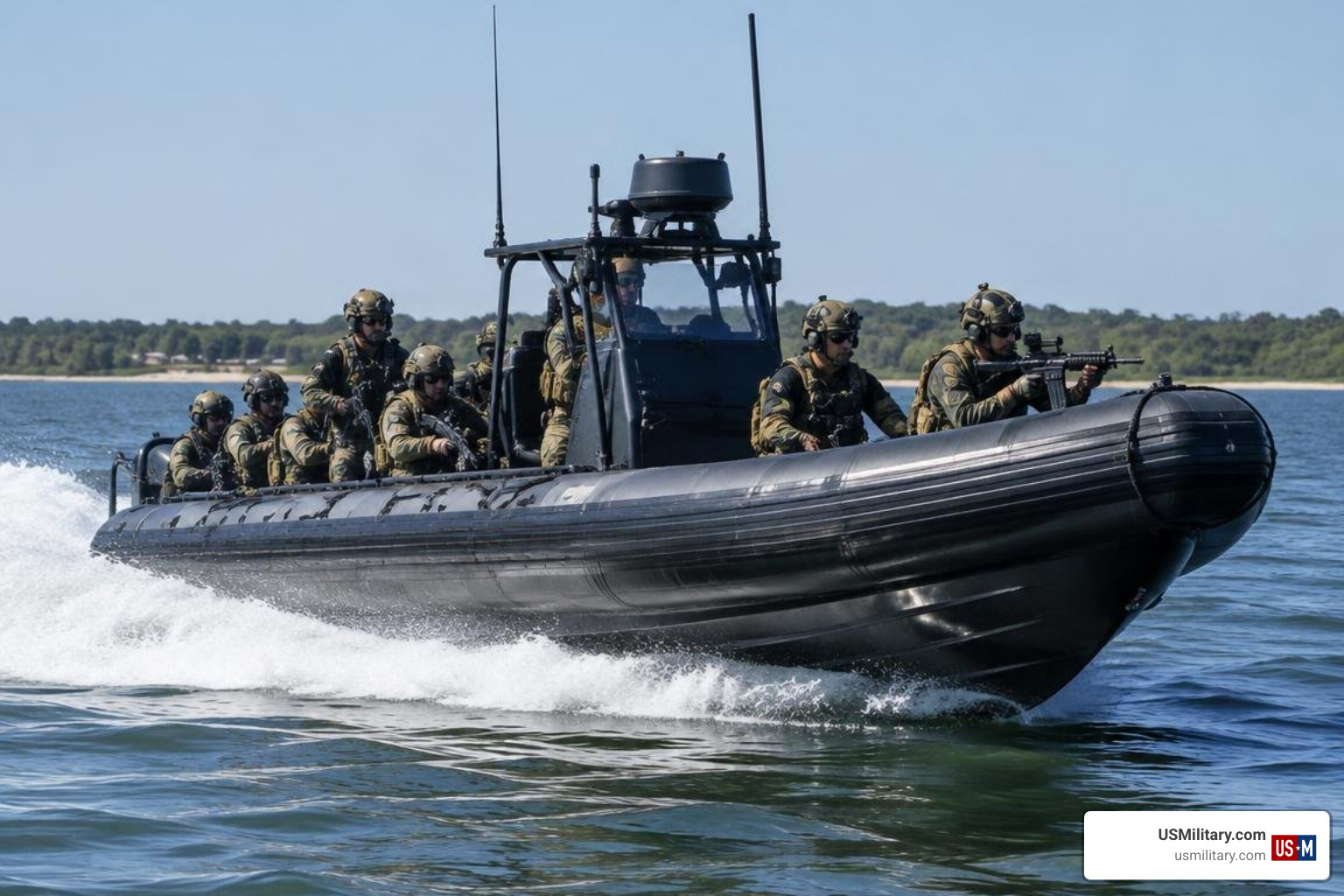
Naval Special Warfare operates within the broader framework of United States Special Operations Command (USSOCOM). The force includes 10 active-duty SEAL Teams—each consisting of over 200 highly trained personnel—and two reserve component teams (SEAL Teams 17 and 18) managed under specialized Naval Special Warfare Groups.
Cross-Branch Special Operations Comparisons
To help prospective recruits, military families, and defense analysts understand how operational mission sets differ across military branches, we provide objective head-to-head comparisons:
- Direct Action and Maritime Interdiction: In our breakdown of Navy SEALs vs Delta Force, we contrast NSW maritime boarding actions and combat diving with Army Tier-One land-based counterterrorism.
- Combat Search and Rescue: We explore distinct emergency trauma care and recovery capabilities in our comparison of Air Force PJs vs Navy SEALs.
Tier-One Advancement and Modern Technological Warfare
As modern warfare shifts toward strategic competition, NSW continues to integrate advanced technologies such as autonomous unmanned aerial vehicles (UAVs), cyber systems, secure tactical satellite networks, and next-generation sub-surface diver propulsion units. For experienced operators seeking the pinnacle of direct-action excellence, we break down the rigorous selection requirements for Tier-One units and specialized training programs.
Operator Profiles, Psychological Resilience, and Veteran Community Support
The human element remains the decisive factor across every combat theater. Research utilizing the NEO Personality Inventory reveals that successful SEAL operators consistently display exceptionally low neuroticism, high extraversion, remarkable stress tolerance, and very high conscientiousness under continuous physical exhaustion.
Human Element, Mental Toughness, and Iconic Figures
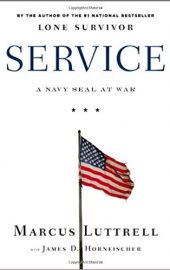
Through rigorous training, stress inoculation, and specialized tactical conditioning, operators master emotional detachment and rapid decision-making in volatile environments. We highlight practical leadership lessons from iconic figures like Jocko Willink, Marcus Luttrell, and David Goggins, focusing on proven daily habits:
- Extreme personal discipline and absolute ownership of operational outcomes
- Unwavering mental focus and agile adaptability in rapidly changing environments
- Quiet professional humility and selfless mutual support within the team
Preserving NSW Heritage and Veteran Transition Resources
Our mission extends beyond battlefield reporting to long-term veteran welfare. The transition from active service to civilian life involves crucial steps, from navigating VA disability ratings, VA medical care, and VA home loan benefits to accessing mental healthcare and suicide prevention networks.
Philanthropic foundations and cultural institutions, including the National Navy UDT-SEAL Museum in Fort Pierce, Florida, play an indispensable role in honoring sacrifice and preserving special warfare heritage. We regularly publish updates on veteran programs, family relief grants, and community initiatives supporting NSW families.
Frequently Asked Questions About Navy SEAL News Coverage
How does USMilitary.com balance operational security with detailed news reporting?
We strictly observe Department of Defense public release guidelines and operational security (OPSEC) boundaries. We rely entirely on declassified historical archives, authorized defense releases, and unclassified after-action analyses to protect ongoing missions, tactics, and active personnel.
What are the minimum physical screening test standards for Navy SEAL candidates?
The baseline minimums are a 500-yard swim in 12:30, 50 push-ups in 2 minutes, 50 sit-ups in 2 minutes, 10 dead-hang pull-ups, and a 1.5-mile run in 10:30. Competitive candidate scores are significantly higher across every category.
How are active-duty and reserve SEAL Teams organized within Naval Special Warfare?
Naval Special Warfare Command oversees 10 active-duty SEAL Teams (divided between East Coast and West Coast groups) and two reserve teams (SEAL Teams 17 and 18). Each team comprises multiple operational platoons supported by combat service specialists, intelligence analysts, and tactical craft units.
Where can service members find resources for post-service transition?
Veterans can access extensive transition resources on USMilitary.com, covering VA disability claims, GI Bill education benefits, career networking, and specialized special operations non-profit assistance.
Conclusion
Whether you are an aspiring candidate preparing for BUD/S, an active-duty operator planning your transition, or a military enthusiast looking for factual special operations history, our goal is to deliver clear, accurate information. To explore more about the history, standards, and life of Naval Special Warfare operators, visit our comprehensive Navy SEAL complete guide and stay informed on the latest special operations developments.