Common Navy SEAL Disabilities and Where to Find Help

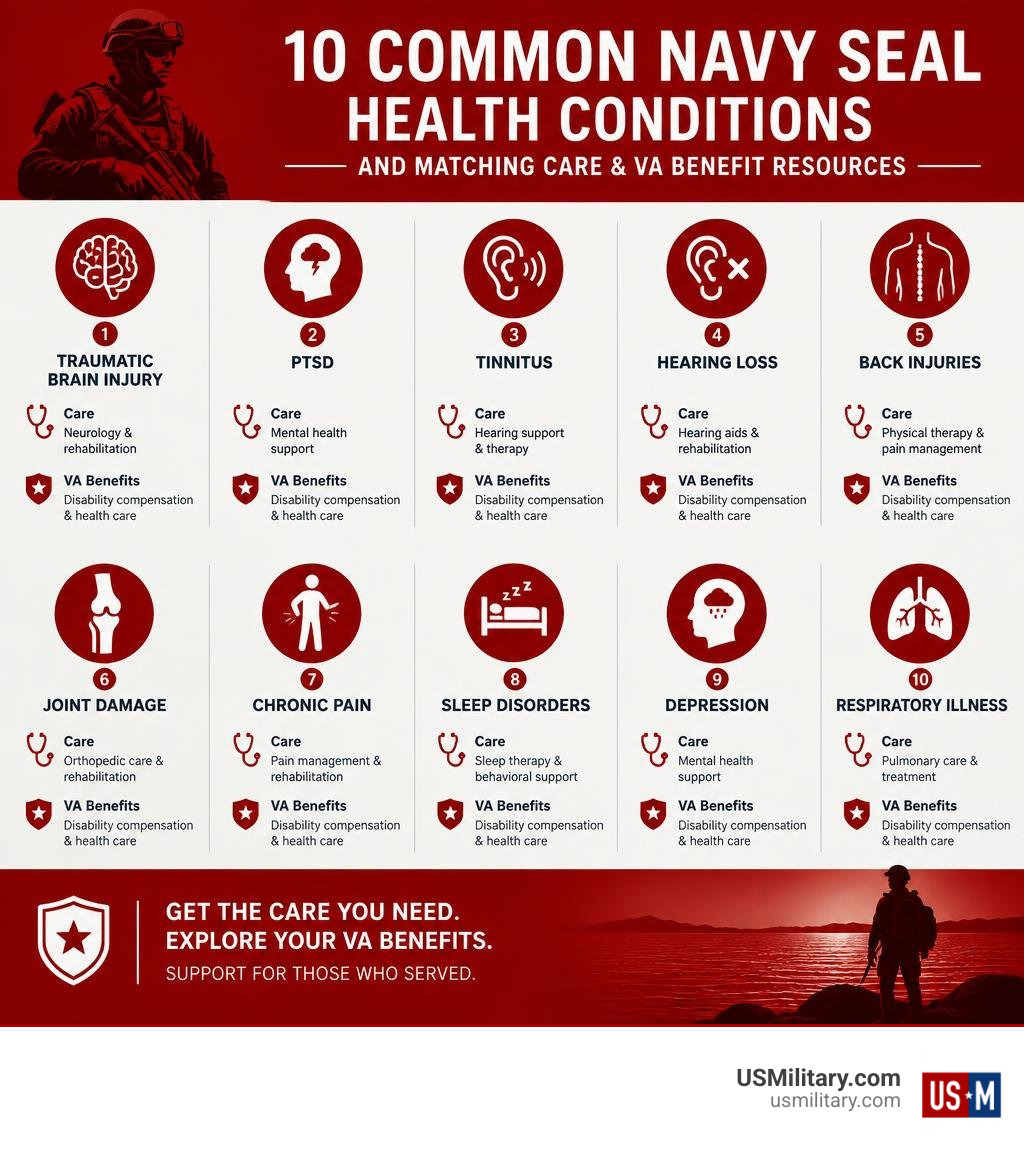
The 10 most common disabilities among Navy SEALs and resources to deal with them include traumatic brain injury, PTSD, tinnitus, hearing loss, back injuries, joint damage, chronic pain, sleep disorders, depression, and respiratory illness. These are conditions to watch for, not a verified ranking of SEAL disability rates.
If you have symptoms, seek care and document how they affect daily life. VA health care can provide treatment, while a VA disability claim may provide compensation for conditions linked to service.
I'm Larry Fowler, a Navy veteran, BUD/S Class 89 graduate, and publisher of NavySeal.com and USMilitary.com, where I've covered VA disability benefits since 2007. In this guide to the 10 Most Common Navy SEAL Disabilities and Resources to Deal With Them, I'll help you identify the next steps for care and benefits.
Key terms for 10 Most Common Navy SEAL Disabilities And Resources To Deal With Them:
- Navy SEALs BUD/S Training Requirements
- What is Navy SEAL Training 3 Phases And WHy is it so tough
- A Day In The Life Of A Navy SEAL Operator
The Unique Demands of Naval Special Warfare and Operator Syndrome
Special operations forces make up less than 1 percent of the total U.S. Armed Forces, yet they have carried approximately 95 percent of the combat load throughout the Global War on Terror. With fewer than 10 percent of candidates surviving grueling selection courses like BUD/S, the roughly 2,450 active-duty Navy SEALs represent an extraordinarily specialized community. Many operators complete 12 or more combat deployments, racking up hundreds or even thousands of direct-action missions over a 20-year career.
This sustained operational tempo comes at a steep physical and psychological cost. The compounding effect of chronic stress, sleep deprivation, physical trauma, and heavy gear loads creates complex medical profiles that require dedicated clinical attention.
Acknowledging these invisible scars is the first step toward addressing veteran mental health needs before discharge.
Understanding Operator Syndrome in Elite Warfighters
Clinical researchers describe the cumulative, whole-body breakdown seen in special operations veterans as "Operator Syndrome." It is not a single diagnosis, but an interconnected web of chronic systemic inflammation, endocrine disruption, low testosterone, vestibular damage, and chronic pain.
The constant surge of adrenaline and cortisol keeps operators in a permanent state of hypervigilance, degrading restorative sleep and accelerating biological wear and tear.
When combined with unresolved trauma, Operator Syndrome significantly increases the risk of severe depression and substance dependence. Left unchecked, the biological and mental strain can lead to catastrophic outcomes, making it vital to understand the underlying causes of suicide in special warfare so teammates and families can intervene early.
High-Impact Exposures: Blast Waves, Parachuting, and 60G Wave Slamming

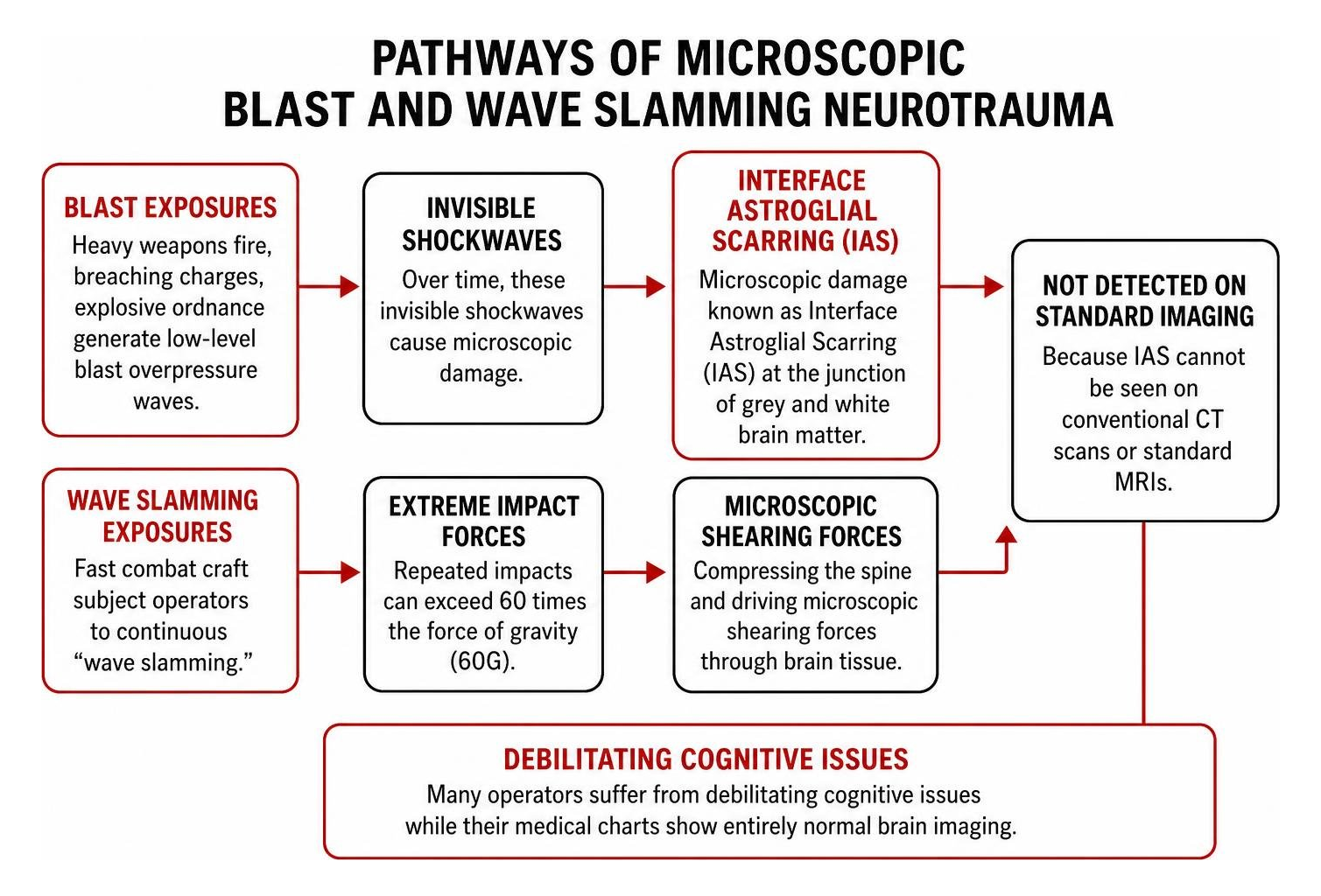
Navy SEALs face extreme biomechanical environments rarely encountered by conventional forces. Maritime operations aboard fast combat craft subject operators to continuous "wave slamming." These repeated impacts can exceed 60 times the force of gravity (60G), compressing the spine and driving microscopic shearing forces through brain tissue.
Furthermore, over 85 percent of special operators sustain traumatic brain injuries from training alone, long before setting foot on a foreign battlefield.
Heavy weapons fire, breaching charges, and explosive ordnance generate low-level blast overpressure waves. Over time, these invisible shockwaves cause microscopic damage known as Interface Astroglial Scarring (IAS) along the junction of grey and white brain matter. Because IAS cannot be seen on conventional CT scans or standard MRIs, many operators suffer from debilitating cognitive issues while their medical charts show entirely normal brain imaging.
10 Most Common Navy SEAL Disabilities And Resources To Deal With Them
The disabilities faced by Naval Special Warfare personnel reflect years of heavy kinetic exposure and high-impact training.
| Common Condition | Primary Service Trigger | Key Care and VA Benefit Resource |
|---|---|---|
| Traumatic Brain Injury (TBI) | Blast overpressure, breaching, fast-boat wave impacts | VA Polytrauma System of Care, Intrepid Fallen Heroes |
| Post-Traumatic Stress (PTSD) | High combat tempo, life-threat exposures, chronic loss | VA PTSD Programs, Vet Centers, Specialized SOF Clinics |
| Tinnitus & Hearing Loss | Heavy weapons fire, breaching charges, engine noise | VA Audiology, Service-Connected Hearing Aids |
| Spinal Herniation & Disc Strain | Heavy body armor, parachute jumps, boat pounding | VA Spinal Cord Injury/Disorders (SCI/D), Physical Therapy |
| Joint Degeneration (Knee/Hip/Shoulder) | Heavy rucking, combat swimming, fast-roping | VA Orthopedic Rehabilitation, Surgical Implants |
| Chronic Pain Syndrome | Cumulative untreated musculoskeletal trauma | VA Whole Health Pain Clinics, Acupuncture, Chiro |
| Sleep Apnea & Sleep Disorders | Hypervigilance, disrupted circadian rhythms, TBI | VA Sleep Medicine, CPAP issue, In-Home Sleep Studies |
| Clinical Depression & Anxiety | Neuroendocrine disruption, social transition strain | VA Mental Health Services, SOF Peer Support Networks |
| Toxic Exposure & Respiratory Issues | Breaching fumes, burn pits, hazardous propellants | PACT Act Presumptive Screenings, VA Pulmonary Care |
| Vestibular & Vision Dysfunction | Low-level blast overpressure, head trauma | VA Neuro-Optometry, Specialized Balance Physical Therapy |
Securing compensation begins with identifying what conditions qualify for veteran disability benefits and linking each diagnosis directly to military service records.
Physical Injuries: 10 Most Common Navy SEAL Disabilities And Resources To Deal With Them
Decades of carrying 80-pound rucks, fast-roping from helicopters, and diving in freezing water cause premature wear on the musculoskeletal system. Degenerative disc disease in the cervical and lumbar spine is widespread among former frogmen. Many operators require multiple knee, shoulder, and hip reconstructions before retirement.
Systemic and Cognitive Conditions: 10 Most Common Navy SEAL Disabilities And Resources To Deal With Them
Cognitive and neurological disabilities among SEALs stem directly from blast dynamics and sustained stress. TBI and PTSD frequently co-occur, producing memory fog, emotional dysregulation, and intense sensory sensitivity. Comparing your symptoms against standard common VA disability ratings helps ensure that every secondary condition—such as migraine headaches secondary to blast exposure—is properly evaluated.
Breaching propellants, lead exposure from indoor shoot-houses, and burn pits also trigger chronic sinusitis, asthma, and metabolic dysfunction.
Navigating the VA Disability Evaluation System and Legislative Benefits
Transitioning out of active duty while managing severe injuries requires navigating the military Disability Evaluation System (DES). Under Title 10 of the U.S. Code, the DES evaluates service members with career-ending conditions to determine fitness for duty and eligibility for military disability retirement.
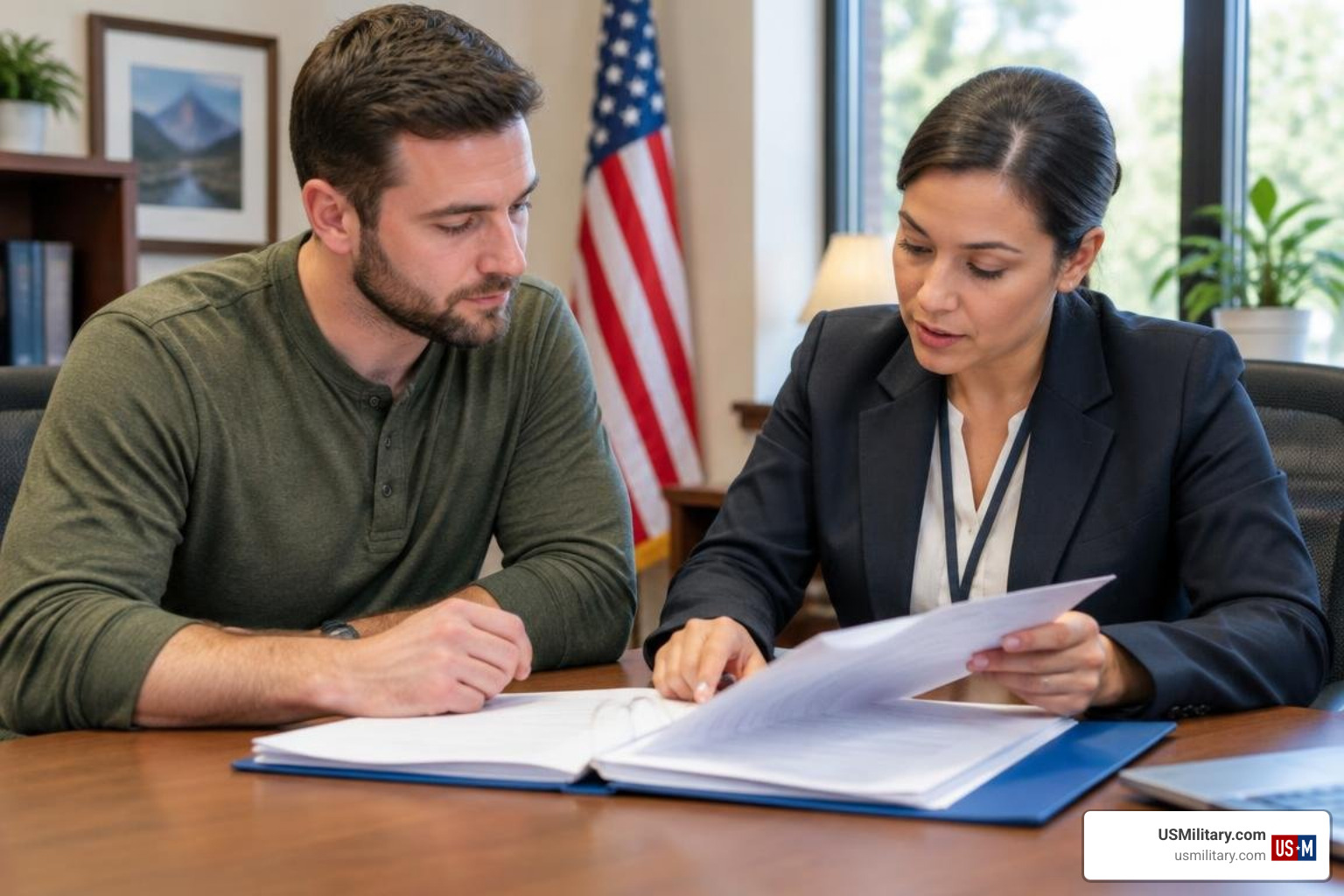
Understanding the steps for filing military VA disability claims ensures you do not leave earned compensation on the table.
Mastering the Disability Evaluation System (DES) and Medical Discharge
The medical discharge process begins with a Medical Evaluation Board (MEB), where a military physician drafts a narrative summary detailing how your medical conditions impair your duties. Unlike the Army, the Navy does not use a rigid profiling system to trigger an MEB; instead, your physician refers your case directly when recovery exceeds Temporary Limited Duty (TLD) limits (typically 180 days).
If referred to the Physical Evaluation Board (PEB), an informal board reviews your service records and assigns a preliminary disability rating. If you disagree with the rating or the fitness determination, you have the right to formal counsel and an appeal through the Formal PEB.
PACT Act, Major Richard Star Act, and VA Benefit Ratings
Recent legislation significantly improves compensation for special operators. The PACT Act establishes presumptive service connection for dozens of toxic-exposure conditions, eliminating the need to prove a specific combat incident caused your respiratory or autoimmune illness.
Furthermore, the Major Richard Star Act aims to provide full Concurrent Retirement and Disability Pay (CRDP) to combat-injured veterans medically retired before 20 years of service. Under existing rules, veterans with 20 or more years of service and a VA disability rating of 50 percent or higher receive both full military retirement and tax-free VA compensation concurrently.
Comprehensive Support Networks for SEALs and Military Families
Transitioning from elite military units to civilian life involves major lifestyle adjustments. Operators moving into civilian employment or higher education can utilize the Chapter 31 Veteran Readiness and Employment (VR&E) program alongside their Post-9/11 GI Bill. Disabled veterans with a rating of 10 percent or higher also receive a full waiver of the VA Home Loan funding fee, saving thousands in closing costs.
Specialized Mental Health Care and Overcoming Cultural Stigma
The "never quit" culture that enables SEALs to push through Hell Week can become a major barrier in civilian life. Operators often compartmentalize physical and emotional pain for decades, viewing medical care as a vulnerability. Understanding the deeper reasons why veterans struggle with mental health helps destigmatize seeking professional care. Dedicated nonprofits like the Navy SEAL Foundation provide specialized mental health resources, anonymous counseling, and equine or neurofeedback therapies designed specifically for the special operations community.
Fostering Resilience in Navy SEAL Families and Children
A SEAL parent is typically away from home upwards of 240 days per year during pre-deployment workups and deploys for at least six months out of every 18 months. Over a career, operators miss up to 80 percent of major family milestones. Research shows that children of deployed military personnel face higher rates of anxiety and stress. Building structured protective factors—such as consistent communication routines, family counseling, and specialized social media resilience programs—provides critical emotional support for military spouses and children.
Frequently Asked Questions About Navy SEAL Disabilities
Can Navy SEALs receive both military retirement pay and VA disability compensation?
Yes. Operators who complete 20 or more years of active-duty service and receive a VA disability rating of 50 percent or higher qualify for Concurrent Retirement and Disability Pay (CRDP), allowing them to collect full pension payments and tax-free VA compensation without any financial offset.
What is Interface Astroglial Scarring and how does it affect Navy SEALs?
Interface Astroglial Scarring is microscopic brain tissue damage caused by blast overpressure waves. It forms along the boundary between grey and white brain matter. Because it occurs at the cellular level, it doesn't show up on standard clinical MRIs, so specialized polytrauma screenings and neurocognitive evaluations are essential for diagnosis.
How do transitioning SEALs convert life insurance and access housing benefits?
Separating operators can convert their active-duty Servicemembers' Group Life Insurance (SGLI) to Veterans' Group Life Insurance (VGLI) without a medical exam or underwriting if applied for within 240 days of discharge. For home purchases, disabled SEALs can obtain a Certificate of Eligibility (COE) through VA.gov to secure a zero-down VA home loan exempt from standard funding fees.
Conclusion
Naval Special Warfare personnel push their bodies and minds beyond ordinary human limits to defend the nation. The physical wear, blast trauma, and chronic stress of elite service require proactive, whole-health rehabilitation.
By understanding your medical rights, tracking every exposure event in your service records, and utilizing dedicated community networks, you can protect your health and family. Explore our complete guide to Navy SEAL service and benefits to secure the full support you earned on the battlefield.
Written by Larry Fowler, BUD/S Class 89

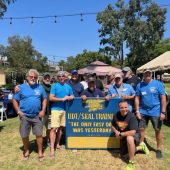
Larry, the amazing and honorable man Doug Young, and awesome Scott Rawding with the BUD/S Class 89 Plaque.