Is Becoming a Navy SEAL Worth It Today?

The pros of becoming a Navy SEAL today include special-duty pay, housing and health benefits, advanced training, close team bonds, and work that many find meaningful. The cons are steep: most candidates do not finish training, and those who do face injury risks, long separations from family, and a demanding career. It may be worth pursuing if you want the mission and accept those costs. Pay or prestige alone is a poor reason to choose it.
I’m Larry Fowler, a Navy veteran and graduate of BUD/S Class 89. In this guide to Pros and Cons Of Becoming a Navy SEAL Today, I’ll draw on that experience to help you weigh the career against your goals and family life.
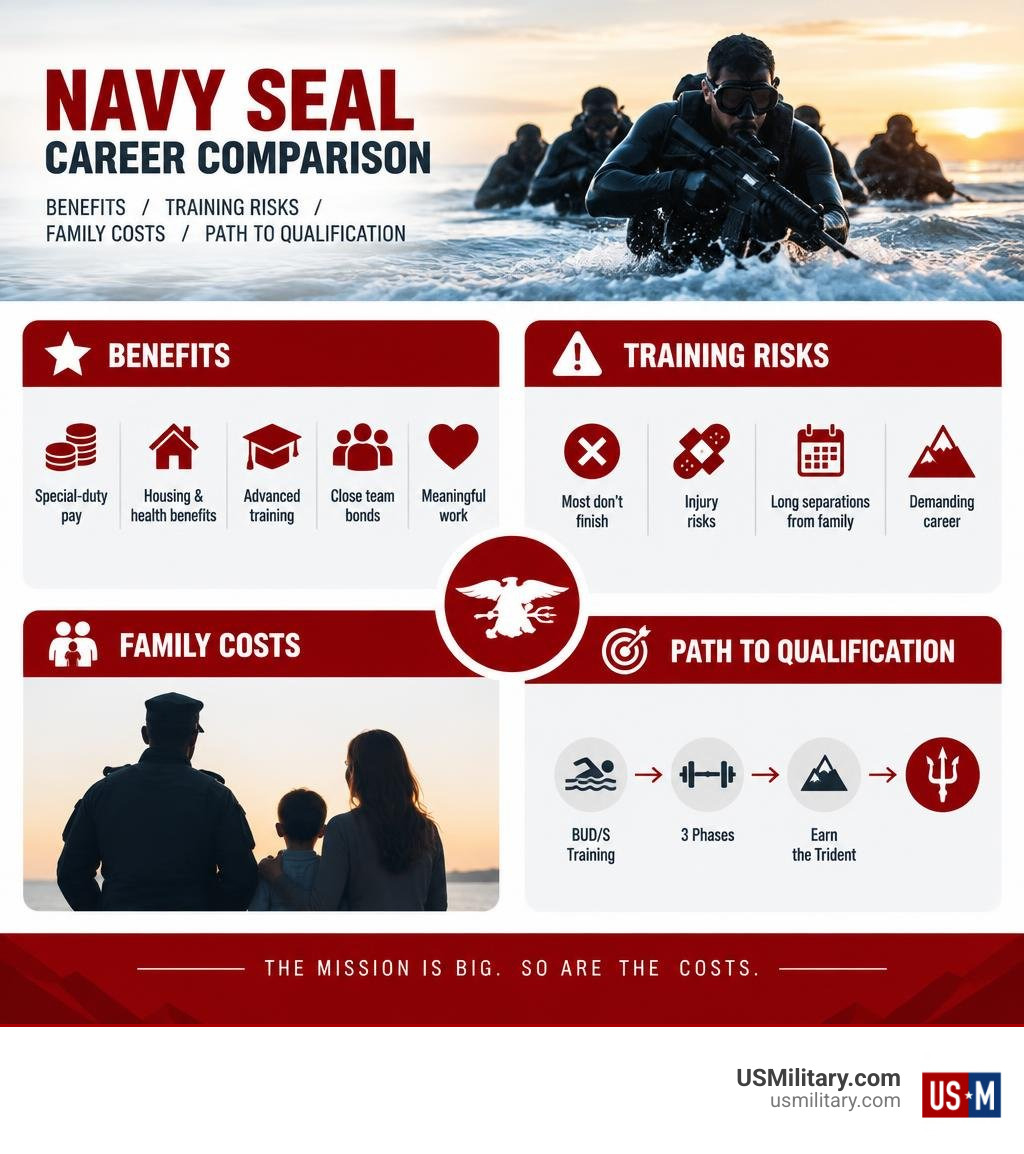
Simple guide to Pros and Cons Of Becoming a Navy SEAL Today:
- Navy SEALs BUD/S Training Requirements
- What is Navy SEAL Training 3 Phases And WHy is it so tough
- A Day In The Life Of A Navy SEAL Operator
Introduction to the SEAL Pipeline and Military Lifestyle
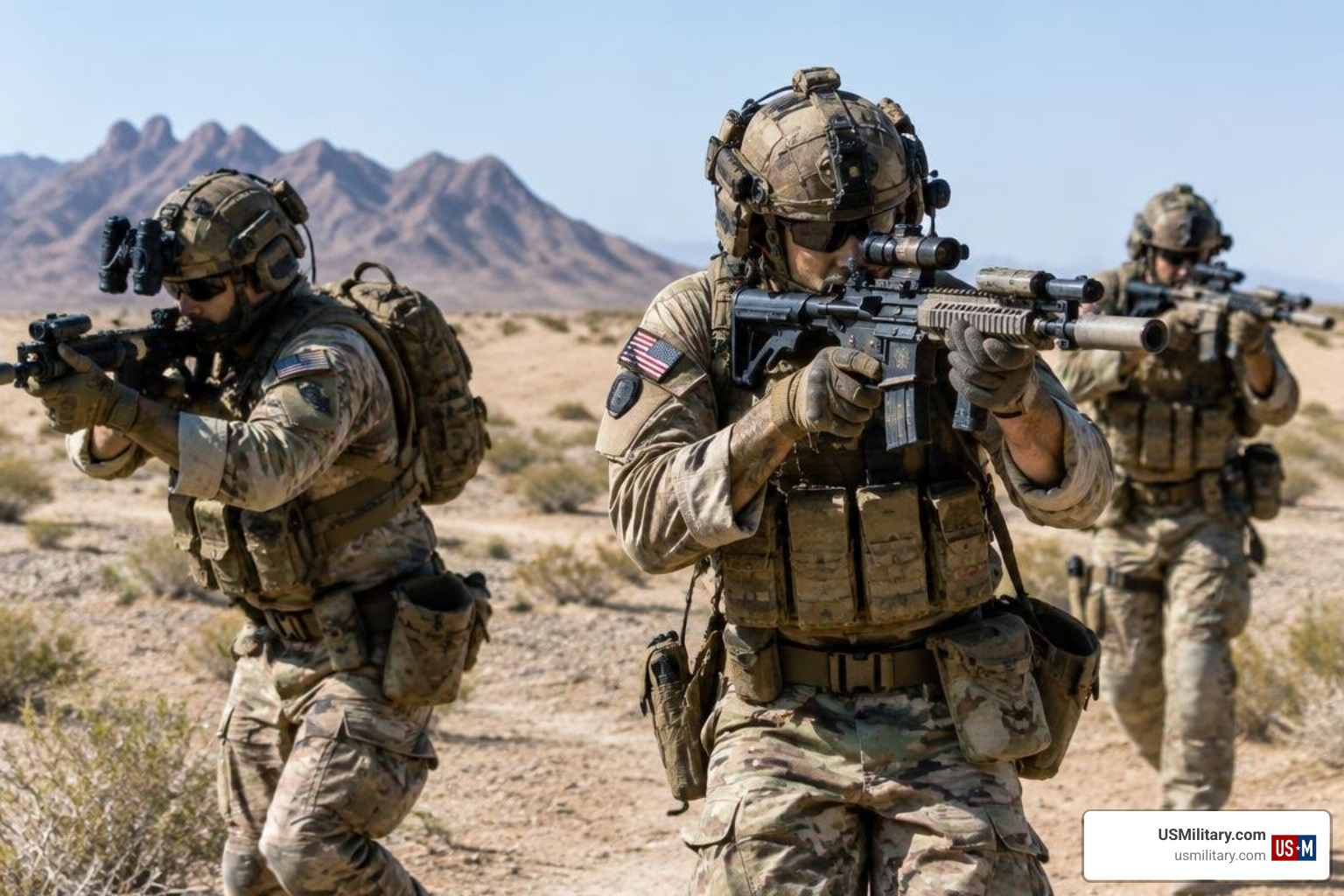
Becoming a U.S. Navy SEAL means joining the elite maritime component of Naval Special Warfare Command. SEALs (Sea, Air, Land) conduct direct-action raids, strategic reconnaissance, counterterrorism, and underwater demolition across every operational environment, from arid deserts to arctic ice.

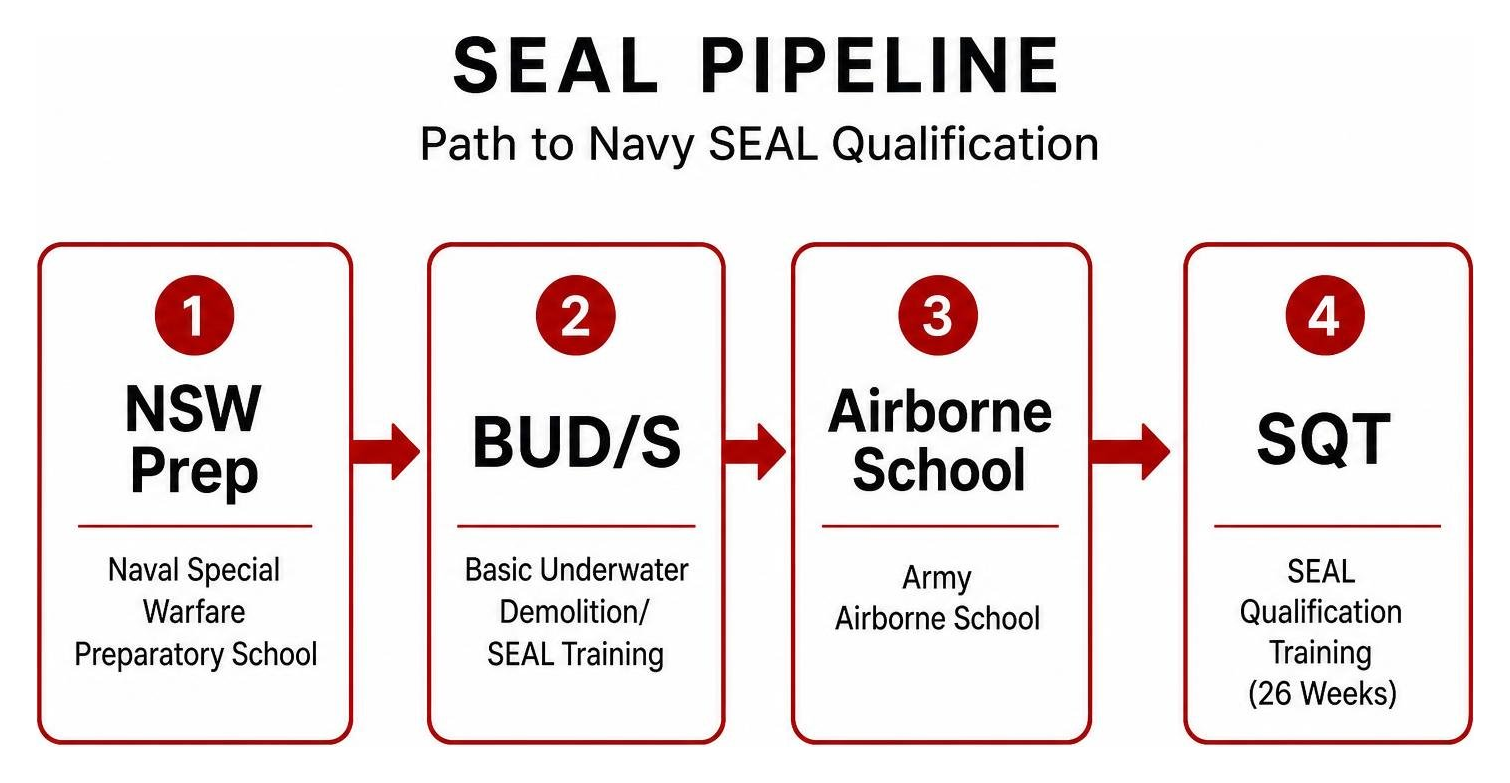
Earning the coveted Special Warfare insignia, known as the Trident, requires passing an arduous multi-stage pipeline. Candidates first attend Naval Special Warfare Preparatory School, advance through Basic Underwater Demolition/SEAL (BUD/S) training, graduate from Army Airborne School, and complete 26 weeks of SEAL Qualification Training (SQT).
Once pinned with the Trident, operators enter an intensive 18-month pre-deployment training cycle within their respective Teams. In 2026, modern combat readiness requires mastering high-speed combat craft insertions, sub-surface diving, high-altitude parachuting, and advanced communications.
The Pros and Cons of Becoming a Navy SEAL Today
The decision to join Naval Special Warfare involves weighing extraordinary operational opportunities against substantial lifestyle sacrifices.
Tangible and Intangible Pros of Becoming a Navy SEAL Today
Serving in the Teams provides competitive compensation and world-class technical education. Enlisted operators can earn a starting total compensation package approaching $60,000 annually when factoring in base pay, allowances, and bonuses.
| Compensation & Benefit Element | Standard Military Baseline | Navy SEAL Special Warfare Operator |
|---|---|---|
| Special Duty Pays | Standard MOS allowances | Dive ($150–$240/mo), Jump ($150–$225/mo), Demo ($150/mo), Special Duty Assignment Pay |
| Enlistment & Retention Bonuses | Branch dependent ($5k–$20k) | Initial bonuses up to $40,000; reenlistment bonuses often exceeding $100,000 |
| Housing & Subsistence | Standard BAH & BAS | Tax-free Basic Allowance for Housing (BAH) and BAS based on duty station tier |
| Retirement Pension | 20-year service vesting | Full 20-year pension, TSP matching, and lifelong TRICARE healthcare coverage |
| Annual Paid Leave | 30 days PTO per year | 30 days fully paid leave annually plus comprehensive medical/dental care |
For a complete breakdown of earnings, review our analysis of what is the salary for an enlisted Navy SEAL in 2026 and the official overview of Navy SEAL career benefits.
Beyond the financial incentives, the intangible benefits are unmatched. With fewer than 2,500 active-duty operators worldwide, you become part of a tightly knit brotherhood. Operators gain specialized expertise through sniper schools, military free-fall jumpmaster courses, language institutes, and combat medic certifications. To see how these skills translate day to day, explore our day in the life of an active SEAL operator.
Physical, Mental, and Personal Cons of Becoming a Navy SEAL Today
The physical toll of special warfare is immense. Years of high-impact ocean insertions, heavy ruck marching, blast wave exposures from breaching charges, and fast-roping take a severe toll on the human body. Musculoskeletal trauma and traumatic brain injury (TBI) risks are common concerns across the community.
The personal sacrifices extend directly into family life. High-tempo workup cycles and overseas deployments keep operators away from home for up to 250 to 300 days a year. This persistent separation contributes to high divorce rates within special operations. Prospective candidates should review the realities of Navy SEAL marriages and family dynamics as well as candid perspectives on training culture and family challenges.
Operational stress, sleep deprivation, and combat exposure can also create severe mental health challenges. Addressing psychological burnout and mental health challenges in special warfare remains a top priority across the military community.
Navigating Career Paths, BUD/S Attrition, and Civilian Transition
Choosing the right path into Naval Special Warfare requires an honest appraisal of career tracks, selection hurdles, and post-military ambitions.
Career Longevity: Enlisted Operators vs. Commissioned SEAL Officers
The Navy maintains a staffing ratio of approximately 10 enlisted SEALs for every 1 commissioned SEAL officer. While both groups train side-by-side at BUD/S, their long-term career trajectories diverge significantly.
| Career Factor | Enlisted SEAL Operator (SO Rating) | Commissioned SEAL Officer (1130 Designator) |
|---|---|---|
| Annual Selection Quotas | Several hundred candidates across classes | Limited to roughly 50 to 70 officer billets per year |
| Primary Focus | Tactical execution, weapons mastery, technical skills | Mission planning, administrative oversight, tactical leadership |
| Operational Lifespan | Can remain in direct platoon roles for 10–15+ years | Shifts primarily to staff, HQ, and command roles after 8–10 years |
| Commissioning Route | Direct enlistment; eligible for OCS up to age 36 | Naval Academy, NROTC, or OCS via SOAS selection |
Officer candidates face an exceptionally competitive selection board and complete SEAL Officer Assessment and Selection (SOAS) before receiving a BUD/S billet. For an in-depth assessment of how special operations pipelines stack up, read our training comparison between Navy SEALs and Army Rangers.
Selection Standards, Training Attrition, and Mental Resilience
To earn an enlistment contract with a SEAL Challenge guarantee, candidates must ace the Navy Physical Screening Test (PST) and score well on the Armed Services Vocational Aptitude Battery (ASVAB) and Computerized Special Operations Resiliency Test (C-SORT).
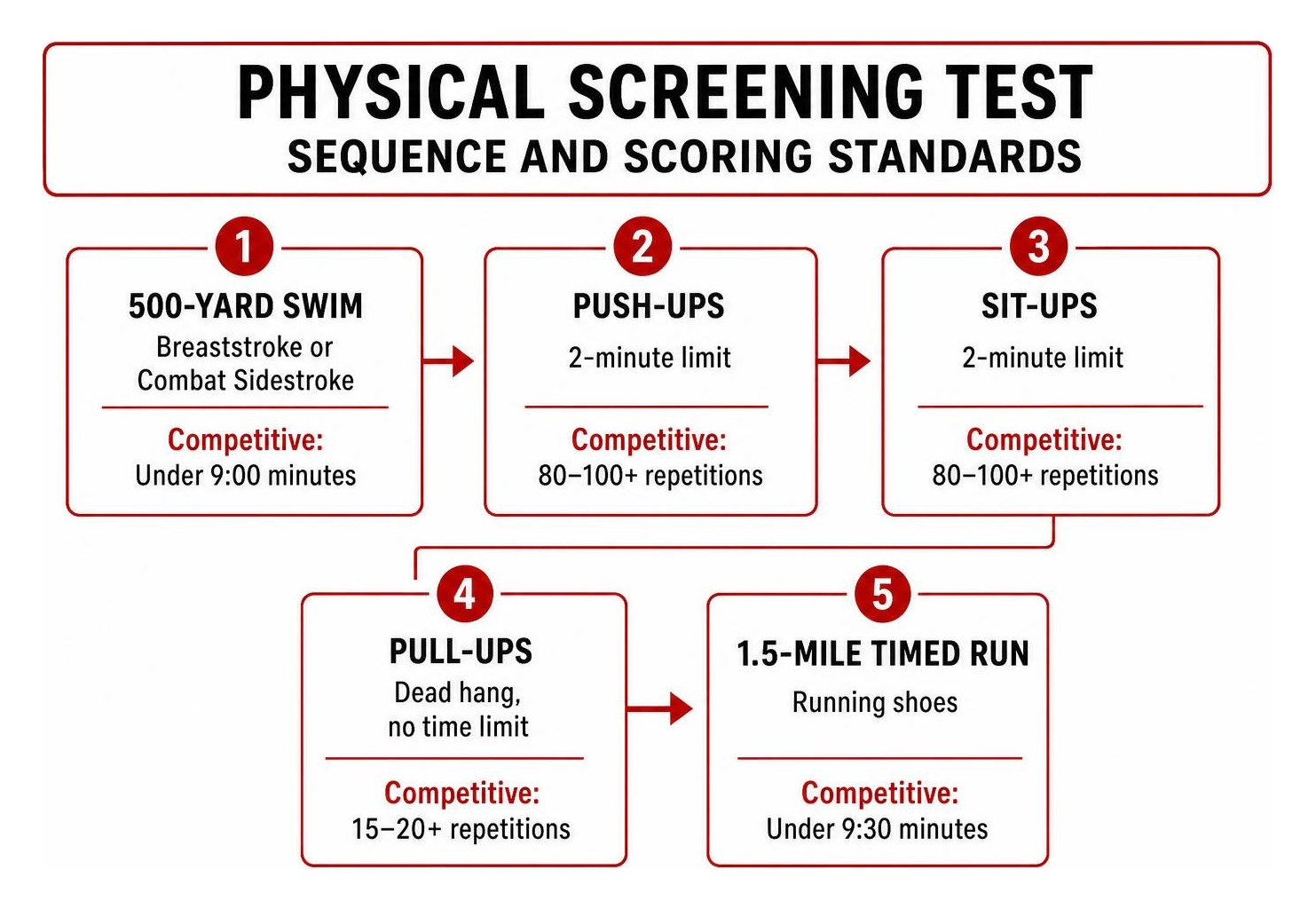
- 500-Yard Swim: Breaststroke or Combat Sidestroke (Competitive: Under 9:00 minutes)
- Push-ups: 2-minute limit (Competitive: 80–100+ repetitions)
- Sit-ups: 2-minute limit (Competitive: 80–100+ repetitions)
- Pull-ups: Dead hang, no time limit (Competitive: 15–20+ repetitions)
- 1.5-Mile Timed Run: Running shoes (Competitive: Under 9:30 minutes)
Despite top physical conditioning, the BUD/S attrition rate hovers around 80 percent. The initial class of 240 candidates often shrinks to fewer than 30 by the end of First Phase. The major crucible is Hell Week: a grueling 5.5-day continuous endurance exercise involving constant surf immersion, boat carries, and log physical training on less than four hours of total sleep.
Anyone can exit the course at any time by stepping up to the brass bell and ringing it three times. Survival comes down to mental resilience, stress inoculation, and prioritizing team success over personal comfort. For deeper insights, read our Navy SEAL BUD/S training requirements guide or review this firsthand account of surviving BUD/S and Hell Week.
Post-Service Transition, Civilian Opportunities, and Next Steps
A career in Naval Special Warfare opens exceptional doors after military service. Former SEALs frequently transition into private security contracting, tactical consulting, defense technology development, and federal law enforcement agencies such as the FBI, CIA, and DEA. Corporate firms actively recruit former operators for leadership and risk-management positions.
Transitioning veterans can leverage Post-9/11 GI Bill education benefits for top-tier undergraduate and graduate degrees. At USMilitary.com, we provide comprehensive guidance on VA disability ratings, VA home loans, and military transition planning to ensure your post-service career is just as rewarding as your time in uniform.
If you are ready to explore this path further, review our Navy SEALs complete guide to evaluate your readiness.
Larry Fowler is a military veteran, BUD/S graduate, and contributing author for NavySeal.com and USMilitary.com.